The kami, spirits, and creatures of Shinto myth, recorded in the Kojiki and the Nihon Shoki.
42 entries in 8 chapters
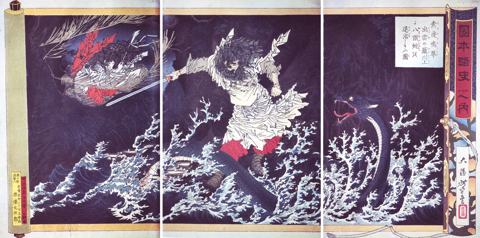
The raging kami of sea and storm — expelled from heaven for wrecking his sister's fields, then redeemed in Izumo by slaying an eight-headed serpent.
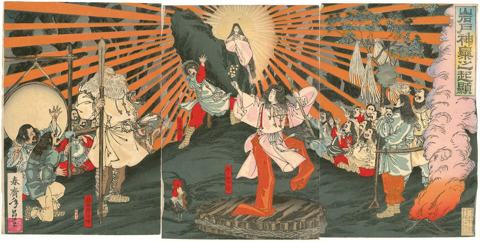
The sun goddess who shines in heaven — ruler of the Plain of High Heaven, ancestor of Japan's imperial line, and the kami enshrined at Ise.
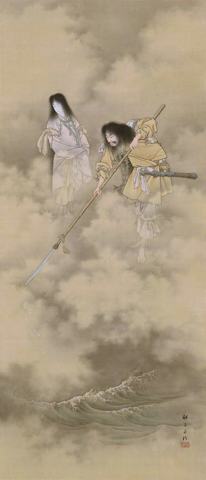
The creator pair of Japanese myth: they stirred the first island out of the sea, bore the land itself, and were parted forever by death.
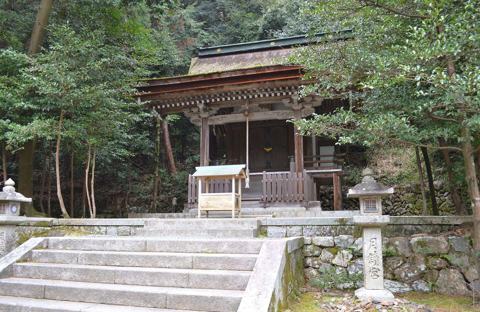
The moon kami born from Izanagi's right eye — ruler of the night, whose single recorded act of violence set the sun and moon forever apart.
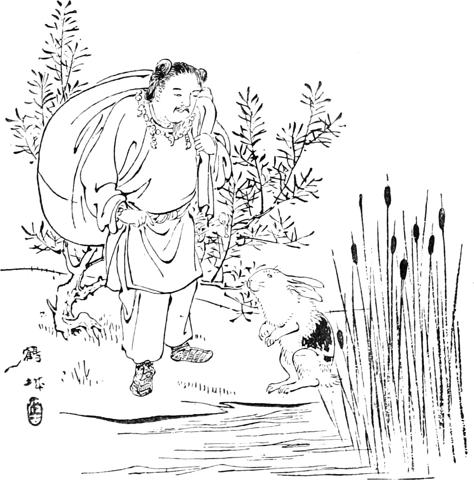
The Izumo kami who healed a skinned hare, survived his own brothers twice, built the land with a tiny god, and ceded it all to Amaterasu's line.
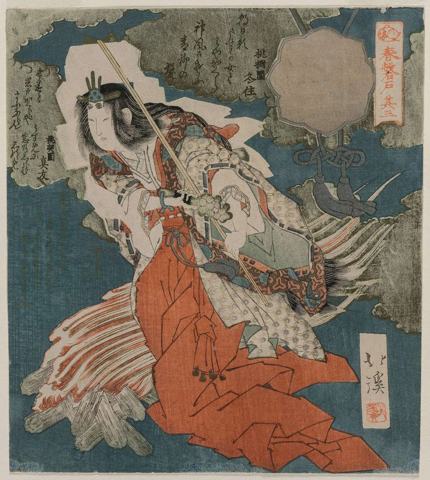
The kami whose bawdy trance dance drew the sun goddess out of hiding, and whose fearless meeting with a road-god gave Japan its oldest ritual dance.
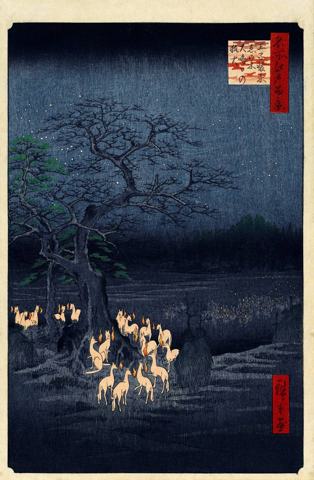
Kami of rice, sake and worldly prosperity, served by white foxes and worshipped at roughly a third of all Japanese shrines.
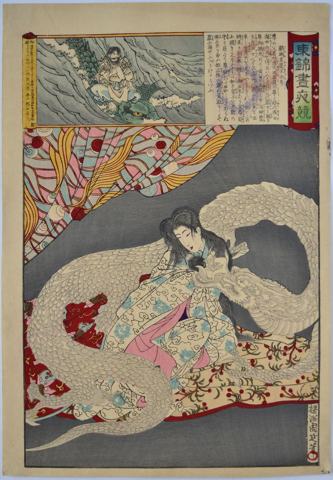
Japan's dragon king of the sea, ruling the palace Ryugu-jo with tide-jewels that command the ocean and a daughter who nearly kept the imperial line undersea.
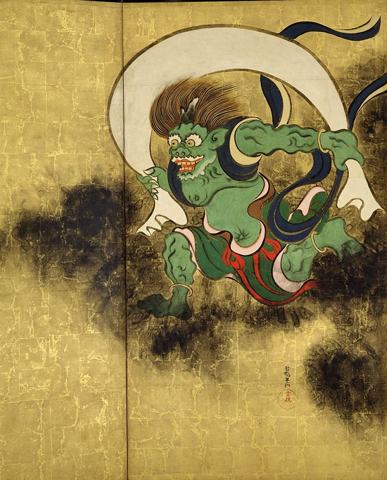
Japan's wind kami — a demon-bodied figure who races across temple screens with a bag of winds over his shoulders, paired with but distinct from Raijin.
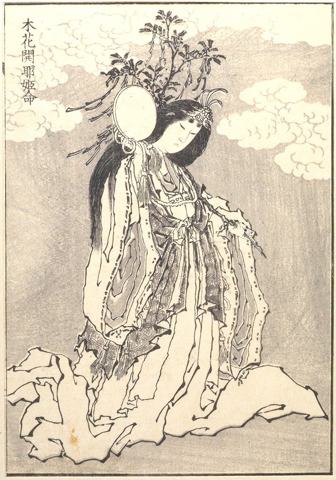
The cherry-blossom princess who married the heavenly grandson, proved her sons' birth by fire, and became the kami worshipped on Mount Fuji.
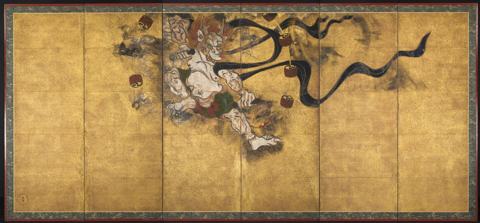
The thunder kami who drums the storm into being — oni-faced, ringed with taiko, and paired in Japanese art with the wind god Fujin.
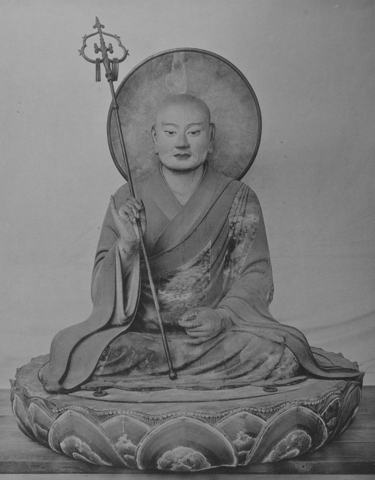
Kami of war, archery and the bow, patron of the samurai and the first kami titled a bodhisattva, worshipped at tens of thousands of shrines.
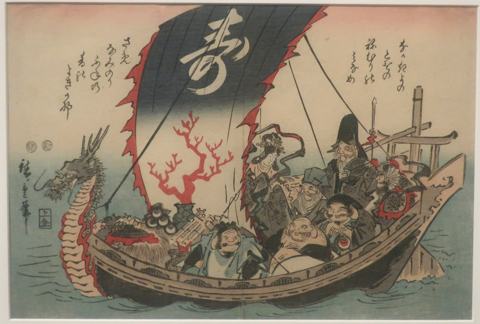
Seven mismatched deities of luck, drawn from native, Buddhist, Hindu and Taoist sources, who ride together on a treasure ship and visit New Year's dreams.
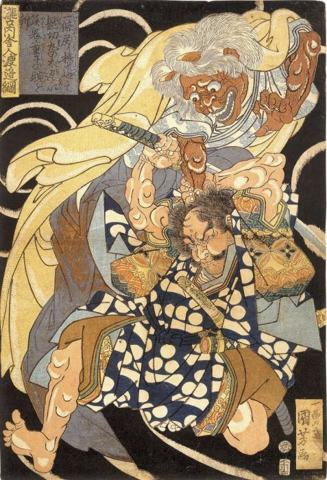
Horned, fanged ogres of Japanese folklore: hell's wardens, mountain bandits and village guardians, driven out with beans every February.
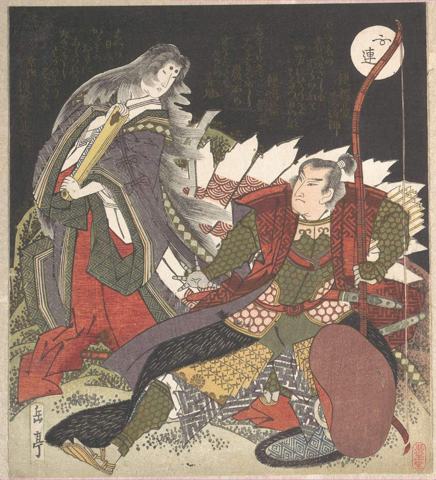
Japan's fox spirits — shapeshifters who gain tails and power with age, feared as deceivers and revered as the messengers of the rice kami Inari.
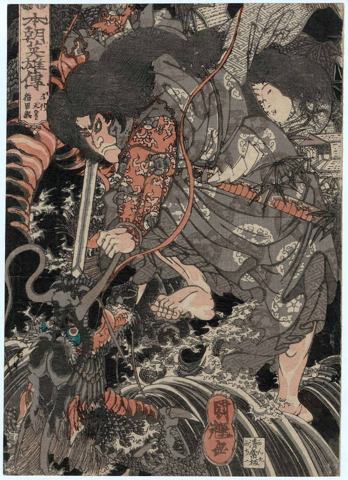
The eight-headed, eight-tailed serpent of Izumo — devourer of maidens, killed drunk by Susanoo, and the source of the imperial sword Kusanagi.
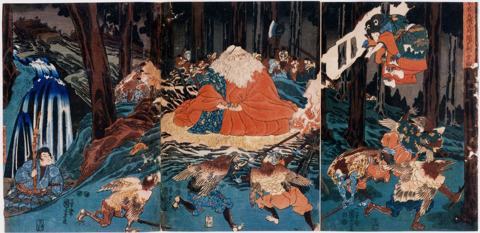
Winged mountain spirits of Japan: crow-beaked tricksters and long-nosed masters of the sword, once Buddhist demons, later guardians of the peaks.
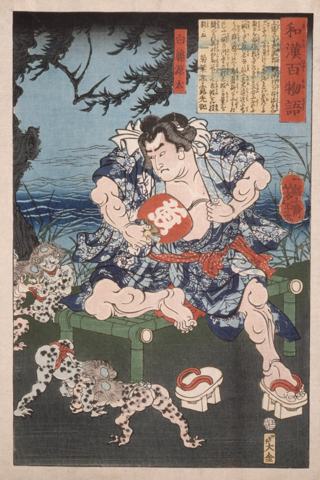
Japan's river-dwelling yokai — beaked and shell-backed, it drowns livestock and challenges travelers to sumo, yet is now a beloved mascot.
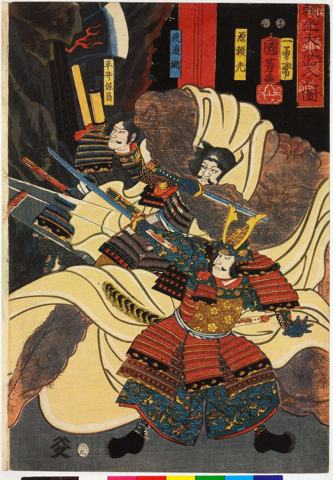
Japan's most famous oni — a demon king who ruled Mount Oe from a stolen palace, until Minamoto no Raiko brought him down with poisoned sake and a sword.
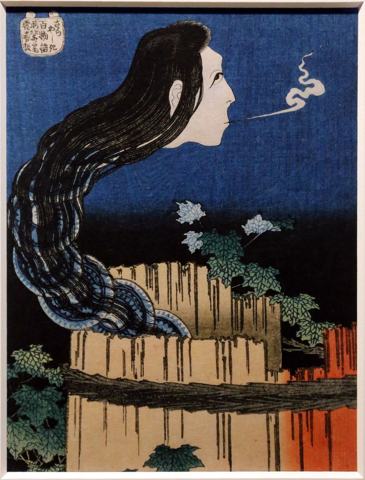
Japan's ghosts of specific dead people, bound by grievance to one place until it is resolved — white-robed, black-haired, and famous through Oiwa and Okiku.
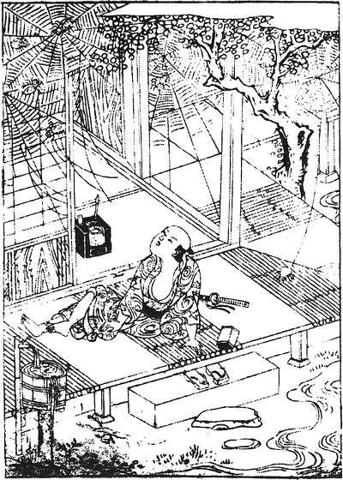
A giant spider of Japanese folklore that takes the shape of a beautiful woman to lure victims into her web, haunting Edo ghost stories and mountain waterfalls.
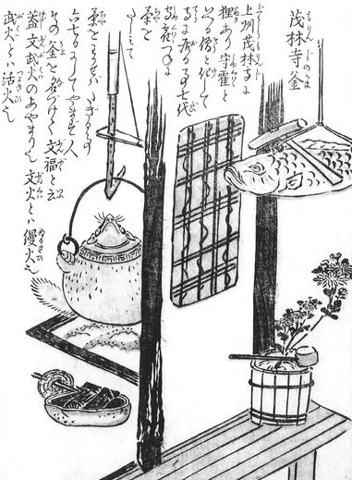
Japan's comic shapeshifter — a pot-bellied raccoon dog that drums on its belly, turns into teakettles, and plays the fool beside the more dangerous kitsune.
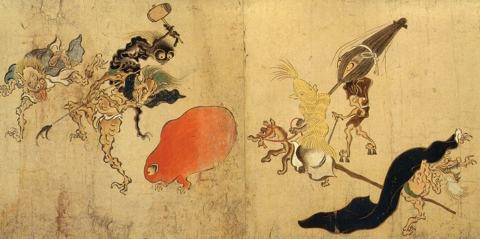
Tools that, discarded near their hundredth year, rise up as spirits in a Muromachi handscroll built to teach a Buddhist lesson about ordinary things.
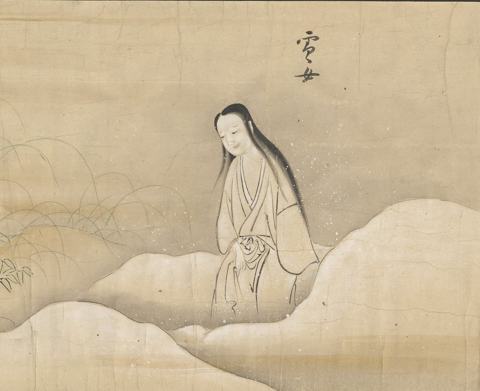
Japan's snow spirit, who freezes travelers on winter nights — known worldwide through Hearn's Kwaidan, though the folklore is far older and less romantic.
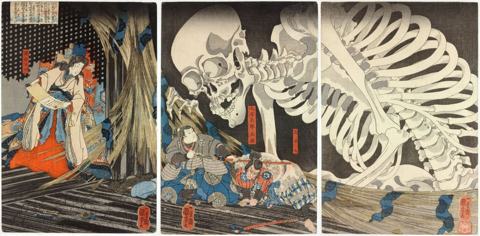
A building-sized skeleton yokai widely presented as ancient folklore, though the figure itself was invented in illustrated books of the 1960s and 70s.
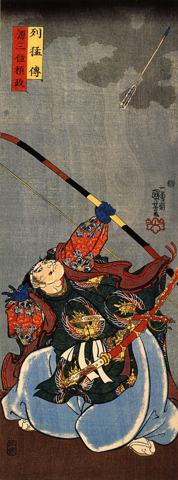
A chimera of monkey, tiger, snake and tanuki that darkened Emperor Konoe's nights in the Tale of the Heike, until archer Minamoto no Yorimasa brought it down.
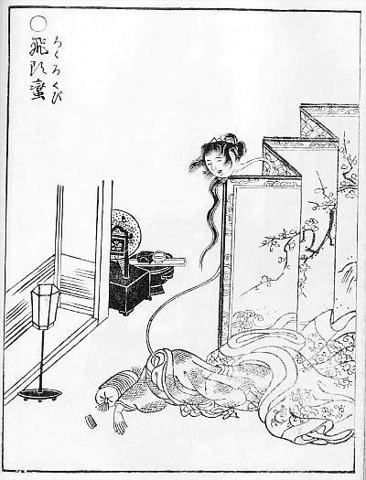
A cursed woman whose neck stretches, or whose head detaches outright while she sleeps: two distinct yokai that Western readers have long treated as one.
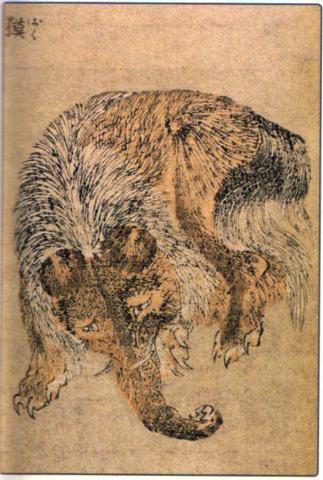
A Chinese-born chimera with an elephant's trunk and a tiger's claws, called on in Japan to eat bad dreams before they can do their damage.
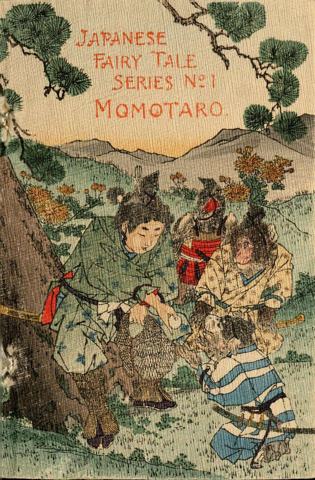
Japan's best-known folk hero — born from a peach and famous for recruiting a dog, a monkey, and a pheasant to raid an island of oni.
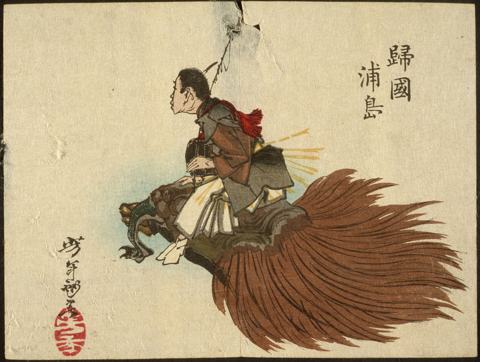
A fisherman rewarded with a journey to a timeless undersea land, who returns home to find centuries have passed and opens the one box he was told to leave shut.
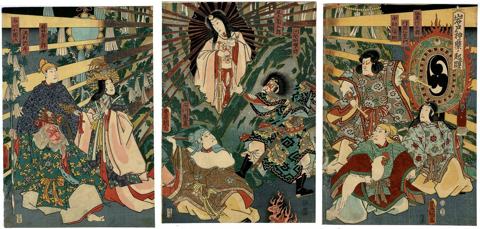
The Plain of High Heaven — where the first kami came into being, where the gods hold council, and from which Amaterasu's line descended to rule the islands.
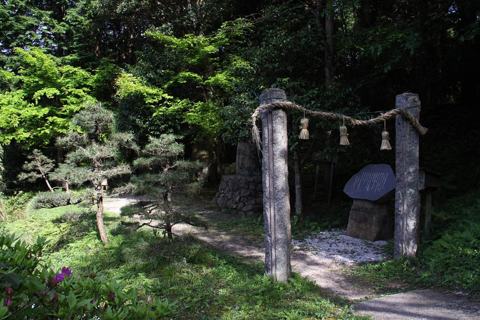
The land of the dead in Japan's oldest myths: a polluted country reached by a slope in Izumo, sealed with a boulder, with no judgment and no return.
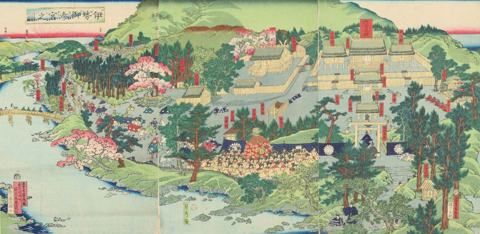
Shinto's holiest site, home to the sun goddess's mirror — rebuilt on an adjacent plot every twenty years so nothing there is ever allowed to age.
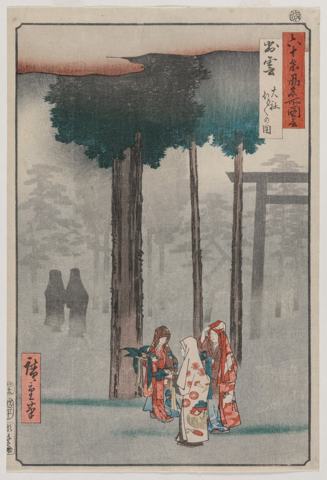
The shrine built, myth says, as the price for the land — where every kami in Japan is believed to gather each autumn, beneath a hall once among Japan's tallest.
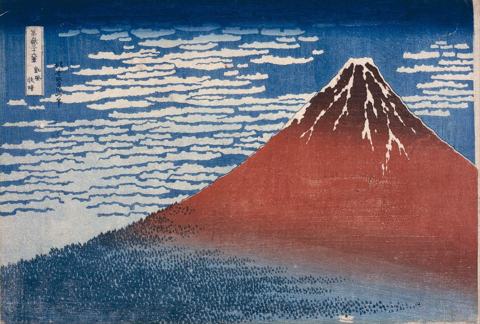
Japan's tallest, most sacred peak, home to a blossom goddess and climbed by pilgrim confraternities for centuries — a UNESCO site for its art, not its geology.
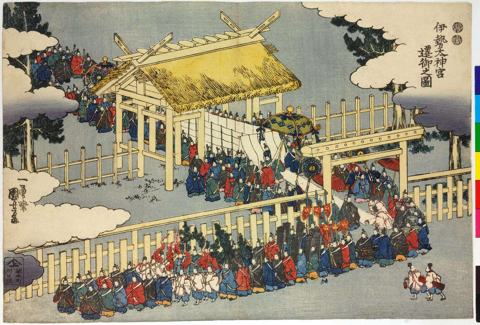
The mirror forged to trick a sun goddess out of hiding, handed down to her earthly heirs, and now kept at Ise, wrapped, unphotographed, and never once unveiled.
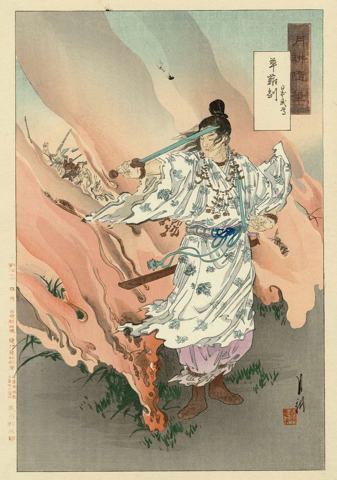
The sword drawn from a serpent's tail and renamed by a burning field — one of Japan's three imperial regalia, kept at Atsuta Jingu and never shown to anyone.
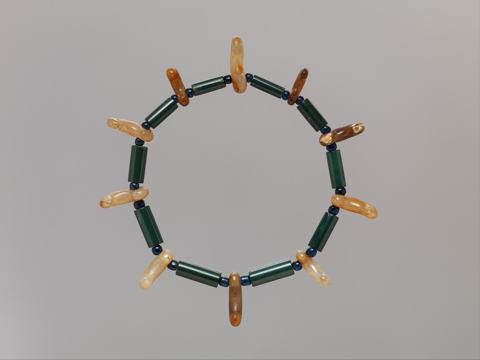
One of Japan's three imperial regalia: a string of curved jewels born at the heavenly rock cave, handed down from Amaterasu, and kept with the emperor unseen.
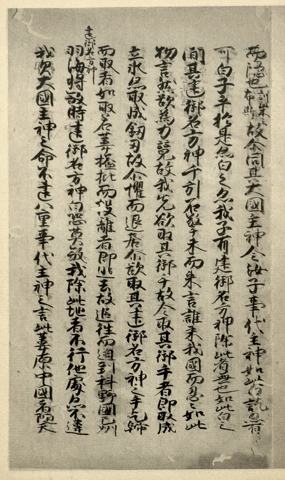
Japan's oldest surviving chronicle, presented to the throne in 712 from one court reciter's memory — the deepest source for the Codex's kami and early emperors.
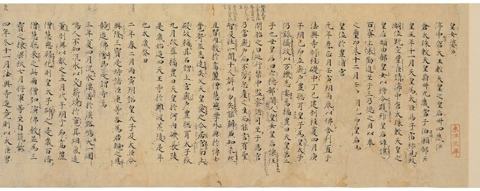
Japan's first official state history, finished in 720 in formal Chinese for a court that wanted its myths and its chronology to impress foreign readers.
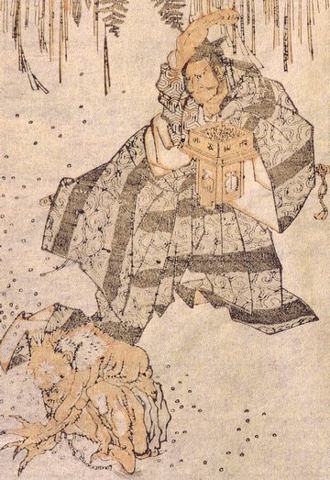
The eve of spring in the old calendar: roasted beans thrown at oni while households shout "demons out, fortune in," descended from a Heian court exorcism.
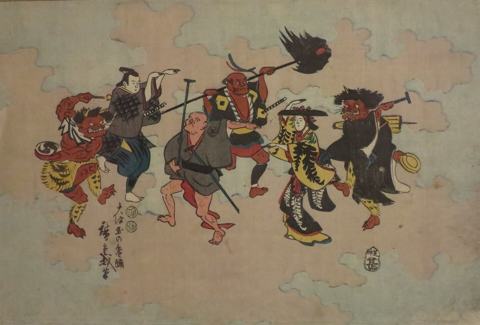
Japan's midsummer festival for the returning dead: welcoming fires, decorated graves, the bon-odori dance, and a Buddhist parable behind all of it.