
Tengu
Winged mountain spirits of Japan: crow-beaked tricksters and long-nosed masters of the sword, once Buddhist demons, later guardians of the peaks.
Ushiwakamaru Training with the Tengu of Mount Kurama, Utagawa Kuniyoshi, 19th century · Public domain · source
A Chinese Dog, a Japanese Bird
The name tengu is written 天狗, "heavenly dog", and comes from the Chinese tiangou, a celestial hound associated with meteors and eclipses. Its first appearance in Japanese is an omen. The Nihon Shoki records that in 637 a great star crossed the sky from east to west with a noise like thunder; while the crowd called it a shooting star or the sound of the earth, a Chinese-trained monk named Somin said it was neither, but the barking of the tengu, whose voice resembles thunder 1,5. The chronicle glosses the characters with a native reading, and nothing about this first tengu is birdlike at all 1,4.
By the Heian period the word had migrated onto something else entirely: a winged, beaked creature of the mountains, kin to the kite and the crow. Michael Dylan Foster notes that this shift is one of the clearer cases in which an imported term was fitted over an existing indigenous belief about mountain spirits rather than importing the creature along with the name 6. How much of the older belief survives underneath is impossible to recover 4,6.
Buddhism's Favourite Adversary
For several centuries the tengu was above all a Buddhist problem. In the tale collections — the Konjaku Monogatarishu devotes a substantial portion of volume 20 to them — tengu abduct monks, possess nuns, disguise themselves as the Buddha to delude the pious, and deceive ascetics into mistaking demonic power for enlightenment 2,4. The offence they punish and embody is pride: a monk of great learning and great arrogance is reborn not in hell but in the tengudo, a realm outside the standard six paths, where he keeps his powers and loses his liberation 4,5.
Haruko Wakabayashi's study of the Tengu zoshi, a set of seven illustrated scrolls dated 1296, shows how sharp an institutional weapon this became. The scrolls depict the monks of the great temples of Nara and Kyoto — and the leaders of the newer Pure Land and Zen movements — as tengu, drawing on the Buddhist concept of ma or Mara, the personification of the passions that obstruct awakening 3,4. To call a rival a tengu was to say that his learning was real and his motives were vanity. The polemic was a live one: the scrolls emerge from the long dispute between Enryakuji and Onjoji, and Wakabayashi argues they should be read as a claim about legitimacy rather than as a bestiary 4.
The same logic produced the tradition of the vengeful sovereign turned tengu. Emperor Sutoku, who died in exile after the Hogen disturbance of 1156, was said to have become a great tengu and the source of the calamities that followed; the Taiheiki stages a whole conclave of tengu made from the angry dead of court and cloister 4,5.
Great Tengu and Crow Tengu
Popular tradition eventually sorted them into ranks. The karasu-tengu or kotengu is the older type and the more animal: crow's head, hooked beak, black feathers, claws, a small body and a bad temper. The daitengu or konoha-tengu is the leader — red-faced, with a long straight nose in place of the beak, dressed in the robes, pom-pommed sash and tiny black tokin cap of a yamabushi mountain ascetic, carrying a feather fan (ha-uchiwa) that raises wind and standing on one-toothed geta 5,6.
The long nose is a late development. It appears in quantity only from the Muromachi period onward, and the usual explanation connects it to the mask tradition and possibly to Sarutahiko, the long-nosed kami who guides the heavenly descent in the chronicles; the substitution is generally treated as gradual and imperfectly documented 5,6. Individual great tengu acquired names, mountains and hierarchies, catalogued in Edo-period compendia: Sojobo of Kurama at the head, with Tarobo of Mount Atago, Jirobo of Hira and dozens more assigned to peaks the length of the country 5,6.
Ushiwakamaru and the Sword
The single most reproduced tengu story is the training of Ushiwakamaru. The boy who would become Minamoto no Yoshitsune, hidden in the temple on Mount Kurama north of Kyoto, is said to have slipped out at night to be taught swordsmanship by Sojobo and his tengu — which is how a slight youth came to defeat the giant Benkei and to fight, in the war tales, with impossible agility 5,6. The Noh play Kurama-tengu dramatises the meeting, and the encounter became one of the standard subjects of ukiyo-e, as in the Kuniyoshi print above.
That story marks the turn in the tengu's reputation. A creature invented to represent spiritual arrogance became, over the medieval and early modern periods, a teacher — the keeper of an esoteric martial and ascetic knowledge available only to those willing to go up the mountain for it 4,6. Whole schools of swordsmanship claimed tengu transmission.
Mountains, Ascetics and Abductions
The tengu's real home is Shugendo, the mountain ascetic tradition. Tengu dress like yamabushi because they occupy the same terrain and the same ambiguous status: half-holy, half-wild, powerful and outside the temple hierarchy 6,7. Carmen Blacker's study of Japanese shamanic practice treats the tengu as the mountain's own guardian and gatekeeper, the being that punishes trespass and rewards discipline 7.
Folk belief credited them with a catalogue of mountain phenomena. Tengu-daoshi is the sound of a great tree falling where no tree has fallen; tengu-tsubute is a shower of stones from empty air; tengu-warai is laughter from an empty slope. Above all there is kamikakushi, "hidden by the kami" — the disappearance of a child or a traveller, sometimes returned days later dazed and speaking of flight 5,6. Tengu were also blamed for temple fires, and shrines and temples on tengu mountains — Kurama, Atago, and Mount Takao's Yakuoin, where great bronze tengu stand at the gate — still keep their images and receive offerings 5,6.
The ambivalence persisted into the historical record in curious ways: M.W. de Visser's 1908 survey notes official notices posted on mountains during the Tokugawa period requiring the tengu to remove themselves temporarily so that a shogunal party could pass in safety, an anecdote that says a good deal about how seriously the belief was still taken 5.
Today the tengu is closer to a mascot than a menace, its red long-nosed mask sold at festivals and mountain shrines across Japan. The trajectory is the reverse of the oni's: where the demon was domesticated from the outside in, the tengu was rehabilitated from adversary to protector, and much of the older Buddhist hostility has simply been forgotten 4,6.
Continue Exploring
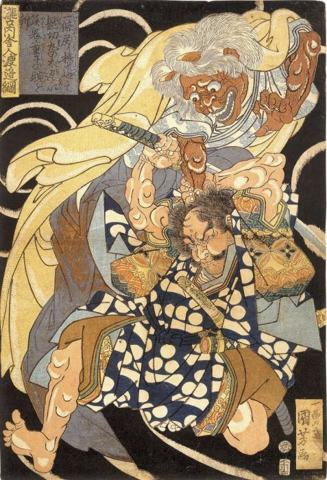
Horned, fanged ogres of Japanese folklore: hell's wardens, mountain bandits and village guardians, driven out with beans every February.
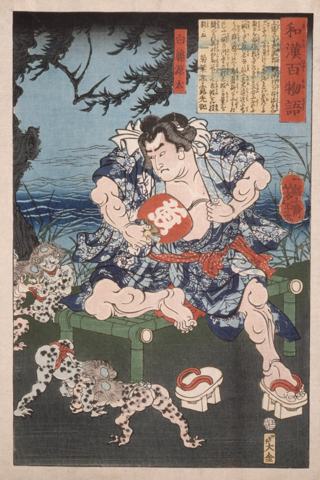
Japan's river-dwelling yokai — beaked and shell-backed, it drowns livestock and challenges travelers to sumo, yet is now a beloved mascot.
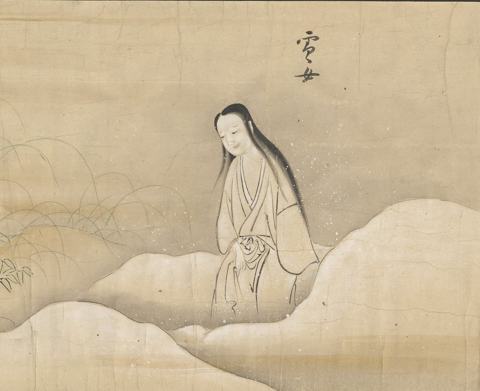
Japan's snow spirit, who freezes travelers on winter nights — known worldwide through Hearn's Kwaidan, though the folklore is far older and less romantic.
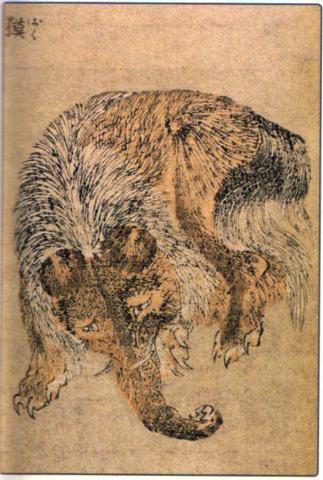
A Chinese-born chimera with an elephant's trunk and a tiger's claws, called on in Japan to eat bad dreams before they can do their damage.
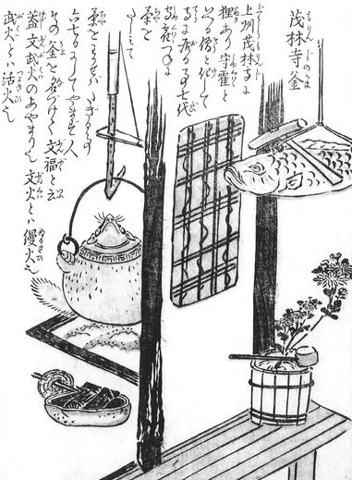
Japan's comic shapeshifter — a pot-bellied raccoon dog that drums on its belly, turns into teakettles, and plays the fool beside the more dangerous kitsune.
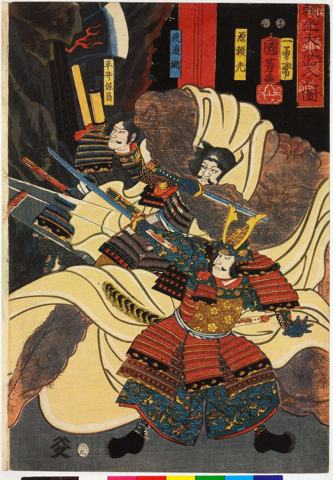
Japan's most famous oni — a demon king who ruled Mount Oe from a stolen palace, until Minamoto no Raiko brought him down with poisoned sake and a sword.
Sources & Further Reading
- 1.Nihon Shoki (Chronicles of Japan, 720) — the "heavenly dog" omen of 637, in W.G. Aston (trans.), Nihongi. Kegan Paul, 1896.
- 2.Konjaku Monogatarishu (Tales of Times Now Past, c. 1120) — the tengu tales of volume 20.
- 3.Tengu zoshi emaki (The Seven Tengu Scrolls, 1296).
- 4.Wakabayashi, Haruko. The Seven Tengu Scrolls — Evil and the Rhetoric of Legitimacy in Medieval Japanese Buddhism. University of Hawai'i Press, 2012.
- 5.de Visser, M.W. "The Tengu." Transactions of the Asiatic Society of Japan 36, part 2 (1908), 25-99.
- 6.Foster, Michael Dylan. The Book of Yokai — Mysterious Creatures of Japanese Folklore. University of California Press, 2015.
- 7.Blacker, Carmen. The Catalpa Bow — A Study of Shamanistic Practices in Japan. George Allen & Unwin, 1975.
Spot an error or have a source to suggest? Write to info@viseterna.com. We cite primary sources and modern scholarship, and we correct fast.