
Inari (Inari Okami)
Kami of rice, sake and worldly prosperity, served by white foxes and worshipped at roughly a third of all Japanese shrines.
New Year's Eve Foxfires at the Changing Tree, Oji, Utagawa Hiroshige, 1857 (Brooklyn Museum) · Public domain · source
The Most Worshipped Kami in Japan
By almost any count, Inari has more shrines than any other deity in Japan. The figure usually quoted is around thirty thousand, roughly a third of the country's registered shrines, and that tally excludes the uncountable small hokora on rooftops, in factory yards, beside fields and inside company headquarters — the private altars that make Inari worship difficult to measure at all 3,6. The head shrine is Fushimi Inari Taisha, on the southeastern edge of Kyoto, whose tunnels of vermilion torii climbing Mount Inari are among the most photographed places in Japan; each gate is a donation, most of them from businesses 3,6.
The name is generally derived from ine-nari or ina-ri, "rice growing" or "rice load", and Inari's oldest and most durable identity is as the kami who makes the crop come in 3,5. Shrine tradition dates the founding to the fourth year of Wado, 711, when the deity is said to have descended on the mountain; a surviving fragment of the Yamashiro no Kuni Fudoki tells the founding legend in which a wealthy man of the immigrant Hata clan uses a rice-cake as an archery target, the cake turns into a white bird, and where it settles rice grows 2,6. Whether the fudoki fragment preserves an eighth-century tradition or a later gloss on the shrine's origins is not settled 3,5.
Who Inari Is
Inari is a name rather than a fixed person, and this is the single most important thing to understand about the cult. In shrine documents the deity is identified with Uka-no-Mitama-no-Kami, a grain kami listed in the Kojiki among the children of Susanoo, and at Fushimi with a group of five kami enshrined together rather than one 1,6. Elsewhere Inari is identified with Ukemochi, with Toyouke of the Outer Shrine at Ise, or with the Buddhist figure Dakiniten 3,5.
The iconography is correspondingly unstable. Karen Smyers, whose fieldwork among Inari priests and lay devotees is the standard study in English, found the deity pictured as a bearded old man carrying a sheaf of rice, as a young female food goddess, as an androgynous bodhisattva riding a white fox, and as a formless presence to which no image should be given at all — sometimes by informants at the same shrine 3. She argues that this multiplicity is not confusion to be tidied away but the actual structure of the cult: Inari is the deity of the personal, negotiated relationship, and each worshipper's Inari is legitimately their own 3,4. Older scholarship that tried to fix a single "original" Inari behind the variants has largely been abandoned 3,5.
The Foxes
Inari's messengers are foxes — kitsune — and they are messengers, not the god. Priests are firm on the distinction; popular usage collapses it constantly, and has done so for centuries 3,7. The stone foxes flanking an Inari shrine are white, the colour of the invisible and auspicious, and they usually carry something in the mouth: a key (to the rice granary), a jewel, a scroll, or a sheaf of grain 3,6.
How the fox attached itself to a rice kami is debated. Foxes hunt the rodents that eat the crop and appear in the fields at planting and harvest; the medieval reading of kitsune against the older honorific miketsu ("august food") for the grain deity may have encouraged the association; and the Buddhist deity Dakiniten, imported from tantric sources and depicted riding a fox, was formally identified with Inari from at least the medieval period 3,5. Bernard Faure's work on Dakiniten stresses how much of Inari's darker, more transactional reputation — the deity who grants sudden wealth and exacts a price — comes from that Buddhist stratum rather than from the agricultural one 5.
The kitsune of folklore, shapeshifters who possess people and repay debts, overlap with Inari's foxes without being identical to them. Lafcadio Hearn, writing in 1894 from Matsue, recorded the two as thoroughly entangled in ordinary belief: the fox that guards the shrine and the fox that bewitches travellers were, for his neighbours, the same kind of creature 7.
From Rice to Business
Inari's portfolio expanded with the Japanese economy. The kami of the harvest became the kami of sake (rice again), then of smiths and merchants, then of any enterprise that needed to prosper. A famous legend has the Heian swordsmith Sanjo Munechika assisted at the forge by an Inari fox, and the resulting blade named Ko-gitsune-maru, "little fox" 3,5. By the Edo period Inari shrines stood in every quarter of the city — a saying of the time listed Inari shrines, along with fires and dog dung, among the things Edo had too many of 3,7.
That trajectory continued into the industrial era without a break. Major corporations maintain Inari shrines on their premises and send delegations to Fushimi; the offerings are for contracts, sales and safe operations rather than for rain 3,4. The characteristic Inari offering is abura-age, deep-fried tofu, said to be the foxes' favourite, which is why rice packed into a sweetened pouch of it is called inarizushi 3,6.
The great annual festival is Hatsu-uma, the first horse day of the second month, commemorating the traditional date of the descent on Mount Inari; at Fushimi it fills the mountain paths 4,6. The mountain itself supports a distinctive private devotion: thousands of small stone otsuka set up by individuals along the trails, each naming a personally received form of Inari. Smyers describes climbing it as a pilgrimage with no fixed route, in which the worshipper's own path is part of the point 4.
Reading Inari
Two things make Inari unusual among major kami. The first is that Inari has no myth — no birth narrative, no cycle of exploits, nothing comparable to the stories told of Amaterasu or Susanoo. What exists instead is an enormous body of local legend, personal revelation and shrine foundation story 3,4. The second is that Inari is worshipped in Buddhist temples as readily as in Shinto shrines: Toyokawa Inari in Aichi is a Soto Zen temple, and the Meiji separation of kami and buddhas cut through the Inari cult without ever managing to divide it cleanly 3,5. For historians of Japanese religion that stubborn hybridity is precisely what makes Inari worth studying.
Continue Exploring
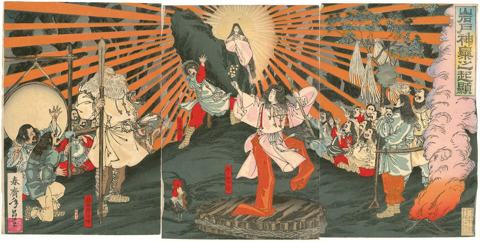
The sun goddess who shines in heaven — ruler of the Plain of High Heaven, ancestor of Japan's imperial line, and the kami enshrined at Ise.
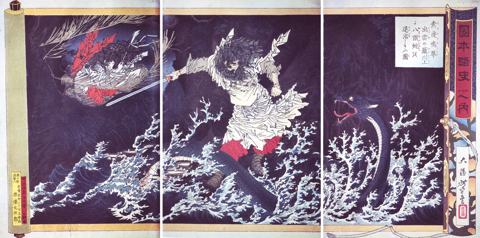
The raging kami of sea and storm — expelled from heaven for wrecking his sister's fields, then redeemed in Izumo by slaying an eight-headed serpent.
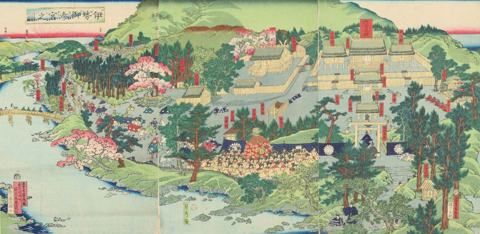
Shinto's holiest site, home to the sun goddess's mirror — rebuilt on an adjacent plot every twenty years so nothing there is ever allowed to age.
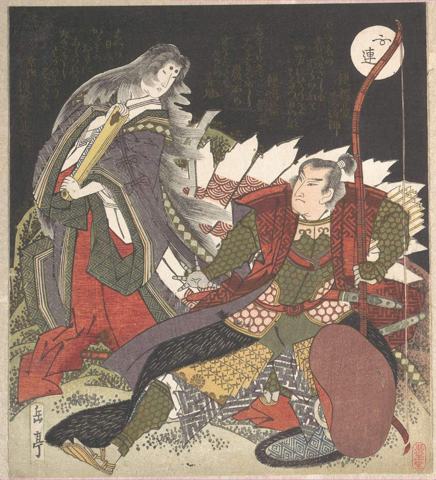
Japan's fox spirits — shapeshifters who gain tails and power with age, feared as deceivers and revered as the messengers of the rice kami Inari.
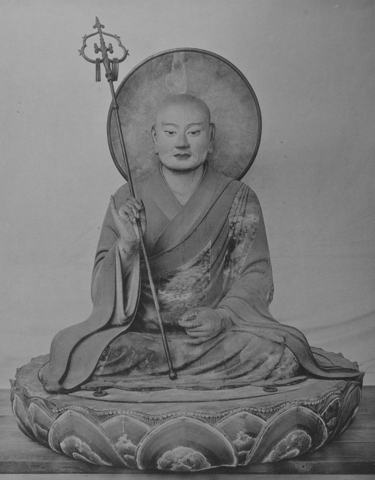
Kami of war, archery and the bow, patron of the samurai and the first kami titled a bodhisattva, worshipped at tens of thousands of shrines.
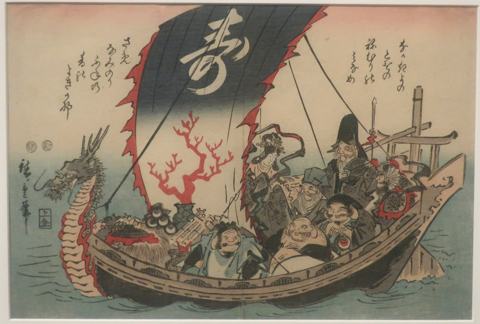
Seven mismatched deities of luck, drawn from native, Buddhist, Hindu and Taoist sources, who ride together on a treasure ship and visit New Year's dreams.
Sources & Further Reading
- 1.Kojiki (Records of Ancient Matters, 712) — Uka-no-Mitama among the offspring of Susanoo; trans. Donald L. Philippi, University of Tokyo Press, 1968.
- 2.Yamashiro no Kuni Fudoki (surviving fragment, 8th century) — the Hata clan and the founding of the Inari shrine in 711.
- 3.Smyers, Karen A. The Fox and the Jewel — Shared and Private Meanings in Contemporary Japanese Inari Worship. University of Hawai'i Press, 1999.
- 4.Smyers, Karen A. "Inari Pilgrimage — Following One's Own Path on the Mountain." Japanese Journal of Religious Studies 24, no. 3-4 (1997).
- 5.Faure, Bernard. Protectors and Predators — Gods of Medieval Japan, Volume 2. University of Hawai'i Press, 2016.
- 6.Fushimi Inari Taisha — official shrine history, Kyoto.
- 7.Hearn, Lafcadio. Glimpses of Unfamiliar Japan (1894) — the chapter "Kitsune", on the nineteenth-century Inari cult.
Spot an error or have a source to suggest? Write to info@viseterna.com. We cite primary sources and modern scholarship, and we correct fast.