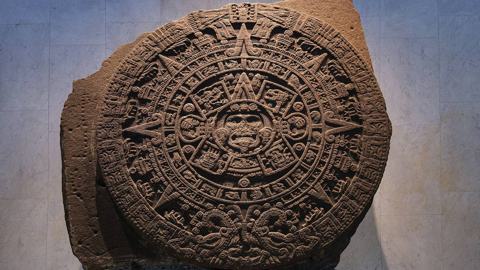
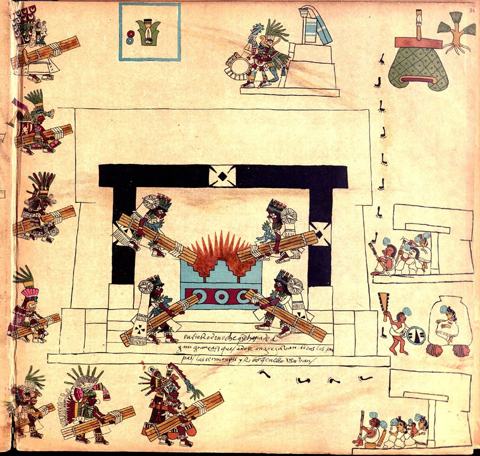
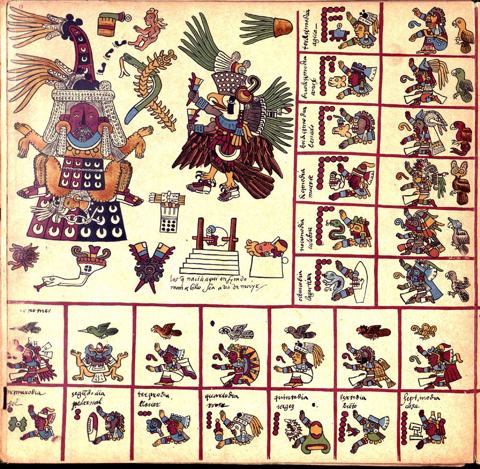
The deities of the Mexica — sun, rain, and feathered serpent — who demanded sacrifice to sustain the age, from the Florentine Codex.
34 entries in 9 chapters
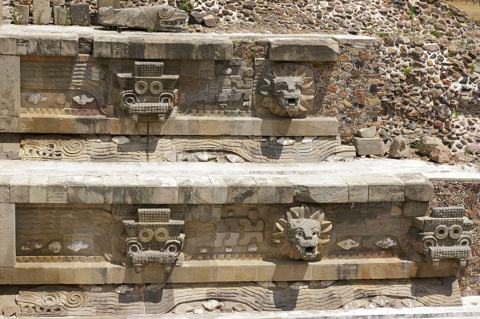
The Feathered Serpent — god of wind, learning, and creation, who stole humanity's bones from the land of the dead and gave people maize.
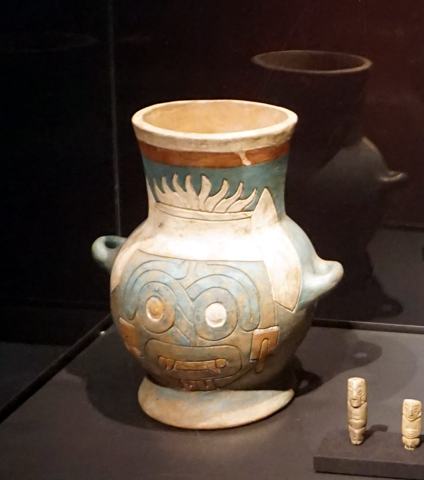
The goggle-eyed rain god who makes things sprout — giver of the storms that feed the maize, keeper of a green paradise, and taker of children.
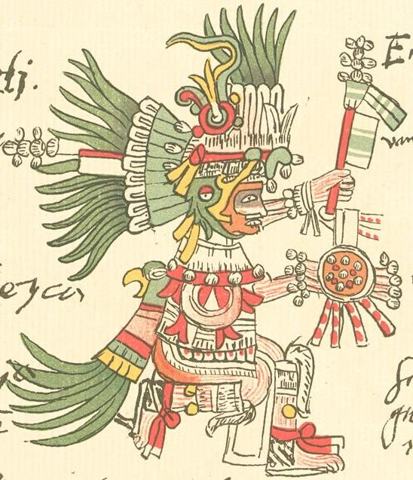
Hummingbird of the Left — the Mexica sun-and-war god, born fully armed on Serpent Mountain and enthroned atop the Great Temple of Tenochtitlan.
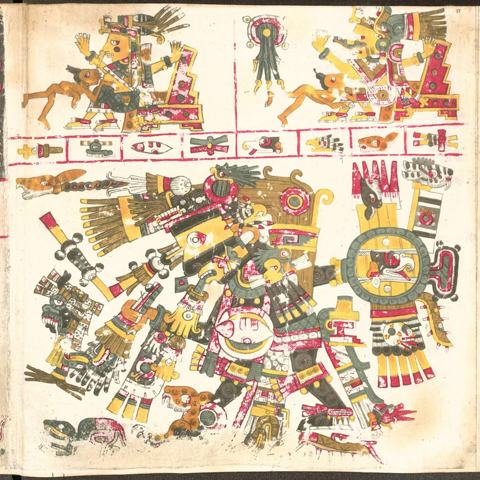
The Smoking Mirror — god of night, sorcery, kingship and fate, whose obsidian glass shows what men do in the dark and who owns them all as slaves.
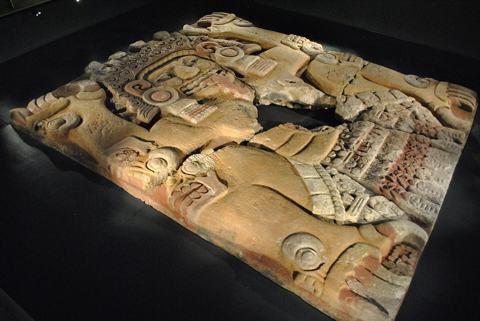
The crocodilian earth deity torn in two to make sky and ground — and the twelve-ton painted monolith of her unearthed at the Templo Mayor in 2006.
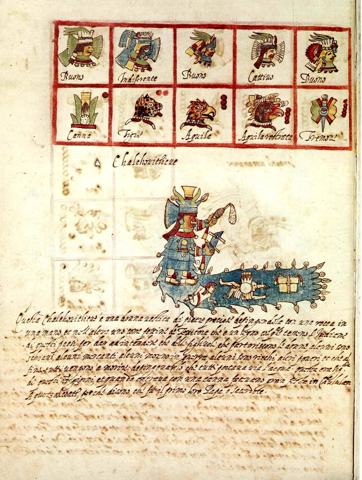
Tlaloc's consort and goddess of lakes and rivers, who ruled the Fourth Sun that ended in flood, and whom midwives invoked to bathe every newborn child.
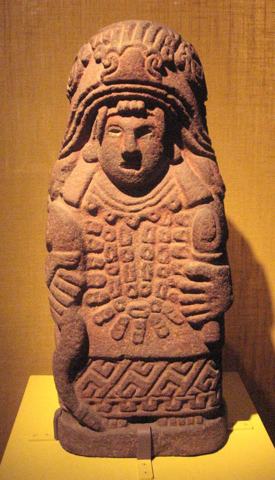
The Aztec goddess of childbirth and earth who helped shape humanity, lent her name to Tenochtitlan's second-in-command, and wept an omen before the conquest.
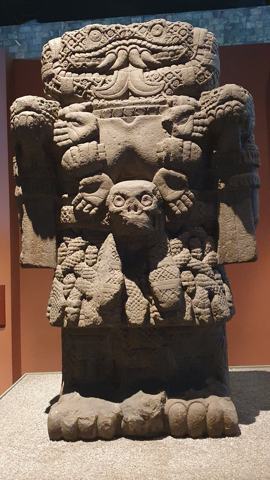
She of the Serpent Skirt — the Mexica earth mother who conceived Huitzilopochtli from a ball of feathers, and the colossal monolith that carries her name.
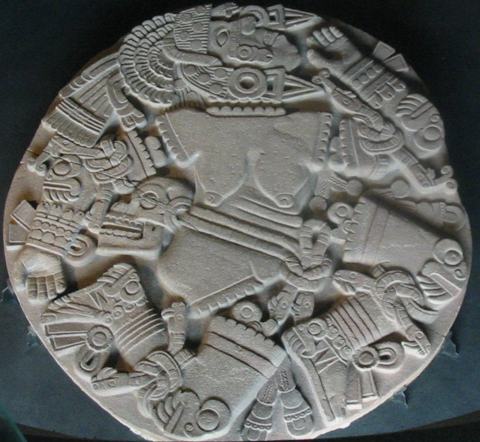
The dismembered sister of Huitzilopochtli, often read as the moon — and the carved disc whose discovery in 1978 uncovered the Templo Mayor itself.
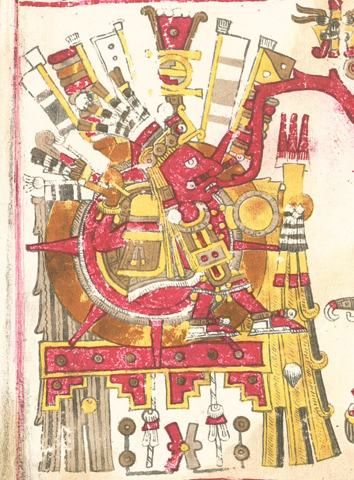
The Aztec sun of the present age, born from a beggar-god's leap into fire and kept moving only by the daily payment of human hearts and blood.
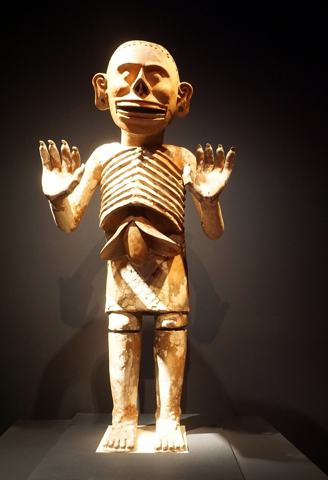
Lord of the Place of the Dead — the skeletal ruler of the ninefold underworld, keeper of humanity's bones and destination of everyone who dies ordinarily.
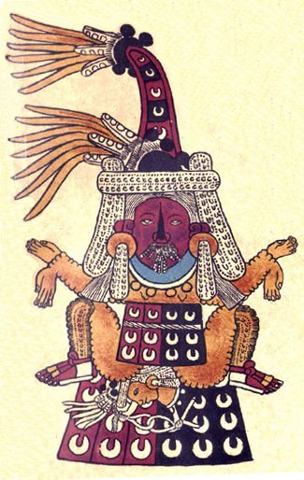
The Aztec goddess of lust and vice who is also the goddess of confession — the one being who can absorb a person's wrongdoing and leave them clean.
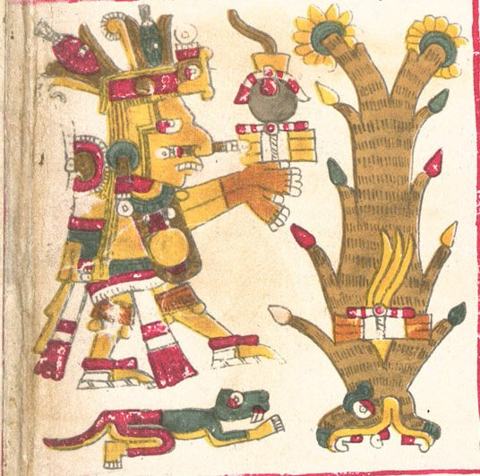
The Aztec maize god, born of two rival colonial traditions and honored at both the spring planting and the harvest festival that bracket his short green life.
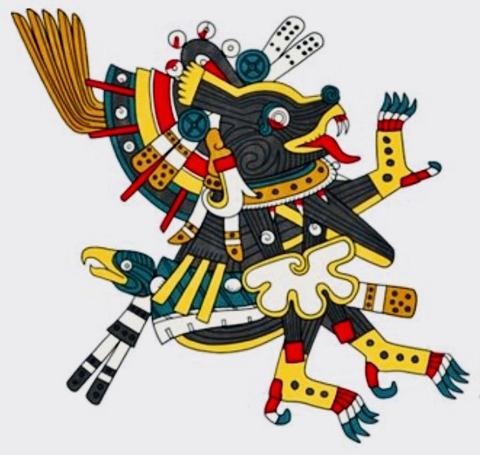
The dog-headed twin of Quetzalcoatl — evening star, guide of the dead through Mictlan, and the shapeshifter whose last disguise was the axolotl.
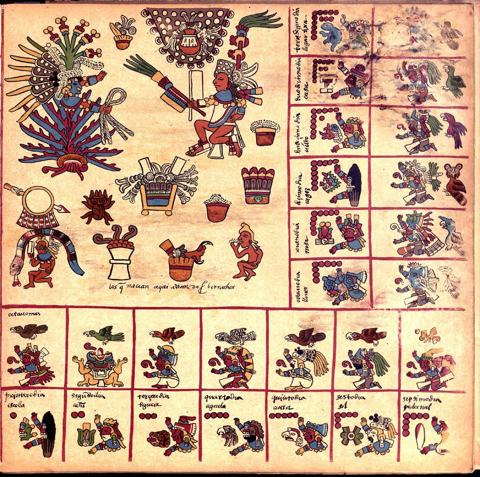
The goddess torn apart and buried to grow the first maguey plant — mother of pulque and of the four hundred rabbit gods of drunkenness.
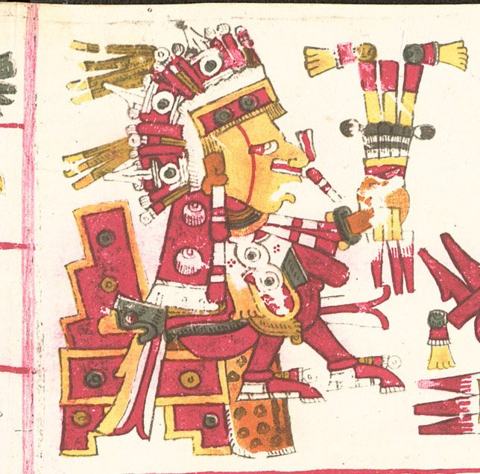
Our Lord the Flayed One — the Mesoamerican god of spring, seed and renewal, whose priests wore the skins of sacrificial victims for twenty days.
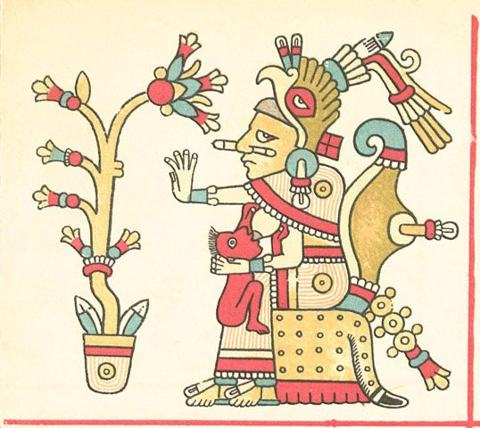
The Aztec goddess of beauty, love, and the household arts — patroness of weavers and courtesans, married to Tlaloc until Tezcatlipoca took her for himself.
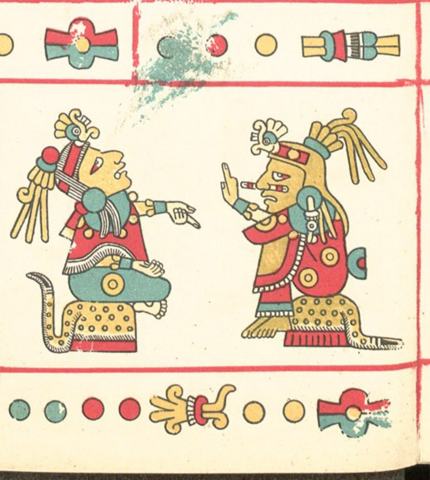
The "supreme dual god" of Leon-Portilla's Aztec philosophy, throned in Omeyocan — and the later critique that the god was substantially his own invention.
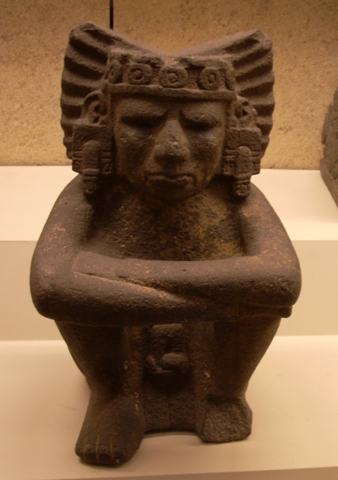
The Aztec fire god of the hearth and the ruling year, whose New Fire ceremony every 52 years kept the world from ending in darkness.
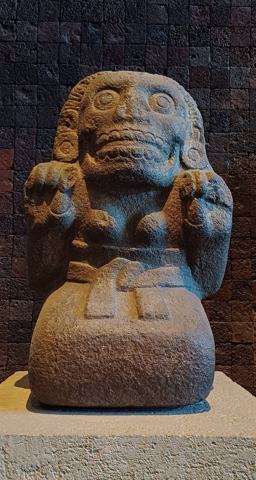
Deified spirits of women who died in childbirth, honored as fallen warriors by day and feared as child-stealing ghosts on certain nights.
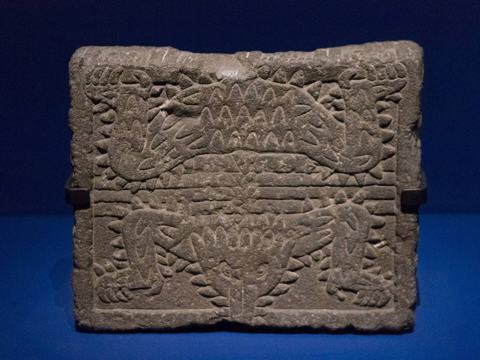
The primordial crocodilian monster torn apart to make earth and sky, and the creature whose name opens every 260-day count in the Aztec calendar.
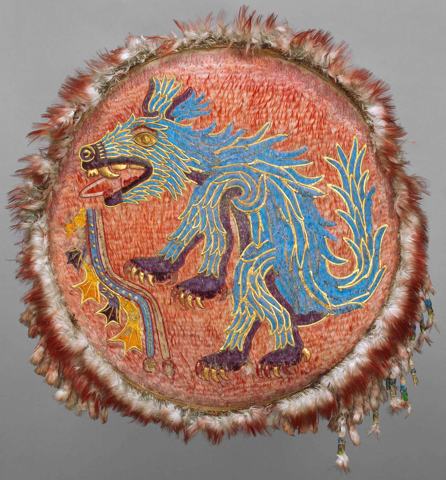
A small, dog-sized water beast with a hand at the end of its tail, said to drown swimmers and eat their eyes, nails, and teeth.
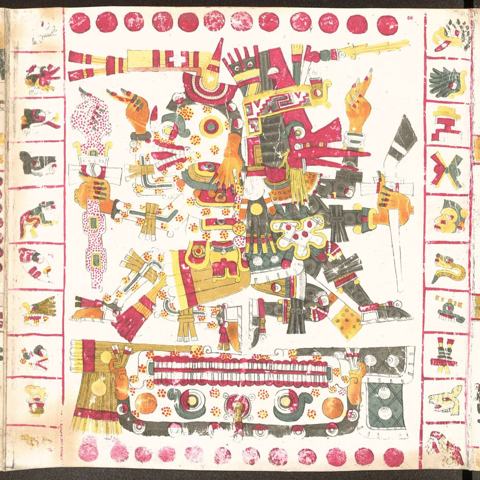
The Place of the Dead — a ninefold underworld reached by a four-year journey, where the ordinary dead arrive at last and simply cease.
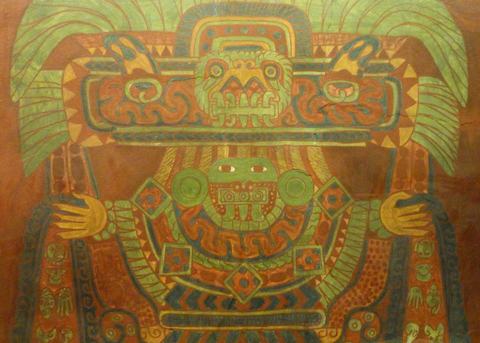
The rain god's paradise of unfailing summer, reserved for those the water took — and the name modern scholars gave a debated mural at Teotihuacan.
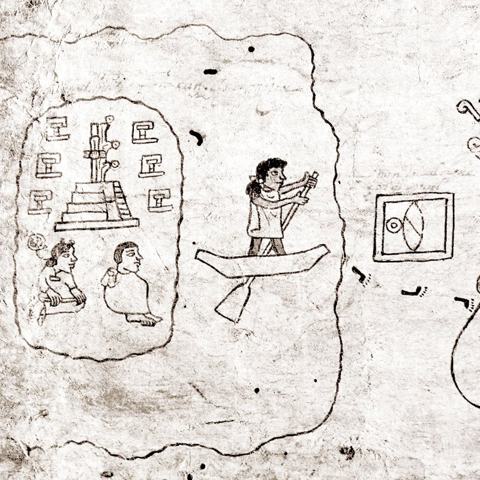
The island homeland the Mexica claimed to have left behind — a founding-migration legend whose real location no one has ever settled.
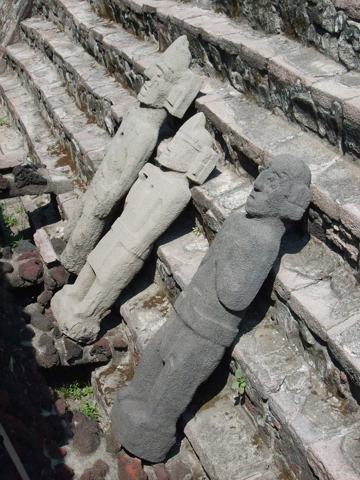
Tenochtitlan's twin pyramid to Huitzilopochtli and Tlaloc, demolished in 1521 and lost until 1978, when electrical workers struck the Coyolxauhqui stone.
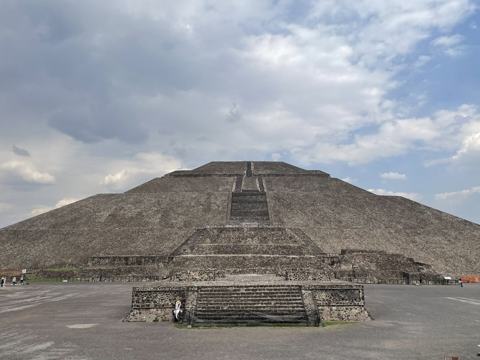
A vast city already ancient when the Aztecs found it, mythologised by them as the place where the gods sacrificed themselves to make the Fifth Sun.
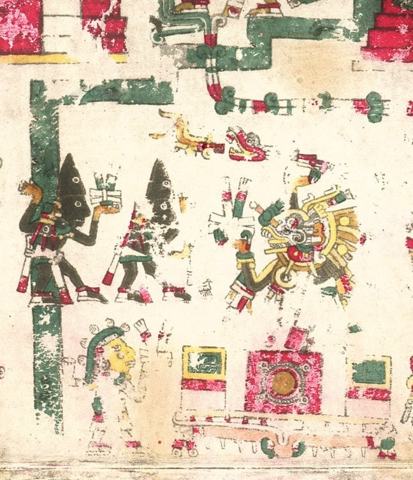
A pre-conquest screenfold of gods and days, painted for diviners to read fate — one of the few Mexican books that survived the conquest untouched.
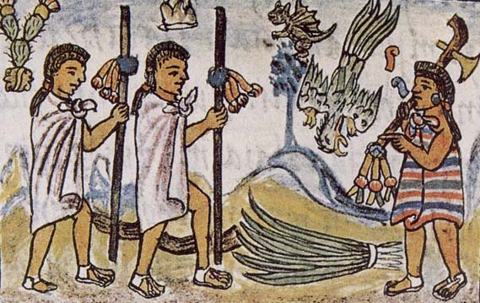
The 16th-century Nahuatl-Spanish encyclopedia of Aztec life and gods, compiled by a friar with Nahua scholars — the single richest source on Mexica myth.
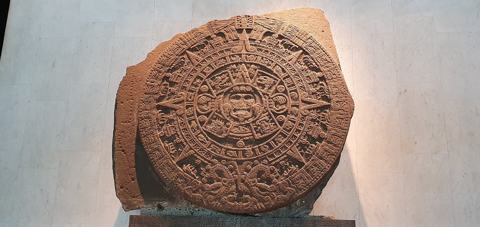
The Aztec myth of four ruined world-ages before this one, each ended by its own catastrophe, in an order and cast of gods the sources don't agree on.
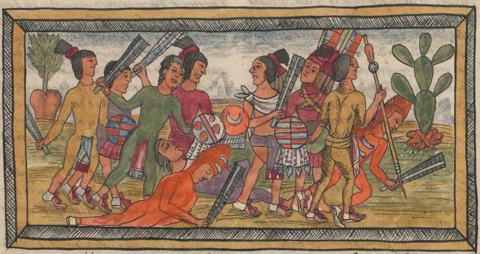
Ritualized battles between the Aztec Triple Alliance and its nearest unconquered neighbors, fought to take captives — and whose real purpose is still disputed.