
Mayahuel (Aztec Goddess of Maguey and Pulque)
The goddess torn apart and buried to grow the first maguey plant — mother of pulque and of the four hundred rabbit gods of drunkenness.
Trecena of the maguey and pulque deities, Codex Borbonicus, page 8, Aztec, early 16th century (Loubat facsimile edition, 1899) · Public domain · source
Found Growing in a Tree
Mayahuel begins her one major myth as a captive rather than a goddess. She lived in the sky, the Historia de los Mexicanos por sus pinturas and later tellings agree, guarded by her grandmother — one of the Tzitzimime, the fanged star-demons who threaten to descend and devour humankind if the sun ever fails 1,4. Quetzalcoatl, in his wind aspect as Ehecatl, saw her, fell for her, and carried her down to earth, where the two of them, to hide from the grandmother's pursuit, transformed themselves into a single tree with two great branches — one Ehecatl, one Mayahuel 1.
Torn Apart, Planted, and Reborn
It did not work. The grandmother found the tree, recognized her granddaughter's branch, broke it off, and gave the pieces to the other star-demons to devour 1. When the danger passed, Ehecatl returned to his own shape, gathered what remained of Mayahuel's bones, and buried them in the earth. From that grave grew the first maguey, the agave plant whose thick, spined leaves and sweet sap would come to sit near the center of central Mexican life 1,4. It is a creation myth built, like several Mexica origin stories, on a violent death repurposed into something that sustains the living.
The Plant That Fed and Clothed a People
The maguey Mayahuel became was not a minor crop. Its long fibers, ixtle, were spun into cloth, cord, and sandals; its sharp thorns served as sewing needles and as the instruments of ritual bloodletting; its dried leaves thatched roofs, and its roasted heart provided food in lean seasons 2,5. Most importantly, the sap collected from a matured plant's hollowed core — aguamiel, "honey water" — could be fermented into pulque, called octli in Nahuatl, the principal alcoholic drink of central Mexico long before and after the Spanish conquest 2,4. Sahagun's informants describe the plant's preparation and uses in enough technical detail that Book 10 of the Florentine Codex reads, in places, almost like an agricultural manual 2.
Mother of Four Hundred Rabbits
Pulque had its own crowded pantheon, and Mayahuel stood at its head as mother of the Centzon Totochtin, the "Four Hundred Rabbits" — centzon being a Nahuatl way of saying "countless" rather than a literal figure, the same counting convention behind the four hundred brothers of Coyolxauhqui 4,6. Each of these minor gods was associated with a different social effect or stage of drunkenness, from mild cheer to violence to weeping, and their animal form linked them to the rabbit's established association with pulque and excess in central Mexican thought 4. The trecena of the ritual calendar that Mayahuel presides over is painted in the Codex Borbonicus with exactly this company around her: the maguey plant itself, vessels of pulque, and a row of rabbit-headed day-lords sharing the page 3. Later retellings, drawing out the maternal image, describe Mayahuel with four hundred breasts to nurse them all; the earliest sources credit her simply as their mother without dwelling on the anatomy, and the multiplied-breast image should be read as a vivid elaboration rather than an attested detail of the original myth 4.
Patecatl and the Chemistry of Pulque
Mayahuel's consort in this second family is usually named as Patecatl, god of the ocpatli root added to fermenting maguey sap to strengthen it — a recognition, built into the mythology, that pulque-making was a genuine craft with real technique behind it, not simple spontaneous fermentation 4,6. Together the two preside over a drink that was at once nutritionally important, ritually central to specific festivals and to the licensed intoxication of the elderly, and, outside those sanctioned contexts, treated as a serious social danger 2,5.
Sanctioned Drunkenness and Its Limits
That danger was taken seriously enough to be written into law and into the moral instruction Nahua parents were recorded giving their children. Book 6 of the Florentine Codex preserves huehuetlatolli, formal speeches in which elders warn the young explicitly against pulque, associating habitual drunkenness with ruin, disgrace, and the loss of one's place in the community 2. Public intoxication among commoners outside approved ritual occasions carried real legal penalties in Mexica society, while the elderly — past the age of military and reproductive service — were permitted to drink more freely 5. Mayahuel's myth, in that light, is not simply a charming origin story for a useful plant; it is the founding image for a substance the Mexica understood, and regulated, as both a gift and a hazard.
Continue Exploring
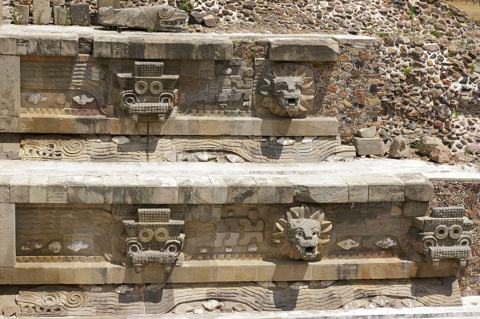
The Feathered Serpent — god of wind, learning, and creation, who stole humanity's bones from the land of the dead and gave people maize.
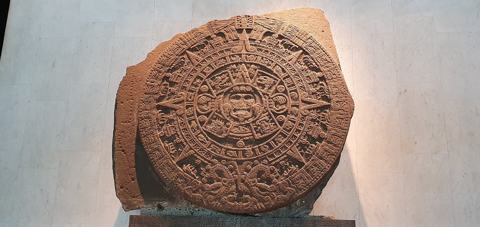
The Aztec myth of four ruined world-ages before this one, each ended by its own catastrophe, in an order and cast of gods the sources don't agree on.
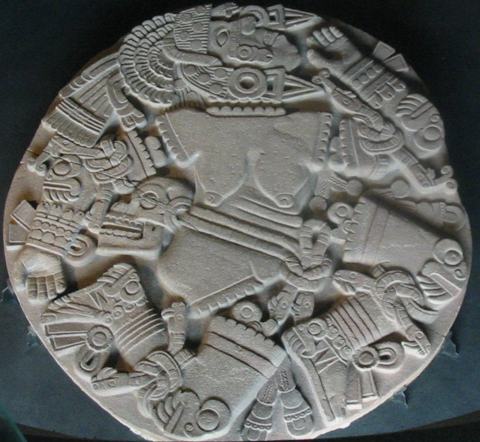
The dismembered sister of Huitzilopochtli, often read as the moon — and the carved disc whose discovery in 1978 uncovered the Templo Mayor itself.
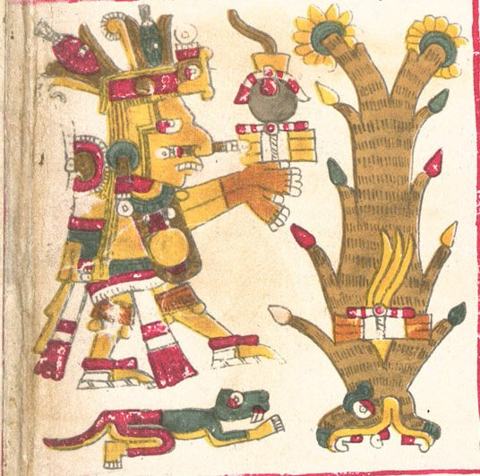
The Aztec maize god, born of two rival colonial traditions and honored at both the spring planting and the harvest festival that bracket his short green life.
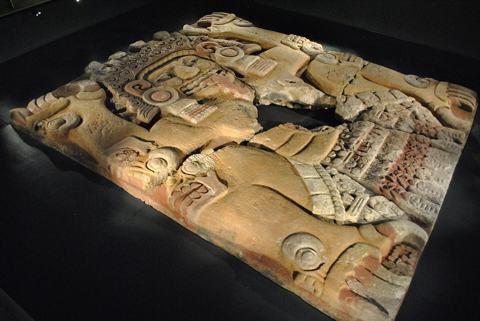
The crocodilian earth deity torn in two to make sky and ground — and the twelve-ton painted monolith of her unearthed at the Templo Mayor in 2006.
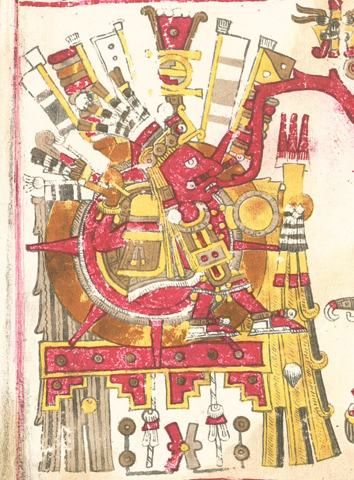
The Aztec sun of the present age, born from a beggar-god's leap into fire and kept moving only by the daily payment of human hearts and blood.
Sources & Further Reading
- 1.Historia de los Mexicanos por sus pinturas (16th century).
- 2.Bernardino de Sahagun, Florentine Codex — General History of the Things of New Spain (c. 1547–1579), Books 6 and 10.
- 3.Codex Borbonicus (Mexica ritual manuscript, painted at or shortly after the conquest; exact date debated).
- 4.Miller, Mary & Karl Taube. The Gods and Symbols of Ancient Mexico and the Maya. Thames & Hudson, 1993.
- 5.Taube, Karl. Aztec and Maya Myths. British Museum Press, 1993.
- 6.Nicholson, H. B. 'Religion in Pre-Hispanic Central Mexico.' Handbook of Middle American Indians, vol. 10. University of Texas Press, 1971.
Spot an error or have a source to suggest? Write to info@viseterna.com. We cite primary sources and modern scholarship, and we correct fast.