
Cihuateteo
Deified spirits of women who died in childbirth, honored as fallen warriors by day and feared as child-stealing ghosts on certain nights.
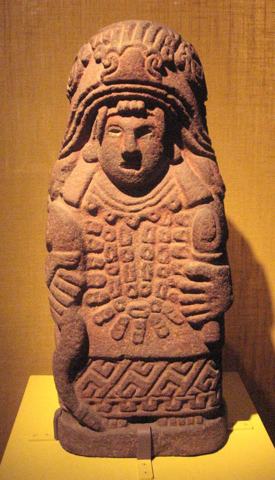
Cihuateotl statue, Mexica, 15th-16th century (Museo Nacional de Antropologia, Mexico City); photograph by Jose Luiz, 2024 · CC BY-SA 4.0 · source
Women Who Died Like Warriors
The Cihuateteo, "divine women," were the deified spirits of Mexica women who died in their first childbirth 1,5. That death was not treated as a private tragedy so much as a battle casualty: bearing a child was conceived as a form of combat, the mother a warrior who had captured a new life the way a soldier captured an enemy, and a woman who died in the attempt earned an honor equivalent to a man who died fighting or on the sacrificial stone 1,4. Sahagun's informants describe the mother's body, after such a death, as fought over at the graveside, with midwives armed to defend it against young men who hoped to steal a lock of hair or a finger as a war charm, believed to carry her fighting power into battle 1.
Escorts of the Afternoon Sun
Their reward was cosmic duty. Where warriors who died in battle escorted the sun from dawn to its zenith, the Cihuateteo took over from noon to sunset, accompanying it down through the western sky to Cihuatlampa, "the place of women," before it entered the night of Mictlan 1,4. It is one of only two categories of the ordinary dead — the sun's warrior-escort and the Cihuateteo — granted this role in the entire afterlife system Sahagun records, a status the general run of the dead, destined for Mictlan or the water-claimed few sent to Tlalocan, did not share 1.
What They Looked Like
Pictorial sources such as the Codex Magliabechiano depict the Cihuateteo with skeletal or half-fleshed faces, bared teeth, and clawed hands, their bodies marked by orange or unbound hair associated with wildness and the earth, and their skirts often patterned with crossed bones 2,4. The unrealized motherhood their deaths represented is rendered visually too, in exposed breasts and a still-swollen belly on many depictions — imagery meant to unsettle, matching how the sources describe the living treating them 2,6.
The Five Dangerous Days
Honored escorts by daylight, the Cihuateteo were feared after dark. On five specific days of the tonalpohualli — 1 Deer, 1 Rain, 1 Monkey, 1 House, and 1 Eagle — they were believed to descend to earth and haunt crossroads, the traditional junctions where malevolent spirits were thought to gather 1,5. On those nights they were blamed for stealing or sickening children, for causing seizures and madness, and for tempting men into adultery; households set out food offerings at roadside shrines to keep them appeased, and parents kept young children indoors 1,5. Duran's account of the monthly festival calendar situates this fear inside a broader pattern of days considered actively dangerous rather than simply unlucky, tied to particular gods and particular hours 3.
Cihuacoatl's Shadow
The Cihuateteo's iconography leans consistently on Cihuacoatl, "Snake Woman," the serpent goddess associated with warfare, midwifery, and the more frightening aspects of female power in Mexica religion; the serpent belts and skeletal faces common to depictions of both figures signal a shared conceptual family rather than a strict identity, and Read and Gonzalez's survey of Mesoamerican mythic figures treats the Cihuateteo as a plural, distributed expression of the same anxieties Cihuacoatl embodies as a single goddess 5,6. That family also connects them to the tzitzimime, star-demons feared at moments of calendrical crisis such as the close of a 52-year cycle — different figures, but drawn from the same well of fear about female power turned dangerous outside its sanctioned role 4,6.
Reading Them Fairly
It is easy to flatten the Cihuateteo into simple monsters, and the surviving sources make that easy to do — the crossroads hauntings and stolen children are vivid, and colonial writers, already inclined to read indigenous religion as demonic, did little to complicate the picture 1,2. The honoring half of the record deserves equal weight: these were, first, women whose deaths were treated with the same solemn respect given to fallen soldiers, granted a share of the sun's own daily journey that most of the dead, male or female, never received 1,4. The fear came after the honor, not instead of it.
Continue Exploring
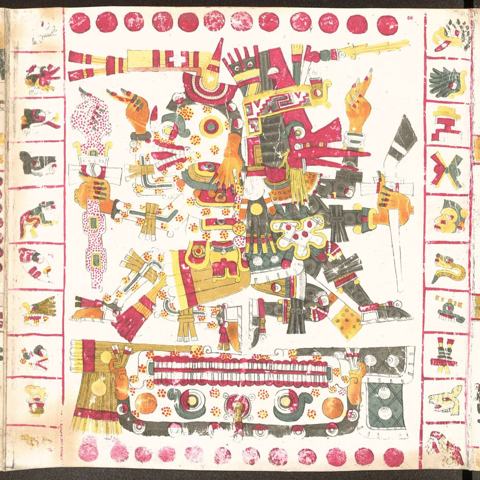
The Place of the Dead — a ninefold underworld reached by a four-year journey, where the ordinary dead arrive at last and simply cease.
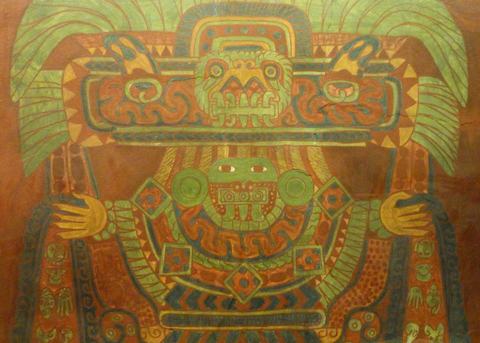
The rain god's paradise of unfailing summer, reserved for those the water took — and the name modern scholars gave a debated mural at Teotihuacan.
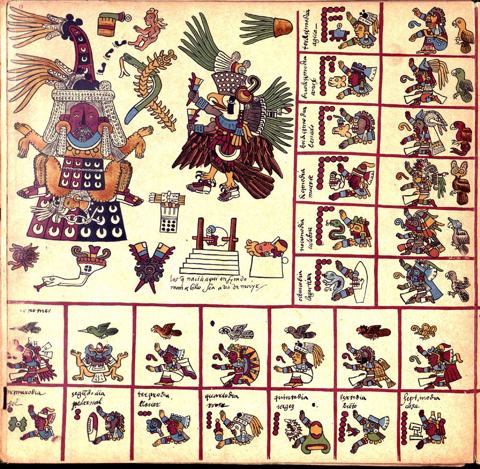
The 260-day sacred count that set every Aztec's birth-fate, built from 13 numbers and 20 day-signs, inherited from far older Mesoamerican tradition.
The Aztec goddess of childbirth and earth who helped shape humanity, lent her name to Tenochtitlan's second-in-command, and wept an omen before the conquest.
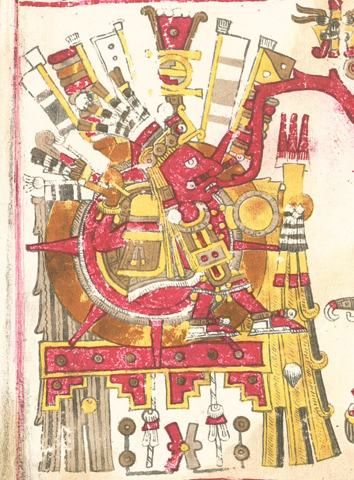
The Aztec sun of the present age, born from a beggar-god's leap into fire and kept moving only by the daily payment of human hearts and blood.
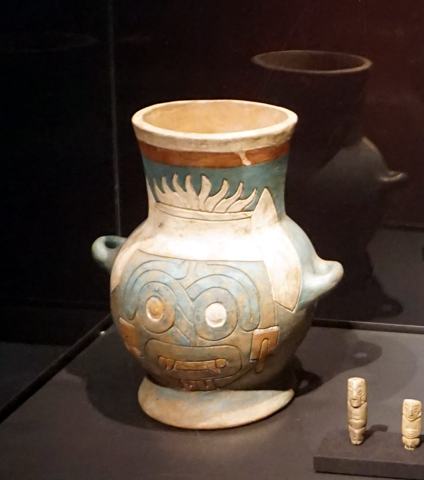
The goggle-eyed rain god who makes things sprout — giver of the storms that feed the maize, keeper of a green paradise, and taker of children.
Sources & Further Reading
- 1.Bernardino de Sahagun, Florentine Codex — General History of the Things of New Spain (c. 1547-1579), Books 1, 4-5 and 6.
- 2.Codex Magliabechiano (16th century).
- 3.Diego Duran, Book of the Gods and Rites and The Ancient Calendar (c. 1574-1579).
- 4.Miller, Mary & Karl Taube. The Gods and Symbols of Ancient Mexico and the Maya. Thames & Hudson, 1993.
- 5.Read, Kay Almere & Jason J. Gonzalez. Handbook of Mesoamerican Mythology. ABC-CLIO, 2000.
- 6.Taube, Karl. Aztec and Maya Myths. British Museum Press, 1993.
Spot an error or have a source to suggest? Write to info@viseterna.com. We cite primary sources and modern scholarship, and we correct fast.