
Zeus
King of the gods and lord of the sky, thunder and justice. He overthrew his own father, divided the universe by lot, and guaranteed the laws of hospitality.
Zeus of Otricoli, Roman copy after a Greek original, 4th c. BC / 1st c. BC copy (Vatican Museums, Rome) · Public domain · source
The Sky Father
Zeus is the ruler of the Olympian gods, god of the sky, the weather, the thunderbolt, and — the part modern retellings usually drop — of justice, oaths and hospitality. He is also the oldest demonstrably Indo-European figure in the Greek pantheon: his name descends from a root meaning "bright sky", and the vocative Zeu pater is the same formation as Latin Iuppiter and Sanskrit Dyaus pitar, making "sky father" his literal title rather than a poetic one 6,7,8.
Ken Dowden's study emphasises how differently he functions from the other Olympians: rather than holding a department, Zeus is the principle of order that the whole system runs on, invoked in dozens of specialised cult forms — Zeus Xenios of guests, Horkios of oaths, Herkeios of the household enclosure, Ktesios of stored property, Hikesios of suppliants, Soter the saviour, Meilichios the appeasable 6,7.
Cronus, Crete and the Titanomachy
Hesiod tells the succession myth in full. Ouranos was overthrown by his son Cronus; Cronus, warned that a son would do the same to him, swallowed each of his children as they were born. When Zeus was due, Rhea gave birth in secret in Crete and handed Cronus a stone wrapped in swaddling clothes, which he swallowed instead — the stone was later set up at Delphi and shown to visitors 1,5.
The infant was hidden in a cave on Mount Dicte or Mount Ida, fed on the milk of the goat Amaltheia, while the armed Curetes clashed their shields to drown his crying. Grown, he forced Cronus to disgorge his siblings — Hades, Poseidon, Hera, Demeter and Hestia — and led them in a ten-year war against the Titans. He won it by freeing the Cyclopes, who gave him the thunderbolt, and the hundred-handed Hecatoncheires, who buried the Titans under a barrage of rock 1,4. A final challenge came from Typhon, the vast serpentine monster born of Gaia, defeated and pinned beneath Etna 1,4.
Then came the division: Zeus the sky, Poseidon the sea, Hades the dark below, with earth and Olympus held in common 2.
Wives, Lovers and Children
Zeus' first wife was Metis, whom he swallowed to prevent a son greater than himself and whose daughter Athena was born from his head. Hesiod lists a sequence of consorts after her, each producing a piece of the world's order: Themis bore the Seasons and the Fates; Eurynome the Graces; Mnemosyne the nine Muses; Leto bore Apollo and Artemis; Demeter bore Persephone; Maia bore Hermes. Hera, his sister, became his permanent queen 1,4.
The mortal affairs are the best-known and the least edifying: Europa carried off by a white bull, Danae reached as a shower of gold, Leda approached as a swan, Io turned into a heifer, Semele destroyed by his true form and her unborn son Dionysus sewn into his thigh, Alcmene visited in her husband's shape to father Heracles, the boy Ganymede snatched up by an eagle to be cupbearer 1,4. Modern readers see a catalogue of assault, and ancient sources do not disguise the coercion; the stories also served a political function, since a great many Greek aristocratic houses and cities traced their founder to one of these unions 6,7.
Justice, Fate and Hospitality
Alongside the philandering runs a genuinely serious theology. In Hesiod's Works and Days Zeus watches over human justice through his daughter Dike and thirty thousand immortal watchers, and a city that gives crooked judgements is punished with famine and plague 1. In the Iliad he weighs the fates of heroes in golden scales and does not overturn what the scales show, even for his own son Sarpedon — a striking limit on the power of the king of the gods 2,6.
The Odyssey rests on him even more directly. Its whole moral architecture is the law of xenia, guest-friendship, which Zeus Xenios enforces: the Cyclops Polyphemus declares the Cyclopes care nothing for Zeus and eats his guests, and the suitors consume another man's house for years — and both are destroyed 2. The poem opens with Zeus himself complaining that mortals blame the gods for sufferings they bring on themselves by their own recklessness, which is as close to a thesis statement as early Greek epic gets 2.
Cult
Zeus' great sanctuary was Olympia in the western Peloponnese, where the games were held every four years from 776 BCE by traditional reckoning, and where Phidias' chryselephantine seated statue — some twelve metres high — was counted among the seven wonders of the ancient world 5,7,8. His oldest oracle was at Dodona in Epirus, where the priests interpreted the rustling of a sacred oak, and one of his most famous was Zeus Ammon at the Siwa oasis in Egypt, which Alexander went out of his way to consult 5,7.
He was also worshipped domestically at every scale: a stone in the courtyard, a jar in the storeroom, an oath sworn in the market. Burkert notes the paradox that the most universal Greek god was worshipped in the most locally specific ways 7. A Cretan tradition even showed his tomb, which the rest of the Greek world took as proof that Cretans were liars 6,8.
In Popular Culture
Zeus is the default "chief god" of Western popular culture, from Clash of the Titans to the God of War games and Rick Riordan's novels, usually reduced to a thunderbolt and a temper. The 2026 film wave around Christopher Nolan's The Odyssey has drawn attention back to a less familiar side of him — the guarantor of hospitality whose law the poem's villains break, and whose enforcement is the reason the story ends as it does.
Continue Exploring
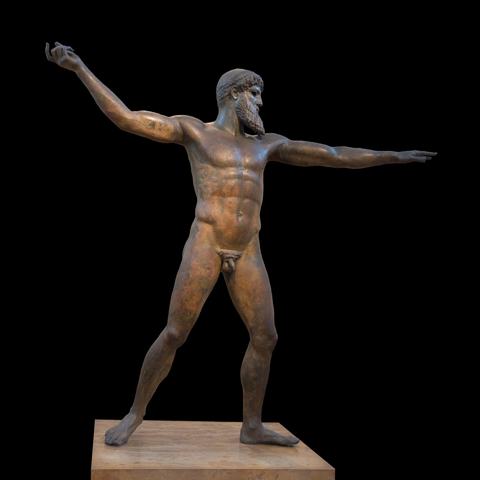
God of the sea, earthquakes and horses. Brother of Zeus, wielder of the trident, and the divine enemy who keeps Odysseus from reaching home.
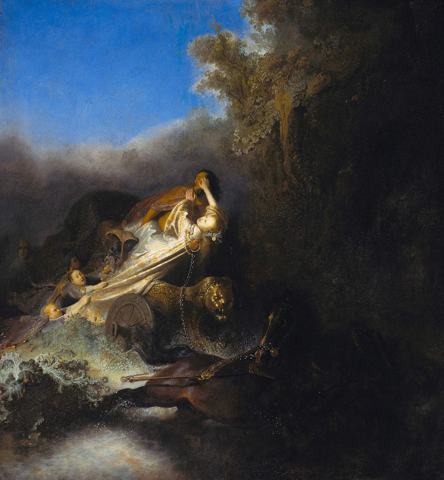
Lord of the underworld and of the wealth beneath the earth. Not a devil — a grim, lawful king whose only rule is that no one leaves.
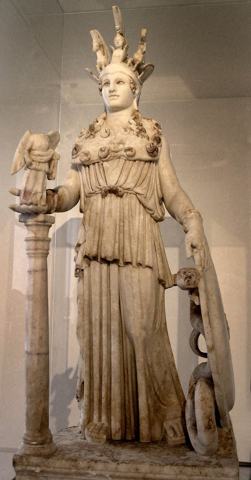
Goddess of wisdom, strategy and craft, born fully armed from the head of Zeus. Patron of Athens, of heroes, and of Odysseus above all.
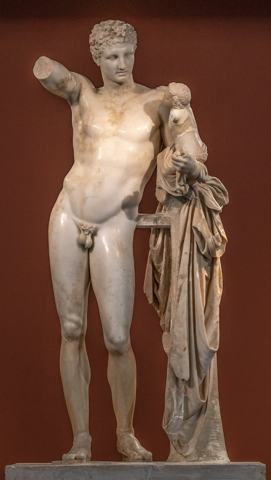
Messenger of the gods and guide of the dead. Patron of travellers, traders, heralds and thieves, and the only Olympian who crosses every boundary at will.
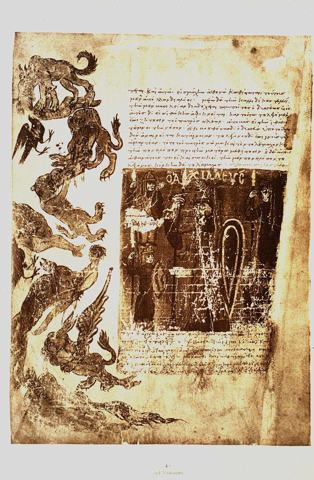
Homer's epic of the final weeks of the Trojan War, opening with Achilles's rage and closing with the ransom of Hector's body.
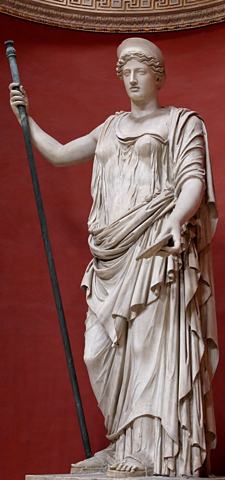
Queen of the gods. Zeus's sister, wife and most dangerous opponent — goddess of marriage in cult, and in Homer the one Olympian he is genuinely wary of.
Also mentioned inAchillesAphroditeApolloAresArtemisDemeterDionysusJupiterKing ArthurMount OlympusPandoraPegasusPersephonePrometheusThe Eleusinian MysteriesThe Golden FleeceThe TitansTheogony (Hesiod's Genealogy of the Gods)
Sources & Further Reading
- 1.Hesiod, Theogony and Works and Days (c. 700 BCE).
- 2.Homer, Iliad (esp. Books 1, 8, 15, 16) and Odyssey (esp. Books 1, 9, 24).
- 3.Homeric Hymns (c. 7th-6th century BCE).
- 4.Apollodorus, Bibliotheca (1st-2nd century CE).
- 5.Pausanias, Description of Greece (2nd century CE).
- 6.Dowden, Ken. Zeus. London: Routledge, 2006.
- 7.Burkert, Walter. Greek Religion, trans. John Raffan. Harvard University Press, 1985.
- 8.Hornblower, S., A. Spawforth and E. Eidinow, eds. The Oxford Classical Dictionary, 4th ed. Oxford University Press, 2012.
Spot an error or have a source to suggest? Write to info@viseterna.com. We cite primary sources and modern scholarship, and we correct fast.