
The Golden Fleece
The pelt of a winged golden ram, hung in a grove sacred to Ares and guarded by a sleepless dragon, that Jason sailed to the edge of the world to steal.
Jason and the Golden Fleece, Attic red-figure kylix attributed to Douris, c. 480-470 BCE (Vatican Museums) · CC BY-SA 4.0 · source
A Ram Sent to Save Two Children
The fleece begins as a rescue. King Athamas of Boeotia takes a second wife, Ino, who resents his children by his first marriage, Phrixus and Helle, and schemes to have them killed. Their birth mother's spirit, Nephele, sends a ram with golden wool to carry the two children to safety through the air. Helle loses her grip over the strait later named for her, the Hellespont, but Phrixus reaches Colchis on the eastern edge of the Black Sea, where he sacrifices the ram to Zeus and gives its pelt to King Aeetes, who hangs it in a grove sacred to Ares under the guard of a sleepless serpent 3.
An Impossible Errand
A generation later the fleece becomes a political problem rather than a memorial. Back in Greece, Hera, angry at King Pelias of Iolcus for neglecting her worship, watches him seize the throne from his half-brother Aeson and then try to remove Aeson's son Jason by sending him after the fleece — a task assumed to be a death sentence, since Colchis lay at the edge of the known world. Jason accepts, has the ship Argo built with Athena's direct help, and assembles a crew of the era's best-known heroes, the Argonauts, for a voyage Pindar's surviving ode already treats as old, celebrated material rather than new invention in 462 BCE 1,7.
Dragon's Teeth and a Sleepless Guardian
Aeetes will not simply hand the fleece over. He sets Jason a trial: yoke two bronze, fire-breathing bulls, plow a field with them, and sow it with dragon's teeth that sprout into armed warriors who must then be destroyed. Jason survives only because Aeetes' daughter Medea, a priestess of Hecate with real sorcery, falls for him — in Apollonius's telling, with help from a hidden arrow shot by Eros — and gives him a fireproof ointment and a trick for turning the earthborn warriors on each other. Completing the trial still does not produce the fleece; Aeetes refuses to give it up regardless, and Medea has to lead Jason to the sacred grove by night and sing the guardian serpent to sleep before he can lift the fleece from the tree himself 2,3,6.
Taking the Fleece, Losing a Brother
Getting out of Colchis costs more than getting in. Aeetes pursues the fleeing Argo, and in the grimmest detail of the story, Medea kills her own brother Apsyrtus and scatters pieces of his body behind the ship, forcing her father to stop and gather his son's remains rather than continue the chase — a story ancient authors themselves found troubling enough that some versions instead have Apsyrtus killed in open battle rather than murdered by his sister 3,7. However the Argonauts actually get home, the fleece itself largely vanishes from the story once it changes hands; the real unfinished business is Medea, who follows Jason to Iolcus, engineers Pelias's death, and later, at Corinth, becomes the subject of Euripides' tragedy when Jason abandons her for a more advantageous marriage 4.
A Real Fleece?
Ancient geographers occasionally tried to locate a literal practice behind the golden wool. Strabo, describing the region east of the Black Sea, reports that local peoples caught gold dust washed down from the mountains by using perforated troughs and fleecy skins, and floats the idea that this technique — sheepskins draped in a stream to trap fine gold in the wool — is the real-world seed of the legend, an explanation he offers without much confidence and that modern historians treat as an interesting possibility rather than a proven origin 5. Colchis, roughly modern western Georgia, kept a documented tradition of stream gold-panning into the Roman period, which is part of why the theory has stayed alive rather than being dismissed outright 5,7.
After the Quest
The fleece's afterlife is more literary than archaeological. It is the object every Argonautica retelling has to end with, obtained relatively early in Apollonius's version compared to the much longer voyage home, and it shares its basic shape — a monster-guarded treasure that only trickery, not force, can take — with the guardian serpents attached to other Greek treasures, including the many-headed threat Heracles meets at Lerna 2,7. No ancient source claims the fleece itself survived to be displayed or worshipped anywhere; unlike relics such as the Palladium, it functions purely as a narrative prize, the thing that proves Jason's claim to Iolcus rather than an object anyone kept 2.
Continue Exploring
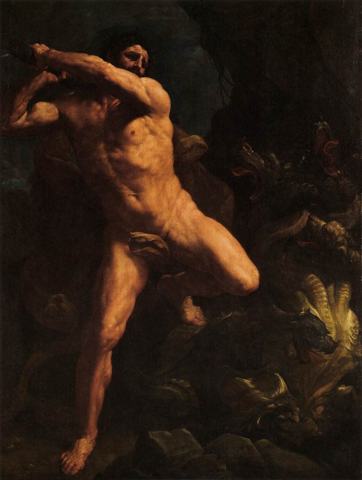
The regenerating, poison-blooded serpent of the Lernaean swamp that Heracles killed with fire in his second labor — and that ancient writers already doubted.
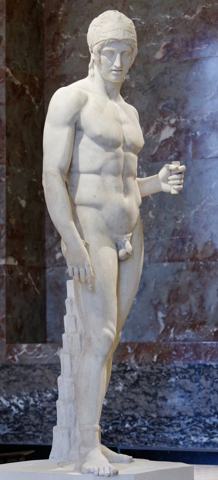
The Greek god of war as slaughter rather than strategy — hated by his own father, beaten by Athena, and worshipped anyway on the edges of the Greek world.
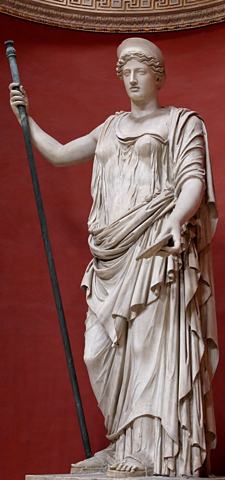
Queen of the gods. Zeus's sister, wife and most dangerous opponent — goddess of marriage in cult, and in Homer the one Olympian he is genuinely wary of.
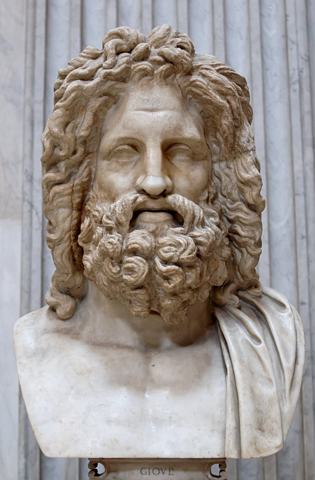
King of the gods and lord of the sky, thunder and justice. He overthrew his own father, divided the universe by lot, and guaranteed the laws of hospitality.
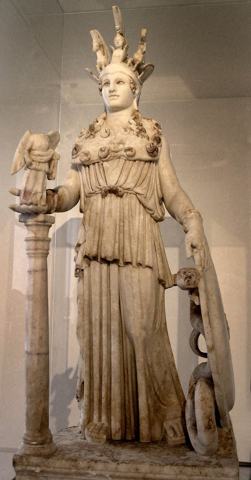
Goddess of wisdom, strategy and craft, born fully armed from the head of Zeus. Patron of Athens, of heroes, and of Odysseus above all.
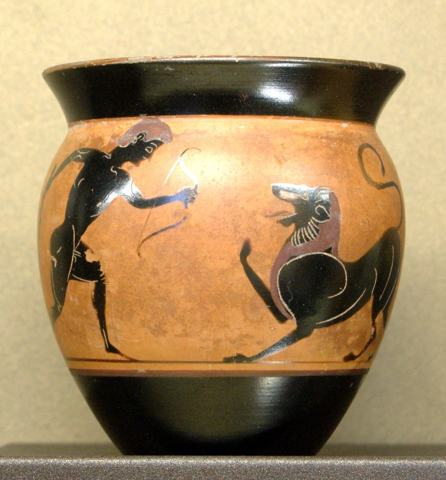
Zeus's mortal son, driven mad by Hera and set twelve impossible labours as penance - the strongest man in Greek myth, who died in agony and rose to Olympus.
Also mentioned inJason and the ArgonautsTheseus
Sources & Further Reading
- 1.Pindar, Pythian 4 (462 BCE).
- 2.Apollonius of Rhodes, Argonautica (3rd century BCE).
- 3.Apollodorus, Bibliotheca (1st-2nd century CE), 1.9.1-1.9.28.
- 4.Euripides, Medea (431 BCE).
- 5.Strabo, Geography (early 1st century CE), 1.2.39 and 11.2.19.
- 6.Hunter, Richard, trans. Jason and the Golden Fleece: The Argonautica. Oxford University Press (Oxford World's Classics), 1993.
- 7.Gantz, Timothy. Early Greek Myth — A Guide to Literary and Artistic Sources. Johns Hopkins University Press, 1993.
Spot an error or have a source to suggest? Write to info@viseterna.com. We cite primary sources and modern scholarship, and we correct fast.