
Hades
Lord of the underworld and of the wealth beneath the earth. Not a devil — a grim, lawful king whose only rule is that no one leaves.
The Abduction of Proserpina, Rembrandt van Rijn, c. 1631 (Gemaldegalerie, Berlin) · Public domain · source
The Unseen One
Hades is a son of Cronus and Rhea, brother of Zeus and Poseidon, and the holder of the third share of the universe. When the brothers divided the cosmos by lot after overthrowing the Titans, Zeus drew the bright sky, Poseidon the sea, and Hades "the misty dark" — the realm of the dead, which he has governed ever since without ever, in Homer, setting foot on Olympus 1,2.
His name is usually derived from a-ides, "the unseen", and the Greeks were reluctant to use it. They preferred euphemisms: Plouton, "the wealthy one", because everything that grows and every seam of ore comes out of the ground he owns; Polydegmon, "receiver of many"; Klymenos, "the famous"; or simply "the god below" 6,8. The Romans took Plouton over as Pluto, which is why the two names now feel like different gods. In ordinary Greek usage "Hades" more often means the place than the person — one goes eis Haidou, "to the house of Hades" 6,8.
He owns a cap of invisibility, made for him by the Cyclopes at the same forge that produced Zeus' thunderbolt and Poseidon's trident, and lends it out to Perseus, Hermes and Athena at various points 2,4.
Not the Devil
The most persistent modern error about Hades is to read him as a Greek Satan. He is nothing of the kind. He is not evil, not a tempter, not in rebellion, and not the punisher of sin — the punishment of the worst offenders is generally Zeus' doing, and the underworld receives everyone regardless of merit in the older strata of Greek belief 6,7,8. What he is is implacable. Homer calls him the most hated of gods by mortals, but the reason given is that he is unyielding and unpitying, not that he is wicked: he takes what is owed and does not negotiate.
He is also, by the standards of his brothers, notably well-behaved. He has one queen, no string of affairs beyond the nymphs Minthe and Leuke — both of whom end as plants — and no interest in Olympian politics 4,6.
The Abduction of Persephone
The central myth is told at length in the Homeric Hymn to Demeter. Persephone, daughter of Zeus and Demeter, is gathering flowers on the Nysian plain when the earth opens at a narcissus planted as a lure, and Hades comes up in his golden chariot and takes her below — with the consent of Zeus, a detail the hymn does not soften. Demeter searches nine days with torches, learns the truth from Helios, and withdraws her power from the earth until nothing grows and the gods risk losing all sacrifice 3,6.
Zeus is forced to send Hermes to fetch Persephone back, but Hades gives her a pomegranate seed to eat before she goes, and food from the underworld binds the eater to it. The settlement is a divided year: a part below with her husband, the rest above with her mother, and the seasonal death and return of vegetation follows her movement 3,6. The hymn is closely tied to the Eleusinian Mysteries, the most important initiatory cult of the Greek world, whose promise was a better lot after death for those who had been initiated 6,7.
The Geography of the Dead
The underworld's furniture accumulated over centuries. Homer's version is bleak and simple: a joyless place beyond the stream of Ocean where the dead are witless shadows, and where the ghost of Achilles tells Odysseus he would rather be a hired labourer on earth than king of all the dead 1. Later tradition filled it in: the rivers Styx, Acheron, Cocytus, Lethe and Phlegethon; the ferryman Charon, who requires a coin; the three-headed dog Cerberus, who lets everyone in and no one out; the judges Minos, Rhadamanthys and Aeacus; Tartarus far below for the Titans and the great offenders; and the Elysian Fields or Isles of the Blessed for a favoured few 2,4,6,7.
Its famous prisoners are the standard illustrations of divine punishment: Tantalus in water he cannot drink beneath fruit he cannot reach; Sisyphus and his stone; Ixion on the wheel; Tityos with the vultures; the Danaids filling a leaking jar 1,4. Radcliffe Edmonds' study of underworld narratives argues that these journeys and geographies were never a fixed doctrine but a flexible language, redeployed by poets, comic playwrights, philosophers and mystery cults to argue about who belonged inside a community and who did not 7.
Break-ins
The house of Hades is entered by a short list of the living, and each visit tests the rule that no one leaves. Heracles takes Cerberus, with permission, as his final labour. Orpheus talks his way past every guard with music and loses Eurydice at the threshold by looking back. Theseus and Pirithous come to carry off Persephone herself and are fixed to the chair of forgetfulness for their arrogance; only Theseus is pulled free 4,6,7. Odysseus does not properly enter at all — he calls the dead up to a trench of sacrificial blood at the edge of the world to consult the seer Tiresias, and flees when he fears Persephone may send a Gorgon's head after him 1.
Cult and Reputation
Hades had almost no temples. Pausanias notes a genuine sanctuary at Elis that was opened one day a year and entered only by the priest, and remarks that he knew of no other 5,6. Where he was worshipped, the rites were chthonic and inverted: black victims, blood poured into a pit rather than burnt on a raised altar, the sacrificer turning his face away and striking the ground with his hands to be heard 6,8. As Plouton, however, he was honoured widely and warmly alongside Persephone in agricultural and mystery cult — the god of the grain in the silo as much as the corpse in the ground 6,7.
In Popular Culture
Modern media has recast Hades repeatedly as a villain — most influentially Disney's Hercules (1997) — and then partly rehabilitated him: Supergiant's Hades (2020) plays him as an exhausted, overbearing father and administrator, closer to the ancient conception of a lawful king than the cartoon devil. The wave of interest in the Odyssey around Christopher Nolan's 2026 film has also brought fresh attention to Book 11 and to the Greek underworld as Homer actually imagined it.
Continue Exploring
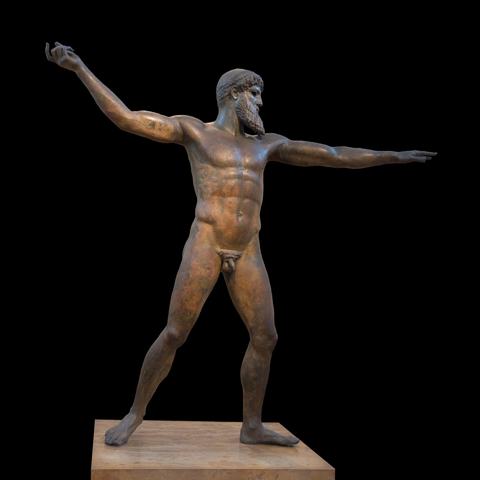
God of the sea, earthquakes and horses. Brother of Zeus, wielder of the trident, and the divine enemy who keeps Odysseus from reaching home.
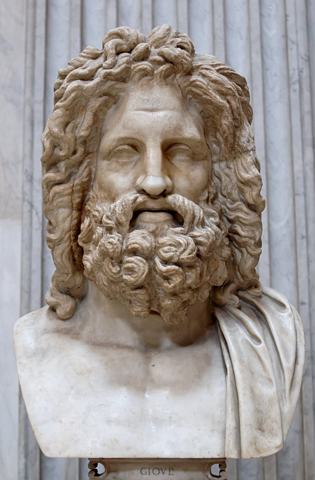
King of the gods and lord of the sky, thunder and justice. He overthrew his own father, divided the universe by lot, and guaranteed the laws of hospitality.
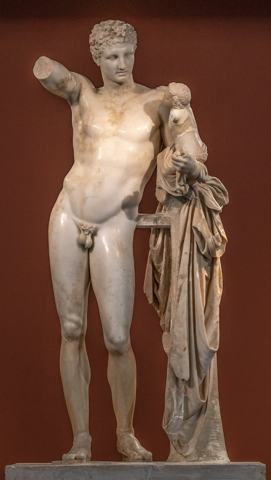
Messenger of the gods and guide of the dead. Patron of travellers, traders, heralds and thieves, and the only Olympian who crosses every boundary at will.
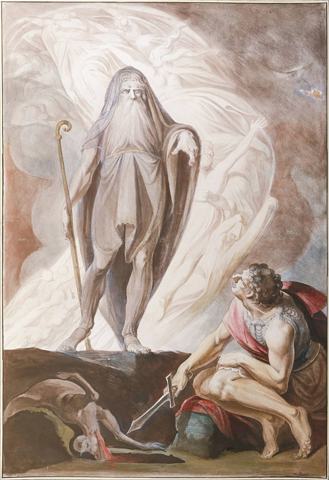
The blind prophet of Thebes who lived seven generations, spent seven years as a woman, and kept his mind intact among the dead.
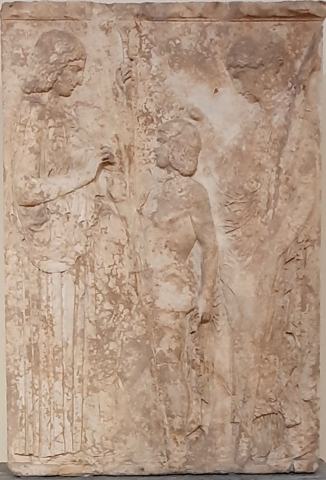
The secret initiation rite of Demeter and Persephone at Eleusis, the most prestigious mystery cult in the Greek world for nearly two thousand years.
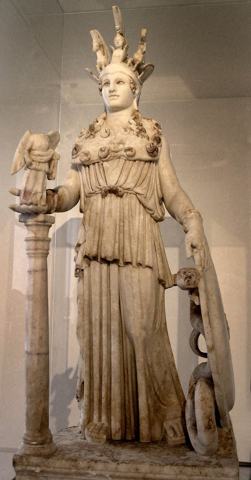
Goddess of wisdom, strategy and craft, born fully armed from the head of Zeus. Patron of Athens, of heroes, and of Odysseus above all.
Also mentioned inCerberusDemeterHeraMedusaMount OlympusPersephonePerseusPlutoThe SirensThe TitansTheseus
Sources & Further Reading
- 1.Homer, Iliad, Book 15, and Odyssey, Books 10-11 (c. 8th-7th century BCE).
- 2.Hesiod, Theogony (c. 700 BCE).
- 3.Homeric Hymn 2, to Demeter (c. 7th century BCE).
- 4.Apollodorus, Bibliotheca (1st-2nd century CE).
- 5.Pausanias, Description of Greece, Book 6 (2nd century CE).
- 6.Burkert, Walter. Greek Religion, trans. John Raffan. Harvard University Press, 1985.
- 7.Edmonds, Radcliffe G., III. Myths of the Underworld Journey: Plato, Aristophanes, and the 'Orphic' Gold Tablets. Cambridge University Press, 2004.
- 8.Hornblower, S., A. Spawforth and E. Eidinow, eds. The Oxford Classical Dictionary, 4th ed. Oxford University Press, 2012.
Spot an error or have a source to suggest? Write to info@viseterna.com. We cite primary sources and modern scholarship, and we correct fast.