
Apollo
Twin of Artemis, lord of Delphi. God of prophecy, music, healing and plague — the far-shooter whose arrows bring both the cure and the sickness.
Apollo del Belvedere, Roman copy c. 2nd century AD, photo by Alvesgaspar, 2015 (Vatican Museums) · CC BY-SA 4.0 · source
Birth on Delos
Apollo is the son of Zeus and the Titaness Leto, and the twin brother of Artemis 3,4. The Homeric Hymn to Apollo tells how Leto, hounded by the jealousy of Hera, was refused shelter by every land until the small, poor, rocky island of Delos agreed to receive her — on the condition that the god born there would build his temple on it and never despise it for its barrenness. Leto laboured nine days and nine nights, clinging to a palm tree, until Apollo was born and the island's foundations turned to gold 2.
The infant grew at once. Fed on nectar and ambrosia rather than milk, he burst his swaddling bands, called for the lyre and the curved bow, and declared that he would prophesy to men the unerring will of Zeus 2. That triple claim — bow, lyre, oracle — is the whole god in one line, and the Greeks never separated the three.
The Far-Shooter
The Iliad opens with Apollo at his most terrifying. His priest Chryses is insulted by Agamemnon; the god comes down from Olympus "like the night", takes his stand apart from the ships, and looses arrows into the Greek camp for nine days, killing mules and dogs first, then men 1. He is Hekatebolos, the far-shooter, and Smintheus, a title connected with mice — a plague god as readily as a healer, since the power that sends sickness is the power that lifts it 1,7.
The same detachment marks his role in battle. He shepherds Hector, blunts Diomedes, and in Book 16 strikes Patroclus between the shoulders, knocking off his helmet and loosening his armour so that lesser hands can finish him 1. Where Ares fights, Apollo simply decides; scholars often read him as the Greek ideal of measured, ordered force, the god of the "nothing in excess" carved at Delphi 7.
Delphi and the Oracle
Having left Delos, Apollo searched for an oracular seat and found the spring of Telphousa and then the site under Parnassus, where he killed the great she-serpent guarding it and let her corpse rot in the sun — the hymn's own explanation for the names Pytho and Pythian 2,5. He then seized a shipload of Cretan merchants, appearing to them as a dolphin, and installed them as his first priests, which the hymn offers as the origin of the title Delphinios 2. These etymologies are ancient folk explanations rather than modern linguistics, and scholars treat them as such 7.
At Delphi a priestess called the Pythia, seated on a tripod, delivered responses that Greeks from every city and many beyond it came to consult 5,7. The god's oracular epithet Loxias — "slanting", "oblique" — reflects the reputation of those responses for saying something true in a form the hearer would misread 5,7. Ancient writers spoke of vapours rising from a chasm; the archaeology is contested, and no consensus exists on what, if anything, physically induced the Pythia's state 7.
Music, Healing, and Punishment
As Musagetes Apollo leads the Muses, and the lyre given him by Hermes is his emblem in nearly all classical art 2,4. He is also the father of Asclepius, the healer, by the mortal Coronis, whom he killed for her infidelity and whose child he snatched from the pyre 4,8. When Zeus later destroyed Asclepius for raising the dead, Apollo killed the Cyclopes who forged the thunderbolt and was sentenced to a year's servitude as a mortal's herdsman 4,8.
His myths of desire are mostly myths of loss. Daphne, fleeing him, becomes the laurel that afterwards crowns him; Hyacinthus dies from a discus throw and becomes a flower; Cassandra accepts the gift of prophecy, refuses the god, and is cursed so that no one will believe her 4,6,8. Challenges to his art end worse still: the satyr Marsyas, beaten in a music contest, is flayed 6,8.
Cult, Sun, and Afterlife
Beyond the stories, Apollo governed purification, colonisation (no colony sailed without consulting Delphi), the calendar of festivals, and the passage of young men into adult citizenship 5,7. His great sanctuaries at Delphi, Delos, Didyma and Claros were among the wealthiest institutions in the Greek world 5,7.
He is very often called a sun god today, but that identification is secondary. In Homer and Hesiod the sun is Helios, a separate deity; the merging of Apollo with Helios appears in the fifth century BC, spreads through philosophical and Orphic circles, and becomes standard only in the Roman period 7,8. Some scholars have also argued for an Anatolian element in his origins, on the strength of his Trojan sympathies and possible Hittite-Luwian name parallels — a debate that remains open 7.
The modern shorthand of "Apollonian" order against "Dionysian" ecstasy comes from Nietzsche's The Birth of Tragedy (1872), not from the Greeks, who housed both gods at Delphi and gave Dionysus the sanctuary for the winter months 5,7.
Continue Exploring
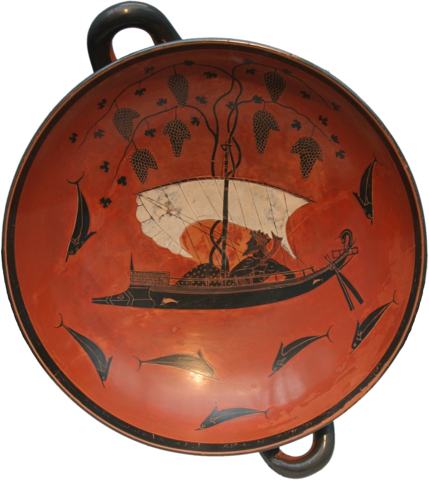
Twice-born god of wine, madness and the mask. He dissolves the boundary between god and beast, and destroys the cities that refuse him.
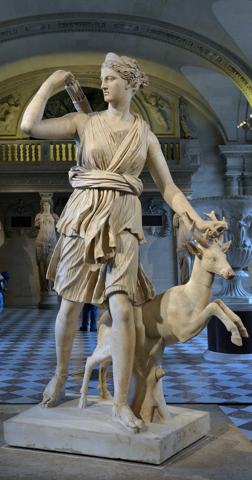
Virgin huntress, mistress of animals, twin of Apollo. Protector of the young and the wild — and a goddess whose arrows kill without warning.
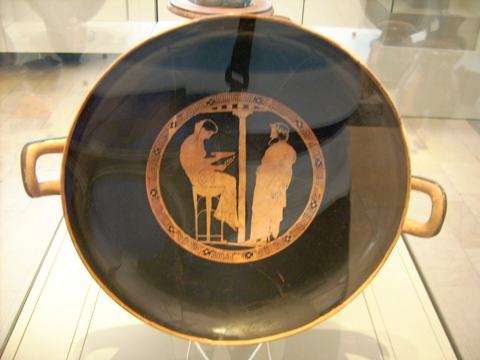
The mountainside sanctuary of Apollo where the priestess Pythia delivered oracles for over a thousand years, and the modern debate over what made her speak.
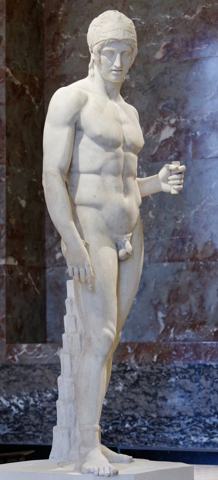
The Greek god of war as slaughter rather than strategy — hated by his own father, beaten by Athena, and worshipped anyway on the edges of the Greek world.
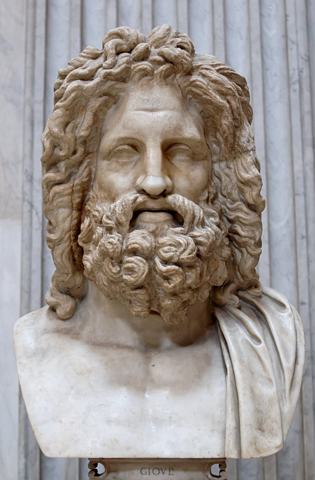
King of the gods and lord of the sky, thunder and justice. He overthrew his own father, divided the universe by lot, and guaranteed the laws of hospitality.
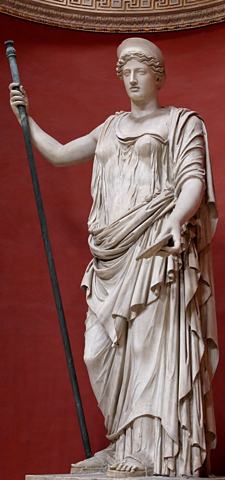
Queen of the gods. Zeus's sister, wife and most dangerous opponent — goddess of marriage in cult, and in Homer the one Olympian he is genuinely wary of.
Also mentioned inThe IliadThe Titans
Sources & Further Reading
- 1.Homer, Iliad — Books 1, 5, 16 and 21 (c. 8th-7th century BC).
- 2.Homeric Hymn 3, To Apollo (Delian and Pythian parts, c. 7th-6th century BC).
- 3.Hesiod, Theogony (c. 700 BC).
- 4.Apollodorus, Bibliotheca (Library), 1st-2nd century AD.
- 5.Pausanias, Description of Greece — Book 10 (Phocis and Delphi), c. AD 160-180.
- 6.Ovid, Metamorphoses — Books 1, 6 and 10 (c. AD 8).
- 7.Burkert, Walter. Greek Religion. Trans. John Raffan. Harvard University Press, 1985.
- 8.Gantz, Timothy. Early Greek Myth — A Guide to Literary and Artistic Sources. Johns Hopkins University Press, 1993.
Spot an error or have a source to suggest? Write to info@viseterna.com. We cite primary sources and modern scholarship, and we correct fast.