
Jupiter
King of the gods and of the Roman state — lord of the bright sky, hurler of the lightning bolt, and the guarantor behind every oath and treaty.
Jupiter of Smyrna, Roman marble, 2nd c. AD (Musee du Louvre, Ma 13); photo Marie-Lan Nguyen · Public domain · source
Sky Father
The Latin name Iuppiter preserves an invocation older than Rome: Dyeu-pater, "sky father," the same ancestral formula that produced Greek Zeus pater and Vedic Dyaus Pita 7. The oblique stem gives Iovis, from which English gets "Jove." He is, at root, the daylit sky — its brightness, its weather, and above all its thunder, which Romans read as the clearest signal a god ever sent 5,7.
That etymology matters because it separates the Roman god from his Greek twin. Zeus arrived in Roman literature as a ready-made character with a biography. Jupiter, in Roman cult, was something more austere: a power addressed by title and function, whose business was the standing of the Roman state 7.
Optimus Maximus and the Capitoline
Jupiter's chief manifestation was Iuppiter Optimus Maximus — "Best and Greatest" — worshipped in the vast temple on the Capitoline Hill that he shared with Juno Regina and Minerva, the group known as the Capitoline Triad 1,7. Livy attributes the building to the last kings, the Tarquins, and its dedication to the first year of the Republic, traditionally 509 BCE; the date is a foundation claim as much as a fact, and it locates Jupiter at the very start of Rome's political self-image 1,7.
The temple burned and was rebuilt more than once — in 83 BCE during the civil wars, and again after the fighting of 69 CE — and each reconstruction was treated as a matter of state survival rather than architecture 7. Consuls sacrificed there on entering office. The Senate could meet there. Treaties and the records of the state were housed on the hill. When Romans said "the Capitol," they meant Jupiter 7.
Oaths, Treaties, and Lightning
Jupiter's most Roman office is guarantor of fides — the binding force of a sworn word. The fetial priests, who declared war and ratified treaties, struck the sacrificial victim with a flint while calling on Jupiter to strike Rome the same way should Rome break faith first 1,7. A private Roman swearing his most serious oath swore per Iovem lapidem, "by Jupiter of the stone," holding the flint 7.
Because thunder and lightning were his, they were also legal instruments. Magistrates took the auspices before public business, and an unfavourable sign from the sky could suspend an election or an assembly outright 7. Ground struck by lightning was fenced off as a bidental and treated as consecrated 7. Ovid preserves the strangest version of this in the Fasti: King Numa bargains with Jupiter over the price of averting lightning, and by wilful mishearing negotiates the god down from human heads to onion-heads, hair, and a fish 2.
The Flamen Dialis
Jupiter's dedicated priest, the flamen Dialis, lived inside a cage of prohibitions that Aulus Gellius catalogued with obvious fascination: he could not ride a horse, look at an army under arms, swear an oath, touch a goat or raw flesh or ivy, wear a knot or a closed ring, or spend a night outside the city 6. His wife, the flaminica, held her own priestly role, and if she died he had to resign — the office was a married pair, not a man 6,7. The taboos read as a system for keeping one human being permanently in a state fit for the god's presence 7.
The Triumph and the Empire
A victorious Roman general who was granted a triumph processed through the city to the Capitoline temple, riding a four-horse chariot, dressed in the toga picta, his face reddened — by long-standing interpretation, in imitation of the terracotta cult statue itself — with a slave reportedly holding a crown above his head 7. The route ended with white oxen sacrificed to Jupiter. Victory belonged to the god; the general returned it to him in public 7.
As Rome expanded, Jupiter went with it. Provincial capitals raised Capitolia in miniature; soldiers on the Rhine and Danube set up "Jupiter columns" and worshipped Jupiter Dolichenus, a fusion with a Syrian storm god from Doliche 7. Virgil gives the political theology its most quoted line, when Jupiter foretells to Venus an empire without limit in time or space — a promise the Aeneid uses to make Roman power look like the plan of the sky itself 4.
Borrowed Myth and Roman Myth
Almost every familiar story about Jupiter — Europa and the bull, Io, Danaë and the shower of gold, Callisto, Leda, the war against the Giants — reached Latin literature from Greek sources, and it is Ovid's Metamorphoses that fixed them in the European imagination 3. Cicero, writing a generation earlier, already treats these tales as poets' inventions and argues about what an educated Roman should actually believe concerning the nature of the gods 5.
The distinctively Roman material is quieter and more institutional: Jupiter Stator, "the Stayer," who halted a Roman rout when Romulus vowed him a temple 1; Jupiter Feretrius, to whom a general dedicated the spolia opima stripped from an enemy commander killed in single combat, an honour claimed only three times in Rome's entire history 1; Jupiter Latiaris, worshipped by the Latin communities together on the Alban Mount 7. Those are not adventures. They are the constitutional documents of a city that understood its own supremacy as a contract with the sky 7.
Continue Exploring
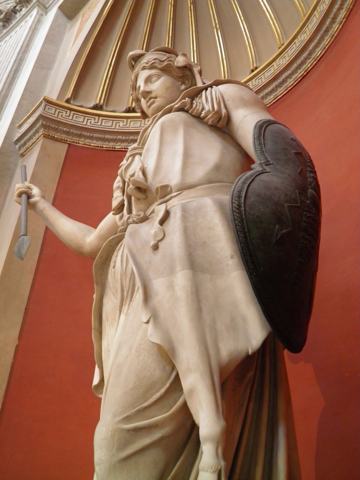
Queen of the gods — Rome's guardian of women, childbirth and the state, whose sacred geese warned the Capitol and whose temple gave us the word money.
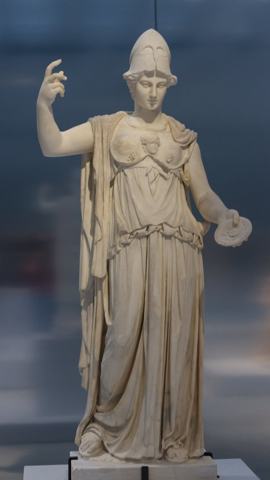
Goddess of wisdom and the crafts — third of the Capitoline Triad, and Rome's patron of every skilled trade from weaving and teaching to medicine.
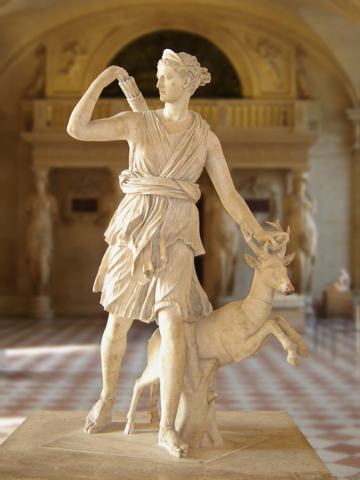
Roman goddess of the hunt, wild places and the moon, whose oldest sanctuary at Lake Nemi was guarded by a priest who held office by killing his predecessor.
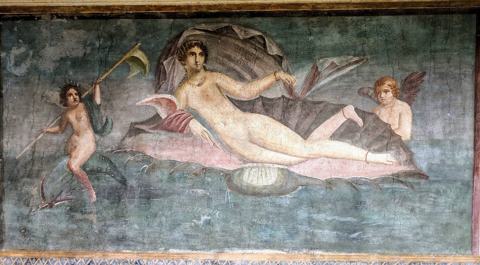
Goddess of love and desire — and the divine ancestress of Rome itself, mother of Aeneas and the claimed forebear of the family of Julius Caesar.

The two-faced Roman god of doors, beginnings and endings, named first in every prayer, whose gates in the Forum stood open only while Rome was at war.
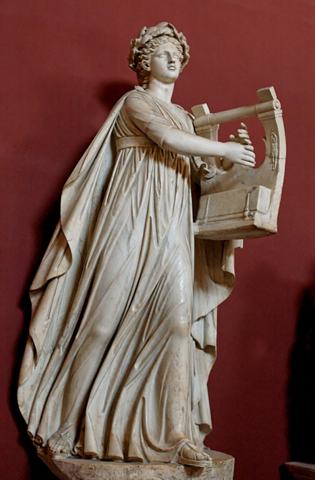
The one great Greek god Rome adopted without renaming him — plague-healer, oracle-giver, and the personal patron Augustus built into the imperial order.
Also mentioned inFortuna (Roman Goddess of Luck)Mercury (Roman Messenger God)PlutoSaturn
Sources & Further Reading
- 1.Livy, Ab Urbe Condita (c. 27 BCE).
- 2.Ovid, Fasti (c. 8 CE).
- 3.Ovid, Metamorphoses (8 CE).
- 4.Virgil, Aeneid (29–19 BCE).
- 5.Cicero, De Natura Deorum (45 BCE).
- 6.Aulus Gellius, Attic Nights (2nd century CE), Book 10.15.
- 7.Beard, Mary, John North & Simon Price. Religions of Rome, Volume 1: A History. Cambridge University Press, 1998.
Spot an error or have a source to suggest? Write to info@viseterna.com. We cite primary sources and modern scholarship, and we correct fast.