
Athena
Goddess of wisdom, strategy and craft, born fully armed from the head of Zeus. Patron of Athens, of heroes, and of Odysseus above all.
Varvakeion Athena, Roman copy after Pheidias' Athena Parthenos, 3rd c. AD (National Archaeological Museum, Athens) · CC BY 2.5 · source
Born Armed
Athena is the daughter of Zeus and Metis, the Titaness whose name means exactly the cunning intelligence that defines both father and daughter. Warned that Metis would bear a son greater than himself, Zeus swallowed her while she was pregnant; the child grew inside him and was born from his head, springing out fully grown and fully armed with a war-cry that shook Olympus. Later versions add that Hephaestus (or Prometheus) split the skull with an axe to let her out 2,3,5.
The birth is the key to the goddess. She has no mother in any practical sense, no childhood, no consort, and no phase of weakness — she arrives complete, armoured, and already the possessor of her mother's intelligence. Susan Deacy's study stresses how consistently Greek cult and art present her as a figure who combines opposites that other gods keep separate: warfare and weaving, violence and civic order, virginity and maternal patronage of a whole city 7.
Her standing epithets are Pallas, of uncertain meaning, and glaukopis, "bright-eyed" or "owl-eyed" — the owl became her bird and the emblem stamped on Athenian coinage. She wears the aegis, a fringed goatskin bearing the Gorgon's head, which throws enemies into panic 1,8.
War as Strategy
Greek theology divided war between two deities, and the division is pointed. Ares is battle as slaughter, noise and appetite; Athena is battle as planning, discipline and the decisive intervention. In the Iliad she guides Diomedes through an entire book of fighting, tells him which gods he may attack, and later drives the chariot herself; she stops Achilles' sword-hand in Book 1 by seizing him by the hair; and she engineers Hector's death in Book 22 by taking the form of his brother Deiphobus so that he turns and stands 1,8. When the two war-gods meet in Book 21 she knocks Ares flat with a boundary stone.
She is likewise the patron of heroes who succeed by intelligence rather than brute strength. She gives Perseus the polished shield that lets him behead Medusa without meeting her gaze — and takes the head afterwards for her aegis; she supplies Bellerophon with the golden bridle for Pegasus; she supervises the building of the Argo; and she stands beside Heracles through the labours in more surviving vase paintings than any other god 5,7.
The Contest for Athens
The city that carried her name claimed her by contest. Athena and Poseidon both wanted Attica: he struck the Acropolis rock and brought out a spring of sea-water, she planted the first olive tree, and the judges — variously Cecrops, the Athenians, or the gods — awarded the land to her because the olive was the more useful gift. The scene filled the west pediment of the Parthenon 5,7,8.
Her Athenian cult was correspondingly dense. As Polias she was the city's protector, housed in the ancient olive-wood statue on the Acropolis; as Parthenos, the virgin, she stood forty feet tall in gold and ivory inside the Parthenon; as Ergane she was the patron of craftsmen, especially potters and weavers; as Nike, wingless Victory, she had her own small temple at the entrance to the citadel. At the Panathenaia, held every year and with great splendour every fourth, the city carried a newly woven robe to her 7,8. She is also the divine foster-mother of Erichthonius, the earth-born Athenian king conceived when Hephaestus' attempt on her failed and his seed fell on the ground — a myth that lets Athens claim descent from the soil itself while keeping her virginity intact 5,7.
Weaving, Justice and Limits
Athena's craft side is not decorative. Weaving was the central productive skill of the Greek household, and she is its inventor and patron. Ovid's story of Arachne — the Lydian girl who wove better than the goddess, depicted the crimes of the gods in her tapestry, and was struck and transformed into a spider — is the best-known illustration of both the honour and the danger of the association 6.
In Aeschylus' Eumenides she performs the founding act of Athenian civic religion, establishing the homicide court of the Areopagus to try Orestes and casting the deciding vote for acquittal when the human jury splits. She then persuades the Furies to accept a place of honour in the city rather than pursue their vendetta — a myth about the replacement of blood-feud with law that the Athenians took seriously as their own charter 4,7.
Ancient tradition did not make her infallible. She loses the Judgment of Paris and spends the Iliad working for Troy's destruction as a result, and she is merciless to those who transgress against her, from Arachne to the Locrian Ajax, punished with the whole Greek fleet for dragging Cassandra from her altar 5,7.
Athena and Odysseus
Her closest relationship in Greek literature is with Odysseus, and the Odyssey explains it plainly: she likes him because he thinks the way she does. She opens the poem by raising his case in the assembly of the gods, disguises herself as Mentes and Mentor to set Telemachus in motion, meets Odysseus on the shore of Ithaca disguised as a young shepherd and laughs at him for lying to her out of habit, transforms him into an old beggar and back again, holds off the dawn to lengthen his reunion with Penelope, fights beside him in the hall, and finally imposes peace on the island by force in the poem's last lines 1.
In Popular Culture
Athena's helmeted profile remains standard visual shorthand for wisdom, learning and justice — on university seals, on the euro-era Greek coinage that revived the owl, and in innumerable games and films. In Christopher Nolan's The Odyssey (2026) she is played by Zendaya, in a poem where she is effectively the second protagonist.
Continue Exploring
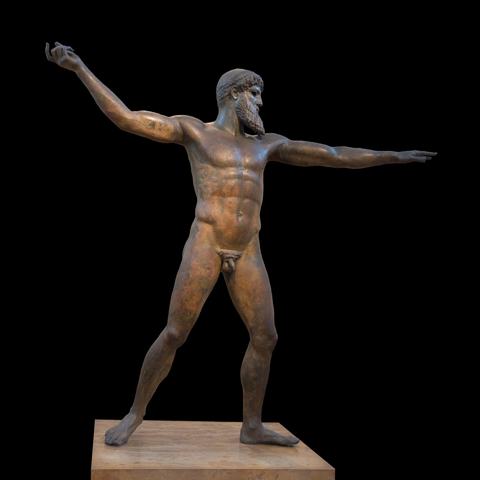
God of the sea, earthquakes and horses. Brother of Zeus, wielder of the trident, and the divine enemy who keeps Odysseus from reaching home.
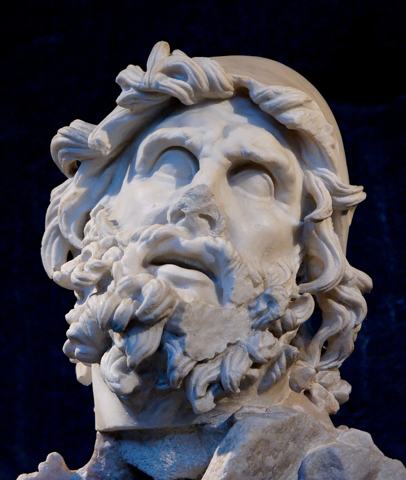
King of Ithaca and the man of many turns. Homer's cleverest hero, who took ten years to sail home from Troy and had to fight for his own house.
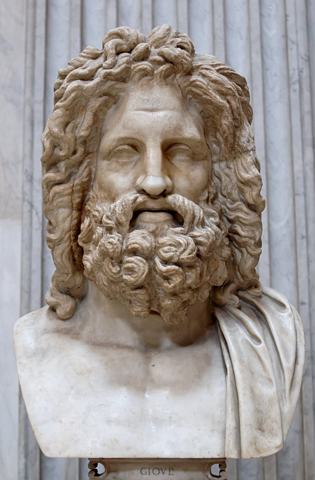
King of the gods and lord of the sky, thunder and justice. He overthrew his own father, divided the universe by lot, and guaranteed the laws of hospitality.
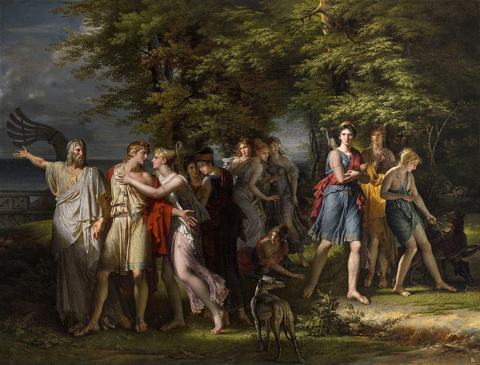
Prince of Ithaca and son of Odysseus. The Odyssey opens with his coming of age: a boy with no father learning how to be a man in a hall full of enemies.
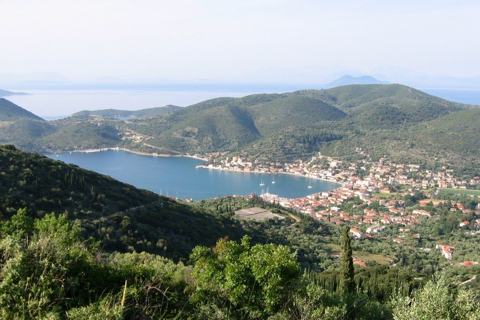
The rocky island kingdom of Odysseus and the destination of the Odyssey — a small, goat-grazed place worth ten years of sailing to get back to.
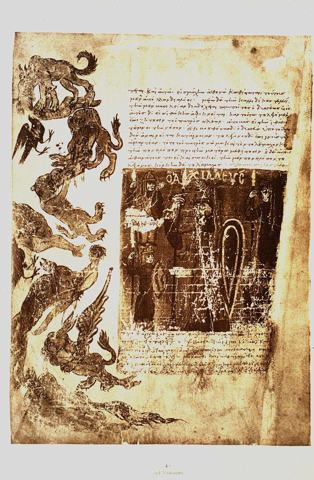
Homer's epic of the final weeks of the Trojan War, opening with Achilles's rage and closing with the ransom of Hector's body.
Also mentioned inAphroditeAresCalypsoHadesHeraMedusaMinervaMount OlympusPandoraPegasusPerseusThe Golden FleeceThe ParthenonThe Trojan HorseTiresias
Sources & Further Reading
- 1.Homer, Iliad (esp. Books 1, 5, 22) and Odyssey (esp. Books 1, 13, 22-24).
- 2.Hesiod, Theogony (c. 700 BCE).
- 3.Homeric Hymn 28, to Athena (c. 7th-6th century BCE).
- 4.Aeschylus, Eumenides (458 BCE).
- 5.Apollodorus, Bibliotheca (1st-2nd century CE).
- 6.Ovid, Metamorphoses, Book 6 (c. 8 CE).
- 7.Deacy, Susan. Athena. London: Routledge, 2008.
- 8.Burkert, Walter. Greek Religion, trans. John Raffan. Harvard University Press, 1985.
Spot an error or have a source to suggest? Write to info@viseterna.com. We cite primary sources and modern scholarship, and we correct fast.