
The Iliad
Homer's epic of the final weeks of the Trojan War, opening with Achilles's rage and closing with the ransom of Hector's body.
Venetus A, Codex Marcianus Graecus 454, 10th century (Biblioteca Marciana, Venice) · Public domain · source
What the Iliad Is
The Iliad is the older and, by most ancient reckonings, the greater of the two epics credited to Homer: twenty-four books of dactylic hexameter covering only a few weeks near the end of the ten-year Trojan War 1,5. It does not narrate the war's beginning or its end, the wooden horse, or the fall of the city; instead it opens with a single word, menis, "wrath," and follows the consequences of one hero's anger with an intensity that ancient critics already recognized as the poem's real subject 1,7. Its companion epic, The Odyssey, covers the aftermath; the Iliad covers the war itself, compressed almost entirely into the fighting around Troy's walls 5.
The Wrath and Its Cost
The plot is deceptively narrow. The Greek champion Achilles, insulted by the commander Agamemnon over the division of war-spoils, withdraws from battle and asks his goddess mother to have Zeus turn the war against his own side, so that the Greeks will feel his absence 1,2. They do: the Trojans, led by Hector, push the Greeks back to their ships. Achilles's closest companion, Patroclus, borrows his armor to rally the Greeks and is killed by Hector, which brings Achilles back into the war not for Greek victory but for revenge 1,2. He kills Hector, drags the body behind his chariot, and the poem closes not with triumph but with an old man's grief: Priam, Hector's father, crosses the battle lines at night to beg Achilles for his son's corpse, and the poem ends with Hector's funeral 1,2,7. Finley's study of the poem's "heroic society" reads the original quarrel as a dispute over honor and status goods, not hurt feelings, the same economy of prestige that structures nearly every exchange in the poem, from battlefield boasts to funeral gifts 6.
Gods Divided
The war is fought on two levels at once, mortal and divine, and the poem treats the gods' quarrels with the same seriousness as the human ones. Zeus presides but tries to stay above the factions; Hera and Athena back the Greeks out of old resentment toward Troy; Apollo and Ares favor the Trojans, and Aphrodite, Paris's patron since the judgment that started the war, rescues her favorites from the battlefield more than once 1,2. Poseidon sides with the Greeks against his brother Zeus's wishes. The gods are not distant machinery here; they bicker, get wounded, and take the war personally in a way that has puzzled and delighted readers since antiquity, and their disunity mirrors the fractured, quarreling command on the human side 2,7.
Oral Tradition and the Homeric Question
Like the Odyssey, the Iliad is the product of a long oral tradition of composition-in-performance, built from a stock of formulaic phrases, fixed epithets, and repeated type-scenes that let a singer construct hexameter lines in real time 3,5,7. Most scholars date the poem's fixed form to roughly the eighth century BCE, though the language preserves layers from far older Mycenaean and Dark Age Greek, and the question of whether one poet, a tradition of poets, or a single moment of dictation produced the text we have remains genuinely open, the core of the Homeric Question 3,5. Nagy treats the Iliad less as the work of an individual author than as the distilled, competitively refined product of a poetic tradition performed and re-performed across the Greek world for centuries before it hardened into a fixed text 5.
The Venetus A and the Text's Survival
The single most important physical witness to the Iliad's text is the Venetus A, a tenth-century Byzantine manuscript held in Venice's Biblioteca Marciana, whose margins preserve scholia, ancient scholarly notes copied down from ancient works, including editorial marks going back to the Alexandrian critics Zenodotus, Aristophanes of Byzantium, and Aristarchus of Samothrace 3,4. Rediscovered by the French scholar Jean-Baptiste-Gaspard d'Ansse de Villoison in 1788, the manuscript let modern scholars see for the first time how much editorial work ancient librarians had done on Homer's text centuries before it reached medieval copyists, and it remains the foundation of the modern critical edition of the poem 3,4. West's textual studies trace how variant readings, athetized (marked-as-spurious) lines, and competing ancient editions complicate the idea of a single "original" Iliad, since the poem was already an object of scholarly dispute in antiquity 3.
Translations and Afterlife
English has produced a long line of major Iliad translations, from Robert Fagles's 1990 version in sweeping free verse to Caroline Alexander's 2015 translation, praised for hewing closer to Homer's blunt, compressed diction and unsentimental treatment of violence 1,2. Commentaries such as the six-volume Cambridge series begun under G.S. Kirk have made the poem's formulaic language, similes, and battle scenes newly legible to readers without Greek 4. The poem's account of a war fought over pride, spoils, and the value of a single life has kept it central to arguments about heroism and mortality far outside classics departments, and its formulas and structure remain the model against which every later epic, including its own sequel, the Odyssey, is measured 5,7.
Continue Exploring
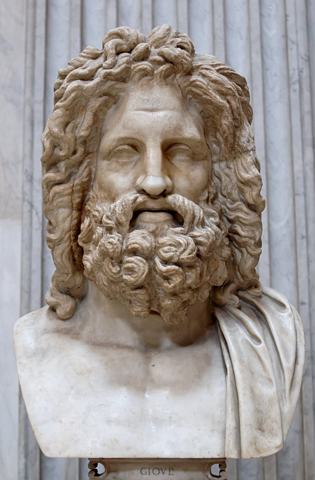
King of the gods and lord of the sky, thunder and justice. He overthrew his own father, divided the universe by lot, and guaranteed the laws of hospitality.
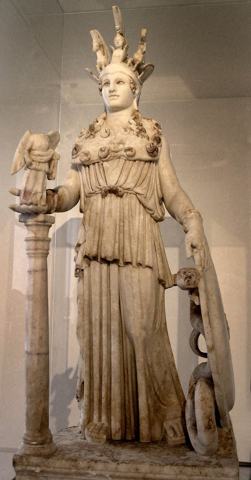
Goddess of wisdom, strategy and craft, born fully armed from the head of Zeus. Patron of Athens, of heroes, and of Odysseus above all.
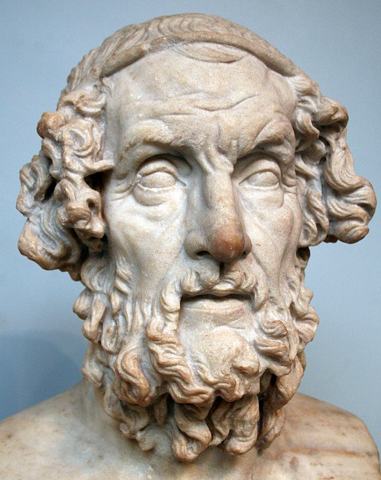
Homer's epic of Odysseus's ten-year voyage home from Troy, the founding adventure story of Western literature and the subject of a 2026 film.
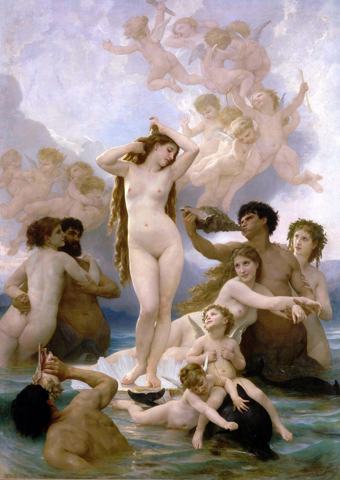
Born from sea foam or fathered by Zeus — the goddess of desire, whose power over gods and mortals starts wars as easily as marriages.
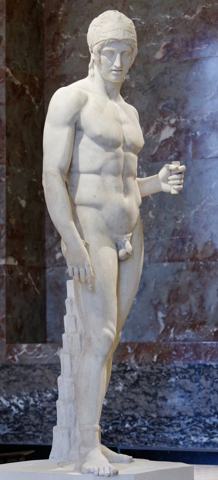
The Greek god of war as slaughter rather than strategy — hated by his own father, beaten by Athena, and worshipped anyway on the edges of the Greek world.
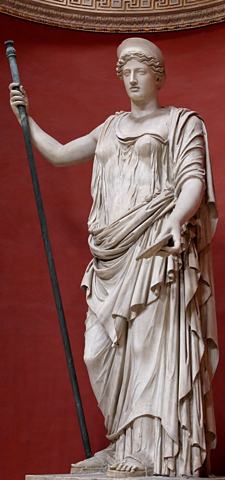
Queen of the gods. Zeus's sister, wife and most dangerous opponent — goddess of marriage in cult, and in Homer the one Olympian he is genuinely wary of.
Also mentioned inOdysseus
Sources & Further Reading
- 1.Homer. The Iliad. Translated by Robert Fagles. Viking, 1990.
- 2.Homer. The Iliad. Translated by Caroline Alexander. Ecco, 2015.
- 3.West, M.L. Studies in the Text and Transmission of the Iliad. K.G. Saur, 2001.
- 4.Kirk, G.S., general editor. The Iliad: A Commentary. Cambridge University Press, 1985-1993.
- 5.Nagy, Gregory. The Best of the Achaeans: Concepts of the Hero in Archaic Greek Poetry. Johns Hopkins University Press, 1979.
- 6.Finley, M.I. The World of Odysseus. New York Review Books, 2002.
- 7.Powell, Barry B. Homer. Blackwell, 2004.
Spot an error or have a source to suggest? Write to info@viseterna.com. We cite primary sources and modern scholarship, and we correct fast.