
Ares
The Greek god of war as slaughter rather than strategy — hated by his own father, beaten by Athena, and worshipped anyway on the edges of the Greek world.
Ares Borghese, Roman copy after a Greek original of c. 420 BC, photo by Marie-Lan Nguyen, 2011 (Musee du Louvre, Paris) · CC BY 2.5 · source
The Unloved Son
Ares is the son of Zeus and Hera, one of the few major Olympians with both parents inside the marriage 3. It does him no good. When he comes to his father wounded in Iliad 5, Zeus answers with the harshest speech any god receives in Homer: of all the gods on Olympus, Ares is the most hateful to him, because strife and wars and fighting are forever dear to him — and only the fact that he is Zeus' own son keeps him out of Tartarus 1.
That verdict sets the tone. Where Athena embodies war as skill, discipline and the intelligence that wins, Ares embodies the part of war that cannot be made useful: the noise, the panic and the killing 1,7. Homer's epithets for him are relentlessly physical — "manslaughtering", "insatiate of battle", "bane of mortals" — and never wise, never just 1.
Defeats in Homer
Homer humiliates him repeatedly. In Book 5 Diomedes drives a spear into his belly with Athena leaning on the shaft, and Ares bellows with the voice of nine or ten thousand men before fleeing to Olympus to complain 1. In Book 21 Athena knocks him down with a boundary stone, and he covers seven acres where he falls; when Aphrodite tries to lead him away, Athena knocks her down too 1. Earlier tradition adds the giants Otus and Ephialtes, who bound Ares in a bronze jar for thirteen months until Hermes stole him out, half-dead 1,8.
The Odyssey supplies the comic version. Ares takes Aphrodite, wife of Hephaestus, as his lover; the smith forges an invisible net, catches them in the act, and summons the gods to see 2. The affair is nonetheless productive: their children include Harmonia, who marries Cadmus, and the personified terrors Deimos and Phobos — Rout and Fear — who yoke his chariot 1,3.
Cult and Territory
The old textbook line that Ares had almost no cult is an overstatement. He had real worship, and it clustered in specific places: Thebes, whose founding myth turns on Cadmus killing the dragon of Ares and sowing its teeth; Sparta and Crete, where his name appears in oath formulas alongside other gods; and various sanctuaries in Arcadia and Asia Minor 6,7,8. Thrace, in the poets, is his homeland — a way of placing the god beyond the civilised frontier, and probably not a memory of any actual Thracian cult 7.
Athens is the revealing case. The Areopagus, the "hill of Ares" beside the Acropolis, took its name from a trial: Ares killed Halirrhothius, son of Poseidon, for assaulting his daughter Alcippe, and was tried by the other gods on that spot and acquitted — the mythical charter of the Athenian homicide court 5,6. Yet Athens had no early temple of Ares in its centre; the one that stood in the Agora in Roman times had been physically moved there from elsewhere in Attica under Augustus 6,7.
Children and the Heroic World
Ares' offspring in myth run to the violent and the monstrous: Cycnus, who built a temple from the skulls of travellers and was killed by Heracles; Diomedes of Thrace, whose mares ate human flesh; and, in the traditions most often followed, the Amazons, including Penthesilea and Hippolyta, who are called his daughters 3,5,8. He also fathers Phlegyas and, with Aphrodite, the line that leads to Thebes.
His constant companions are Enyo, a goddess of the battle-cry, and Eris, Strife, who according to Hesiod grows from small beginnings until her head strikes the sky 1,3. The late Homeric Hymn to Ares, which reads more like a philosophical prayer than an archaic one, asks him instead for the courage to keep the peace — evidence of how much the god's image shifted by the end of antiquity 4.
Ares and Mars
Roman readers routinely equated Ares with Mars, and translators still do, but the two are not the same figure. Mars was an ancient Italic god of agriculture and boundaries as well as war, father of Romulus and Remus, second only to Jupiter in the state cult, and honoured with festivals across the calendar 7. Ares was never a founder, never a patron of the city, and never respectable.
That is arguably his function. The Greeks needed a name for what war actually is once the speeches are over, and they gave it a god they were free to despise — while still swearing by him, and still marching 1,7,8.
Continue Exploring
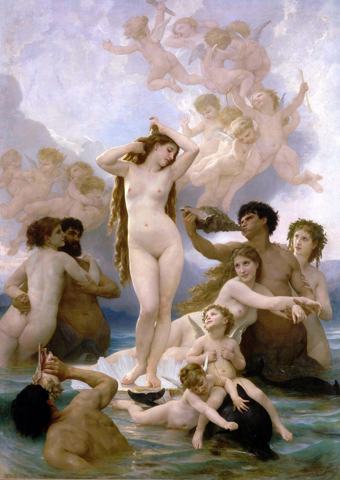
Born from sea foam or fathered by Zeus — the goddess of desire, whose power over gods and mortals starts wars as easily as marriages.
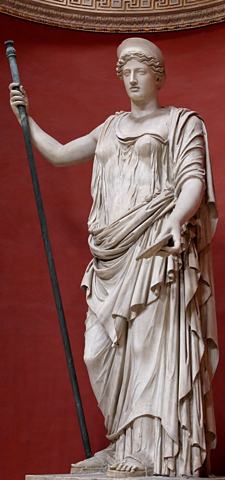
Queen of the gods. Zeus's sister, wife and most dangerous opponent — goddess of marriage in cult, and in Homer the one Olympian he is genuinely wary of.
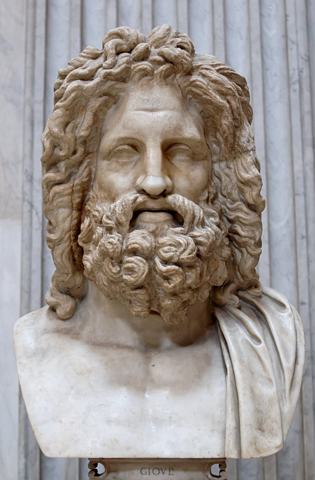
King of the gods and lord of the sky, thunder and justice. He overthrew his own father, divided the universe by lot, and guaranteed the laws of hospitality.
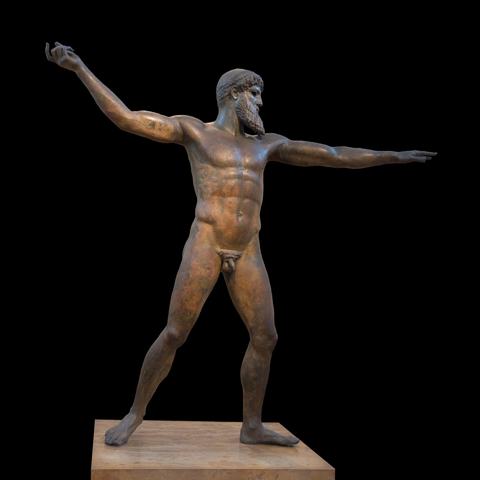
God of the sea, earthquakes and horses. Brother of Zeus, wielder of the trident, and the divine enemy who keeps Odysseus from reaching home.
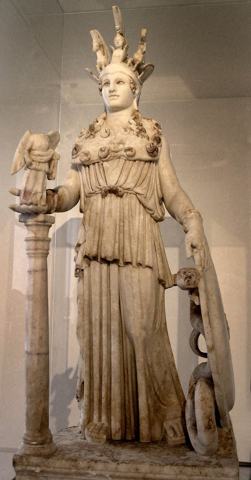
Goddess of wisdom, strategy and craft, born fully armed from the head of Zeus. Patron of Athens, of heroes, and of Odysseus above all.
Homer's epic of the final weeks of the Trojan War, opening with Achilles's rage and closing with the ransom of Hector's body.
Also mentioned inApolloThe Golden Fleece
Sources & Further Reading
- 1.Homer, Iliad — Books 5, 13, 15 and 21 (c. 8th-7th century BC).
- 2.Homer, Odyssey — Book 8, the song of Demodocus (c. 8th-7th century BC).
- 3.Hesiod, Theogony and the Shield of Heracles (c. 700 BC and later).
- 4.Homeric Hymn 8, To Ares (probably late antique).
- 5.Apollodorus, Bibliotheca (Library), 1st-2nd century AD.
- 6.Pausanias, Description of Greece — Books 1, 2, 3 and 9 (c. AD 160-180).
- 7.Burkert, Walter. Greek Religion. Trans. John Raffan. Harvard University Press, 1985.
- 8.Gantz, Timothy. Early Greek Myth — A Guide to Literary and Artistic Sources. Johns Hopkins University Press, 1993.
Spot an error or have a source to suggest? Write to info@viseterna.com. We cite primary sources and modern scholarship, and we correct fast.