
Artemis
Virgin huntress, mistress of animals, twin of Apollo. Protector of the young and the wild — and a goddess whose arrows kill without warning.
Diana of Versailles, Roman copy c. 2nd century AD after a Greek original, photo by Commonists, 2019 (Musee du Louvre, Paris) · CC BY-SA 4.0 · source
Daughter of Leto
Artemis is the daughter of Zeus and Leto and the twin of Apollo 3,6. A widespread strand of the tradition makes her the elder twin, born without difficulty and then serving as midwife at her brother's long and painful birth — which is offered as the reason a virgin goddess presides over childbirth as Artemis Locheia 6,8. Some accounts separate the birthplaces, giving Artemis the island of Ortygia and Apollo Delos, though ancient writers often treat Ortygia as another name for Delos itself 6,8.
Callimachus gives the most vivid picture of her childhood: the small goddess on her father's knee, asking for eternal maidenhood, a bow and arrows made by the Cyclopes, sixty young Oceanids as a chorus, twenty nymphs to mind her hunting boots and hounds, hunting dogs from Pan, and all the mountains in the world — with one city thrown in, since she would rarely visit town anyway 4. It is a late, playful poem, but it assembles genuinely old cult attributes.
Mistress of Animals
The oldest layer of the goddess is not the huntress but the potnia theron, the "mistress of wild animals" — the title Homer gives her in Iliad 21 1. Archaic art shows her flanked by beasts she grips by the throat, an image with deep Near Eastern and Minoan-Mycenaean roots, and scholars generally see the classical Artemis as a Greek narrowing of that far older figure 7,8. Her name appears in Linear B tablets, which places her in Greece well before Homer 7.
The relationship with animals is not sentimental. She protects the young of every species, and she demands their deaths; she is worshipped with sacrifice, and her sanctuaries stood at the edges of cultivated land, in marshes, groves and mountain passes — the boundary between the settled world and what lies outside it 7,8.
Wrath and Retribution
Her myths are almost all myths of transgression punished. Actaeon stumbles on her bathing (or, in older versions, boasts of outhunting her) and is turned into a stag and torn apart by his own hounds 6. Niobe boasts of having more children than Leto, and the twins shoot them down — Apollo the sons, Artemis the daughters 1,6. Agamemnon kills a deer in her precinct and boasts of the shot; the fleet is becalmed at Aulis until his daughter Iphigenia is offered, though in Euripides the goddess substitutes a deer at the altar and carries the girl to the Taurians to serve as her priestess 5,6.
The giant Orion dies by her arrows or by a scorpion, depending on the version, and the reasons vary from an attempted assault to a hunting boast to Apollo's jealousy — the sources genuinely disagree 6,8. The nymph Callisto, one of her companions, is seduced by Zeus, discovered when the band bathes, and transformed into a bear; some tellings have Artemis shoot her, others Hera 6. In the Iliad Artemis herself comes off badly: Hera boxes her ears and empties her quiver, calling her a lion only to women 1.
The link to women's deaths is not an insult but a function. Sudden death of a woman was attributed to Artemis' gentle arrows as sudden male death was to Apollo's 1,7.
Cult: Bears, Brauron, and Ephesus
At Brauron in Attica, girls before marriage served the goddess in a rite called the arkteia, in which they were said to "act the bear" — a ritual of transition out of wildness and into adult womanhood 7,8. At Sparta, Artemis Orthia's sanctuary hosted an ordeal in which youths were whipped at the altar; the tourist-friendly bloodletting of the Roman period was probably a hardened survival of an older initiatory contest 7,8.
Artemis of Ephesus is a different figure again: a stiff, richly ornamented cult image covered with rows of rounded protuberances, housed in one of the seven wonders of the ancient world. Whether those objects are breasts, eggs, dates, gourds or bull testicles has been argued for over a century without resolution, and the Ephesian goddess is best understood as an Anatolian deity assimilated to the Greek name 7,8.
Legacy
Roman writers identified her with Diana, an Italic goddess of woodland and the Aventine, and much of the later European image of the chaste huntress comes through that channel 7. Later still she was drawn together with Selene the moon and with Hecate, forming the "triple goddess" familiar from Renaissance and modern literature — a synthesis largely of Hellenistic and Roman date rather than archaic Greek belief 7,8. In cult she remained what Euripides' Hippolytus makes her: a goddess who accepts the devotion of those who stay outside the ordinary human bargain, and who does not forgive those who mock it 5.
Continue Exploring
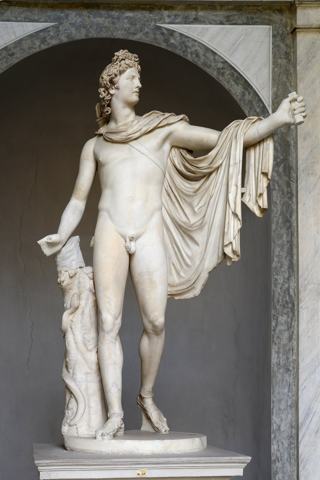
Twin of Artemis, lord of Delphi. God of prophecy, music, healing and plague — the far-shooter whose arrows bring both the cure and the sickness.
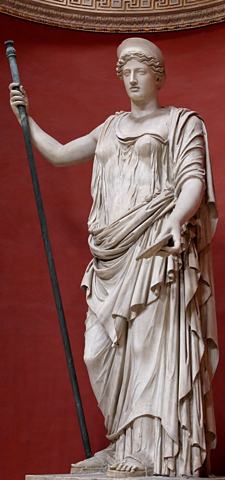
Queen of the gods. Zeus's sister, wife and most dangerous opponent — goddess of marriage in cult, and in Homer the one Olympian he is genuinely wary of.
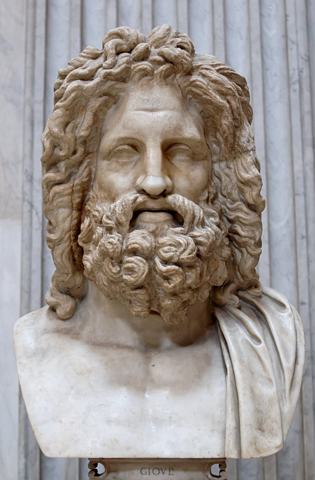
King of the gods and lord of the sky, thunder and justice. He overthrew his own father, divided the universe by lot, and guaranteed the laws of hospitality.
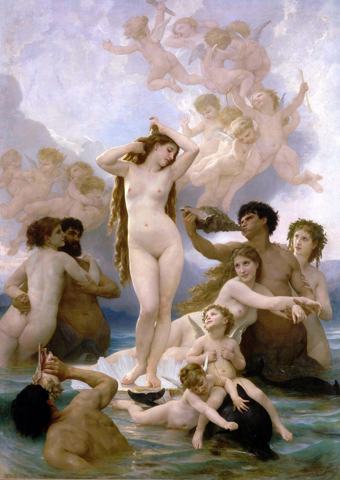
Born from sea foam or fathered by Zeus — the goddess of desire, whose power over gods and mortals starts wars as easily as marriages.
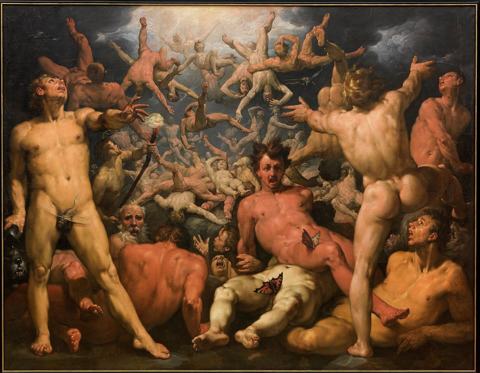
The twelve children of Sky and Earth who ruled before Zeus. Cronus, Rhea, Oceanus, Prometheus' line — and the ten-year war that buried them in Tartarus.
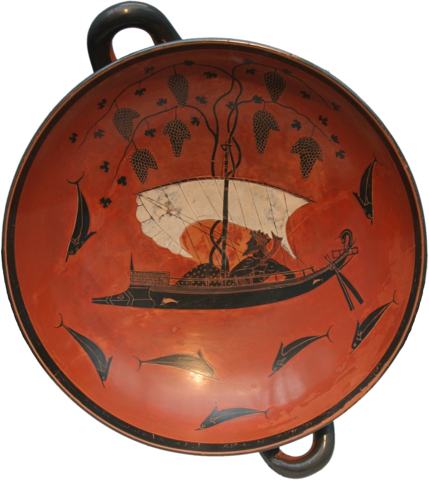
Twice-born god of wine, madness and the mask. He dissolves the boundary between god and beast, and destroys the cities that refuse him.
Sources & Further Reading
- 1.Homer, Iliad — Books 5, 20, 21 and 24 (c. 8th-7th century BC).
- 2.Homeric Hymns 9 and 27, To Artemis (c. 7th-6th century BC).
- 3.Hesiod, Theogony (c. 700 BC).
- 4.Callimachus, Hymn 3, To Artemis (3rd century BC).
- 5.Euripides, Hippolytus (428 BC) and Iphigenia among the Taurians (c. 414 BC).
- 6.Apollodorus, Bibliotheca (Library), 1st-2nd century AD.
- 7.Burkert, Walter. Greek Religion. Trans. John Raffan. Harvard University Press, 1985.
- 8.Larson, Jennifer. Ancient Greek Cults — A Guide. Routledge, 2007.
Spot an error or have a source to suggest? Write to info@viseterna.com. We cite primary sources and modern scholarship, and we correct fast.