
The Eleusinian Mysteries
The secret initiation rite of Demeter and Persephone at Eleusis, the most prestigious mystery cult in the Greek world for nearly two thousand years.
The Great Eleusinian Relief, c. 440-430 BC (National Archaeological Museum, Athens) · CC BY-SA 4.0 · source
The Most Famous Secret in Greece
The Eleusinian Mysteries were an annual initiation rite held at the town of Eleusis, about fourteen miles from Athens, in honor of Demeter and her daughter Persephone 1,3. Unlike ordinary civic sacrifice, open to anyone as spectacle, the Mysteries were a telete, a closed initiation whose central revelation was disclosed only to initiates and protected by a death penalty for disclosure under Athenian law, a secrecy so well kept that despite the rite running for well over a thousand years and initiating tens of thousands of people, including major figures like Cicero and the emperor Hadrian, no ancient source describes exactly what was shown in the climactic ceremony 3,4. What survives is the surrounding structure: the myth that justified the rite, the sequence of preliminary and full initiation, and the site's material remains 3,5.
The Myth: Demeter's Grief and Persephone's Return
The rite's charter myth is told in the Homeric Hymn to Demeter, composed around the seventh century BCE: Hades abducts Persephone to the underworld with Zeus's tacit consent, and her mother Demeter, goddess of grain, searches the earth in grief and rage, disguised as an old woman, and comes to Eleusis, where the local royal family takes her in 1,2. Demeter withholds the harvest from the whole earth until Zeus forces a compromise: Persephone will spend part of the year with Hades and part with her mother, and the earth's fertility returns with her each time 1,2. Before leaving Eleusis, Demeter teaches the local prince Triptolemus the secrets of agriculture and institutes her own rites there in gratitude for the hospitality she received, which the hymn presents as the literal founding of the Mysteries by the goddess herself 1,2.
Becoming an Initiate
Full initiation came in two stages spread across the ritual calendar. The Lesser Mysteries, held in spring at Agrae near Athens, served as a preliminary purification open to anyone who applied, a prerequisite for the main event 3,4. The Greater Mysteries ran each autumn: initiates gathered in Athens, fasted, and then processed roughly fourteen miles along the Sacred Way to Eleusis carrying sacred objects, a journey ancient sources describe as involving ritual insults shouted at travelers from a bridge, torches, and a night vigil, culminating in secret rites inside the sanctuary's initiation hall 3,4. Eligibility was unusually broad for Greek religion: any Greek-speaker, man or woman, free or enslaved, could be initiated, which Parker and other historians treat as one of the rite's most socially striking features against the backdrop of a religious landscape otherwise heavily stratified by citizenship, gender, and status 4,6.
The Telesterion and What Was (Not) Shown
The initiation itself took place inside the Telesterion, a large, roofed hall unlike any standard Greek temple, built to hold hundreds of initiates at once and rebuilt larger several times across the sanctuary's history as its popularity grew 3,5. Ancient hints, never explicit confessions, describe the climax as involving legomena (things said), drōmena (things done), and deiknymena (things shown), and later, hostile Christian writers claimed the culminating revelation involved an ear of grain, understood as a symbol of Demeter's gift and possibly of the initiate's own hope for a better fate after death, though this account comes from polemicists trying to debunk the rite rather than from initiates describing it faithfully, so scholars treat it as suggestive rather than confirmed 3,4. Clinton's study of the sanctuary's surviving relief sculpture and votive imagery, including scenes of Demeter, Persephone, and Triptolemus like the one on this page, offers the closest thing to visual evidence for how Athenians themselves imagined the myth behind closed doors, without ever showing the secret ritual itself 5.
Promise, Decline, and Modern Revival
What initiates were promised is comparatively well attested: a better lot in the afterlife than the bleak, undifferentiated existence Homeric epic assigns ordinary souls, a promise the Hymn to Demeter itself states directly even while withholding the ritual mechanism behind it 1,2. Burkert situates Eleusis within the broader phenomenon of Greco-Roman mystery cults, alongside the cults of Dionysus, Isis, and Mithras, as rites offering individual, elective religious experience and a personal relationship to divine favor that stood alongside, rather than replacing, ordinary civic worship 4. The sanctuary operated continuously from at least the Archaic period until the Visigothic king Alaric's forces sacked it in 396 CE, after which, combined with the general Christianization of the empire, the rites lapsed for good 3,5. Modern neopagan and esoteric groups have since claimed continuity with or revival of the Mysteries, but these are twentieth- and twenty-first-century reconstructions built on fragmentary ancient evidence and considerable speculation, not an unbroken tradition, and should not be confused with the historically attested Athenian rite 4,6.
Continue Exploring
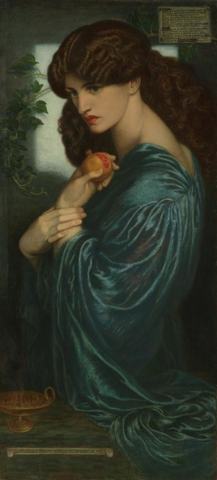
The girl carried off in a chariot and the dread queen of the dead. Persephone divides her year between the grain above and the throne below.
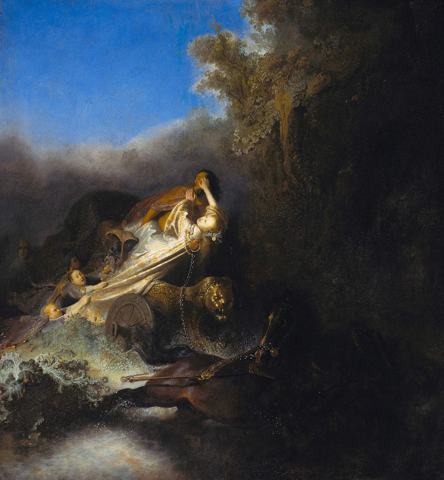
Lord of the underworld and of the wealth beneath the earth. Not a devil — a grim, lawful king whose only rule is that no one leaves.
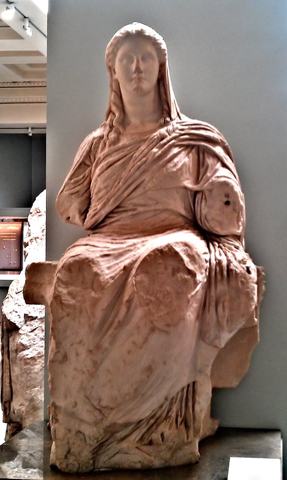
Goddess of grain and the mother who stopped the world's harvest to get her daughter back. Founder of the Eleusinian Mysteries.
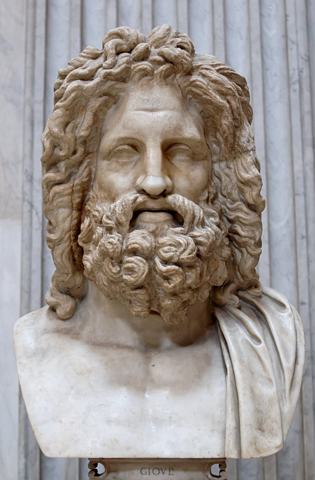
King of the gods and lord of the sky, thunder and justice. He overthrew his own father, divided the universe by lot, and guaranteed the laws of hospitality.
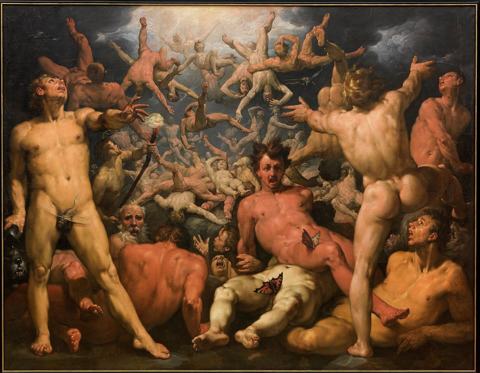
The twelve children of Sky and Earth who ruled before Zeus. Cronus, Rhea, Oceanus, Prometheus' line — and the ten-year war that buried them in Tartarus.
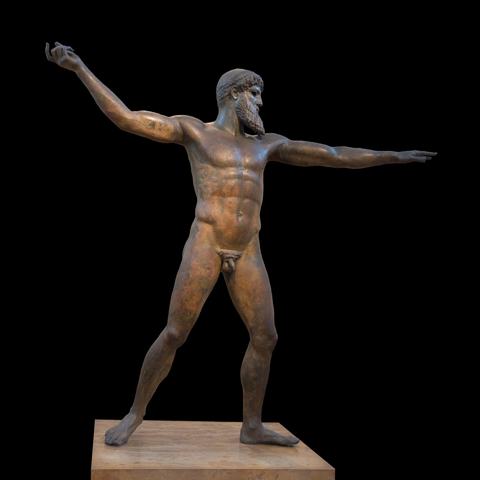
God of the sea, earthquakes and horses. Brother of Zeus, wielder of the trident, and the divine enemy who keeps Odysseus from reaching home.
Sources & Further Reading
- 1.Richardson, N.J. The Homeric Hymn to Demeter. Clarendon Press, 1974.
- 2.Foley, Helene P., ed. The Homeric Hymn to Demeter: Translation, Commentary, and Interpretive Essays. Princeton University Press, 1994.
- 3.Mylonas, George E. Eleusis and the Eleusinian Mysteries. Princeton University Press, 1961.
- 4.Burkert, Walter. Ancient Mystery Cults. Harvard University Press, 1987.
- 5.Clinton, Kevin. Myth and Cult: The Iconography of the Eleusinian Mysteries. Svenska Institutet i Athen, 1992.
- 6.Parker, Robert. Polytheism and Society at Athens. Oxford University Press, 2005.
Spot an error or have a source to suggest? Write to info@viseterna.com. We cite primary sources and modern scholarship, and we correct fast.