
Mount Olympus
Home of the gods. A real snow-capped mountain in northern Greece that Homer made into a cloudless upper world where the twelve immortals hold court.
Mytikas peak, Mount Olympus, Greece; photo Giorgos ab1234, 2018, CC BY-SA 4.0 · CC BY-SA 4.0 · source
A Real Mountain
Olympus is not a metaphor. It is the highest massif in Greece, on the border of Thessaly and Macedonia, rising out of the coastal plain within sight of the Aegean, with its summit ridge reaching about 2,918 metres. Snow lies on it for much of the year and cloud sits on it for most of the rest, which is the entire origin of the idea: a place visibly above the weather, permanently in view, and effectively unreachable 7,8.
The name is probably not Greek. At least a dozen mountains around the Aegean and in Asia Minor carry it — in Mysia, Lycia, Cyprus, Arcadia, Lesbos — which suggests olympos was a pre-Greek word meaning something like "mountain" that stuck to the biggest one 6,8. Greek religion is full of these survivals, names inherited from a population that was there before the language was.
Homer's Olympus
Homer's mountain has a court on it. The gods live in separate houses built by Hephaestus, with Zeus's palace at the top; they assemble there, feast on nectar and ambrosia, listen to Apollo's lyre, and argue. Iliad Book 1 ends with the whole divine family laughing at the limping cup-bearer, immediately after a quarrel that has just condemned thousands of men to die 1.
Then there is the description in the Odyssey that does something else entirely. Olympus, the poet says, is where the gods have their seat forever: not shaken by winds, never wet with rain, never touched by snow, with a cloudless brightness spread over it, in which the blessed take their pleasure all their days 2.
That is a description of a sky, not a summit. Homer uses the word sometimes as a mountain — with peaks, ridges and a base, where Hera can descend from a "topmost peak" — and sometimes interchangeably with ouranos, heaven itself, and no amount of harmonising makes the two fully consistent 1,2,7. The ambiguity is productive. Olympus is exactly as far away as a story needs it to be: close enough for a god to arrive within a line, high enough that no one can go there.
Book 8 supplies the mountain's most memorable image of authority. Zeus tells the assembled gods they may fasten a golden rope to heaven and all pull together, and they will not drag him down — but he could haul up the lot of them, and the earth and sea with them, and tie the rope off around a peak of Olympus and leave everything dangling 1.
The War That Named It
Hesiod's Theogony explains how the gods came to hold the mountain. The Titans occupied Mount Othrys, in southern Thessaly; the younger gods held Olympus; and the two sides fought for ten years without either giving way, until Zeus released the Hundred-Handers from beneath the earth and the balance broke 3.
Hesiod's account of the final battle is one of the most violent passages in Greek literature — the boundless sea roaring, the earth crashing, the flame of the thunderbolts and the wind carrying dust and noise up to heaven, until the Titans are bound below and Olympus belongs to the victors 3. The mountain is a spoil of war, and the gods who live there are called Olympians because they won a real estate dispute against their parents 7.
The Twelve, and Who Counts
"The Twelve Olympians" is a genuine ancient category and a slippery one. The canonical group is usually Zeus, Hera, Poseidon, Demeter, Athena, Apollo, Artemis, Ares, Aphrodite, Hephaestus, Hermes and either Hestia or Dionysus — the two are frequently swapped, and different cities counted differently 6,8.
Hades is generally not included, for the straightforward reason that he does not live there: the three brothers divided the cosmos by lot, and Hades drew the underworld, so he appears on Olympus only rarely 7,8.
The number had civic reality. Thucydides mentions the Altar of the Twelve Gods set up in the Athenian Agora in 522/1 BCE by the younger Peisistratos, which served as the point from which distances in Attica were measured and as a place of sanctuary; a comparable cult of twelve gods existed at Olympia 5,6. The Olympians were a set before anyone agreed on the membership.
Cult on the Mountain Itself
People did climb it. Archaeological survey on the summit ridge has identified an open-air sanctuary with ash deposits and dedications, consistent with sacrifices to Zeus Olympios made high on the mountain over a long period 6,8.
At its foot lay Dion, a major Macedonian sanctuary of Zeus, where the kings of Macedon held games and where Alexander sacrificed before crossing into Asia 4,8. That is worth noting, because it shows the mountain was not merely a literary address. It anchored real cult, and the Macedonian kings used their proximity to it as a claim on Greekness 8.
Confusingly for modern readers, the sanctuary of Olympia — home of the Olympic Games — is nowhere near Mount Olympus. It lies in the western Peloponnese, some 250 kilometres away, and its name derives from the same epithet of Zeus rather than from the mountain 4,8.
The Summit, Eventually
The literal question of the summit was not settled until modern times. The highest of the peaks, Mytikas, was first recorded as climbed on 2 August 1913 by the Greek hunter and guide Christos Kakkalos with the Swiss photographer Frédéric Boissonnas and Daniel Baud-Bovy, who found no palaces 8.
Greece made the massif its first national park in 1938, and it is now a UNESCO biosphere reserve with several thousand plant and animal species, some found nowhere else 8. It remains, as it was in the eighth century BCE, a mountain you can see from a long way off and mostly cannot see the top of — which is all the myth ever needed from it.
Continue Exploring
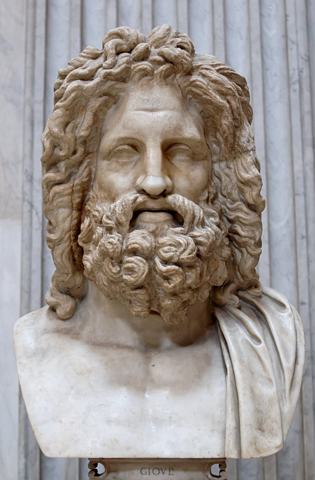
King of the gods and lord of the sky, thunder and justice. He overthrew his own father, divided the universe by lot, and guaranteed the laws of hospitality.
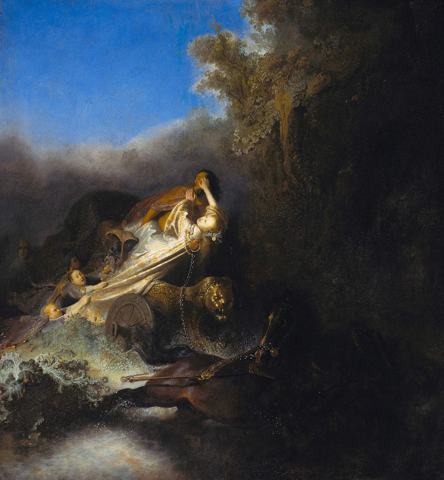
Lord of the underworld and of the wealth beneath the earth. Not a devil — a grim, lawful king whose only rule is that no one leaves.
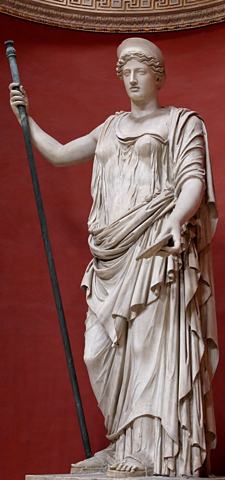
Queen of the gods. Zeus's sister, wife and most dangerous opponent — goddess of marriage in cult, and in Homer the one Olympian he is genuinely wary of.
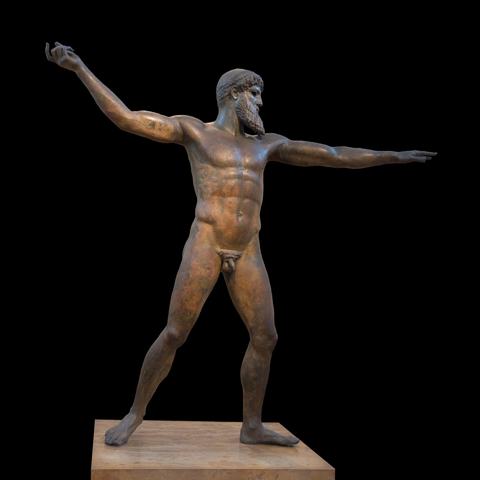
God of the sea, earthquakes and horses. Brother of Zeus, wielder of the trident, and the divine enemy who keeps Odysseus from reaching home.
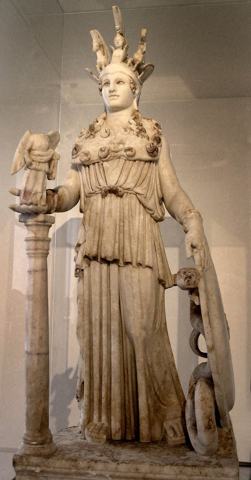
Goddess of wisdom, strategy and craft, born fully armed from the head of Zeus. Patron of Athens, of heroes, and of Odysseus above all.
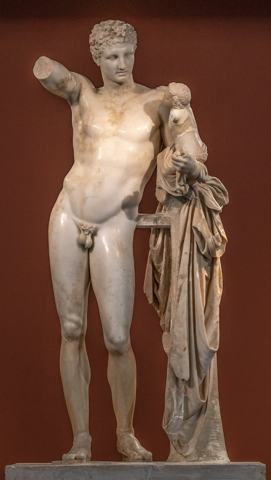
Messenger of the gods and guide of the dead. Patron of travellers, traders, heralds and thieves, and the only Olympian who crosses every boundary at will.
Also mentioned inThe Titans
Sources & Further Reading
- 1.Homer, Iliad (c. 8th century BCE), esp. Books 1, 8, 14 and 20.
- 2.Homer, Odyssey (c. 8th-7th century BCE), 6.41-47.
- 3.Hesiod, Theogony (c. 700 BCE), esp. lines 617-735.
- 4.Pausanias, Description of Greece (c. 150-180 CE), esp. Books 1 and 5.
- 5.Thucydides, History of the Peloponnesian War (c. 400 BCE), 6.54.
- 6.Burkert, Walter. Greek Religion — Archaic and Classical. Trans. John Raffan. Harvard University Press, 1985.
- 7.Hard, Robin. The Routledge Handbook of Greek Mythology. Based on H. J. Rose's Handbook of Greek Mythology. Routledge, 2004.
- 8.Hornblower, Simon, Antony Spawforth and Esther Eidinow (eds.). The Oxford Classical Dictionary. 4th ed., Oxford University Press, 2012.
Spot an error or have a source to suggest? Write to info@viseterna.com. We cite primary sources and modern scholarship, and we correct fast.