
Demeter
Goddess of grain and the mother who stopped the world's harvest to get her daughter back. Founder of the Eleusinian Mysteries.
Demeter of Knidos, marble, c. 350-330 BC, photo by Andres Rueda, 2012 (British Museum, London) · CC BY 2.0 · source
The Grain Goddess
Demeter is a daughter of the Titans Cronus and Rhea, and so a full sister of Zeus, Poseidon, Hades and Hera — one of the six swallowed and disgorged in the first generation of Olympians 2,3. Her name almost certainly contains meter, "mother"; the first element is disputed, with an old derivation from a word for "earth" now generally doubted and no replacement agreed 7.
Her sphere is not the earth in general but cultivated grain: ploughing, sowing, threshing, and the bread that separates a settled people from everything wilder. Hesiod's farming calendar addresses her directly, and her name in Greek can simply stand for the crop itself 2,7. Because grain must be buried before it rises, she is also a goddess of the dead, and the Athenians called their dead Demetrioi 7,8.
The Loss of Persephone
The central myth is told most fully in the Homeric Hymn to Demeter, one of the great poems of early Greece. Demeter's daughter, called simply Kore ("the girl") before her marriage, is picking flowers in a meadow with the daughters of Ocean when the earth opens. A narcissus of extraordinary beauty has been planted as a lure, "by the plan of Zeus"; Hades drives up in his chariot and carries her down 1. Only Hecate and Helios hear or see anything, and Helios later tells Demeter plainly that Zeus gave the girl to his brother.
Demeter tears her veil, refuses ambrosia, and wanders nine days with torches, eating and drinking nothing. On the tenth she comes disguised as an old woman to Eleusis, sits by the Maiden Well, and is taken into the house of King Celeus as nurse to the infant Demophoon 1. She begins to make the child immortal, anointing him with ambrosia and laying him in the fire at night — until his mother Metaneira sees, screams, and ruins it. The goddess reveals herself in a blaze of light, rebukes the household for its foolishness, and orders a temple built 1.
Then she strikes. She sits in her new temple and stops the seed in the ground: no shoot, no ploughing, no harvest anywhere, until the human race would have starved and the gods would have lost all sacrifice 1. It is a straightforward act of leverage against Zeus, and it works.
The Bargain
Zeus sends messenger after messenger, and finally Hermes to the underworld. Hades agrees to release the girl but has her eat a pomegranate seed first, which binds her to return 1,3. In the hymn the settlement gives Persephone a third of the year below and two thirds above with her mother; later tellings, including Ovid's, commonly divide the year in half — a genuine variation, not a single canonical arrangement 1,5.
The reunion restores the grain, and Demeter then reveals her rites to the Eleusinian princes — Triptolemus, Eumolpus, Celeus and Diocles 1. The elaborated story in which Triptolemus is sent out across the world on a winged chariot to teach mankind agriculture belongs to later Athenian art and literature rather than to the hymn 3,6.
Read as an explanation of the seasons, the myth is imperfect: the Mediterranean grain year has its dead period in the parched summer, when seed lies stored in underground jars, not in a cold winter. Many scholars therefore read Persephone's absence against that agricultural cycle, and read the story at least as much as a myth about mothers, daughters and marriage as about weather 6,7.
The Eleusinian Mysteries
For roughly a thousand years, initiates walked the Sacred Way from Athens to Eleusis each autumn to be admitted to Demeter's Mysteries. Candidates purified themselves in the sea, fasted, drank the kykeon — a mixture of barley, water and pennyroyal, the drink Demeter herself accepts in the hymn — and entered the Telesterion, a great pillared hall, where a hierophant showed something in a burst of light 1,6,7.
What was shown was never written down. The secret held remarkably well: ancient authors say the initiates came away with a changed attitude toward death, and Cicero, himself an initiate, called the Mysteries the best thing Athens gave the world, but none of them describes the rite 6,7. Modern reconstructions — an ear of grain displayed in silence, a sacred marriage, a birth announcement — rest on hostile Christian polemic and inference, and remain speculative 6,7,8.
The Mysteries were open to anyone who spoke Greek and had not shed blood: women, foreigners and slaves included. That breadth, unusual in Greek religion, is part of why they mattered 7,8.
Other Faces of Demeter
Away from Eleusis she is stranger. The Thesmophoria, celebrated by married women across the Greek world, involved throwing piglets into pits and retrieving the decayed remains months later to mix with seed corn — an old fertility rite with no male participation at all 7,8. In Arcadia, Pausanias reports a Demeter who fled Poseidon by turning into a mare, was caught when he became a stallion, and bore the horse Arion and a daughter whose name could not be spoken outside the mysteries; in her anger she was worshipped as Demeter Erinys and, at Phigalia, as Demeter Melaina, the Black, with a horse's head 4.
Hesiod adds a milder union: she lay with the hero Iasion in a thrice-ploughed field and bore Plutus, Wealth 2. Erysichthon, who felled her sacred grove, was afflicted with a hunger that consumed his fortune and finally himself 5.
To the Romans she was Ceres, whose name survives in "cereal" — the plainest possible summary of what she was for 7.
Continue Exploring
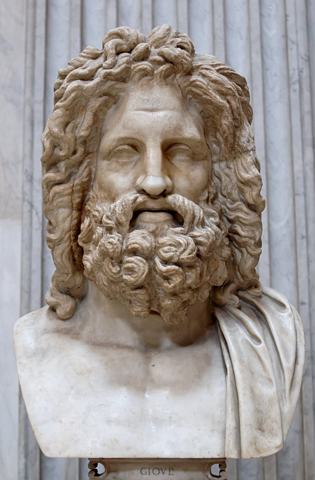
King of the gods and lord of the sky, thunder and justice. He overthrew his own father, divided the universe by lot, and guaranteed the laws of hospitality.
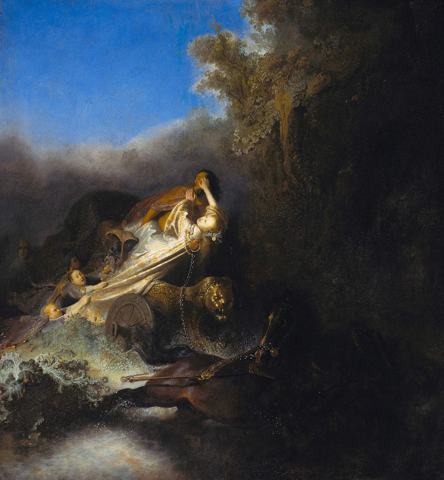
Lord of the underworld and of the wealth beneath the earth. Not a devil — a grim, lawful king whose only rule is that no one leaves.
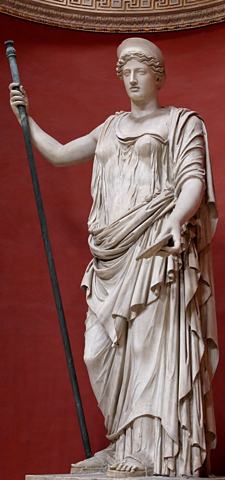
Queen of the gods. Zeus's sister, wife and most dangerous opponent — goddess of marriage in cult, and in Homer the one Olympian he is genuinely wary of.
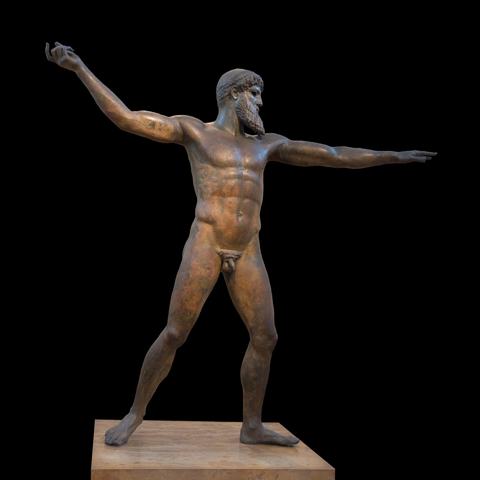
God of the sea, earthquakes and horses. Brother of Zeus, wielder of the trident, and the divine enemy who keeps Odysseus from reaching home.
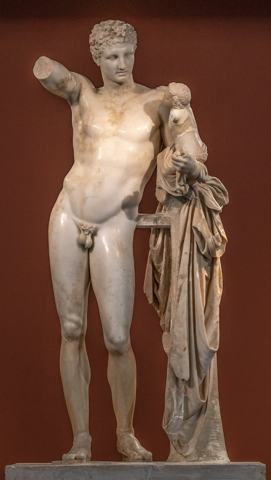
Messenger of the gods and guide of the dead. Patron of travellers, traders, heralds and thieves, and the only Olympian who crosses every boundary at will.
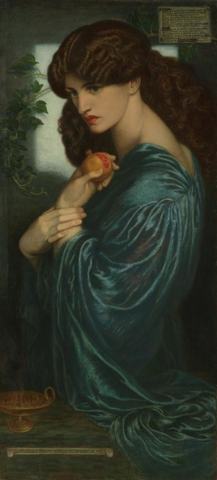
The girl carried off in a chariot and the dread queen of the dead. Persephone divides her year between the grain above and the throne below.
Also mentioned inThe Eleusinian MysteriesThe Lernaean HydraThe Titans
Sources & Further Reading
- 1.Homeric Hymn 2, To Demeter (c. 650-550 BC).
- 2.Hesiod, Theogony and Works and Days (c. 700 BC).
- 3.Apollodorus, Bibliotheca (Library), 1st-2nd century AD.
- 4.Pausanias, Description of Greece — Books 1, 2, 8 and 9 (c. AD 160-180).
- 5.Ovid, Metamorphoses Book 5 and Fasti Book 4 (c. AD 8 and AD 8-17).
- 6.Foley, Helene P. (ed.). The Homeric Hymn to Demeter — Translation, Commentary, and Interpretive Essays. Princeton University Press, 1994.
- 7.Burkert, Walter. Greek Religion. Trans. John Raffan. Harvard University Press, 1985.
- 8.Larson, Jennifer. Ancient Greek Cults — A Guide. Routledge, 2007.
Spot an error or have a source to suggest? Write to info@viseterna.com. We cite primary sources and modern scholarship, and we correct fast.