
Dionysus
Twice-born god of wine, madness and the mask. He dissolves the boundary between god and beast, and destroys the cities that refuse him.
Dionysus in a ship, kylix signed by Exekias, c. 530 BC (Staatliche Antikensammlungen, Munich, inv. 2044) · CC BY 2.5 · source
Twice Born
Dionysus is the son of Zeus and the Theban princess Semele, and the only major Olympian with a mortal mother 4,5. Hera, disguised as an old nurse, persuaded Semele to demand that her lover appear in his true form; bound by an oath, Zeus came in lightning, and Semele burned. Zeus snatched the unborn child, sewed him into his own thigh, and carried him to term — which is why the god is dithyrambos, "twice-born", and why he stands slightly outside the ordinary Olympian order even while belonging to it 5,8.
The infant was hidden from Hera among the nymphs of a mountain called Nysa, and raised with Silenus and the satyrs 2,5. An older scholarly view treated him as a late foreign import into Greece, a god who arrived from Thrace or Phrygia after Homer. That position collapsed when his name was read on Linear B tablets from Mycenaean Pylos and Khania, centuries before the Iliad; the modern consensus is that Dionysus is genuinely old in Greece, whatever eastern colouring his myths later took on 7,8.
Wine, Madness, and the Thiasos
His gift is wine, and wine in Greek thought is not simply a pleasure but a controlled release of self — the god enters the drinker. His followers, the thiasos, are satyrs and maenads: women who leave house and loom for the mountains, dressed in fawnskins, carrying the thyrsos, a fennel stalk tipped with ivy 1,7. In their ecstasy the Bacchae has them suckle wild animals and strike the rock for water, milk and honey — and then tear a living creature apart with their hands, the sparagmos, and eat the raw flesh, omophagia 1.
How much of this was performed and how much imagined is genuinely disputed. Attested Greek maenadic rites — the Delphic Thyiads, the women's bands at Thebes and Miletus — were organised, periodic, and civically sanctioned; scholars debate how far the literary picture of frenzy reflects them 7,8. What is clear is that the cult's promise, unlike most Greek worship, was a temporary loss of the ordinary self.
Resistance and Punishment
The characteristic Dionysian myth is the arrival of the god at a city that refuses him, and the ruin that follows. The Iliad preserves the oldest instance: Lycurgus of Thrace drives the god's nurses down the mountain with an ox-goad, Dionysus dives into the sea to Thetis, and Zeus blinds the king 3. In Euripides' Bacchae, Pentheus of Thebes imprisons the stranger, is lured into women's dress to spy on the maenads, and is torn apart by his own mother Agave, who carries his head home believing it a lion's 1. The daughters of Minyas and of Proetus refuse the rites and are driven mad in turn 5,6.
The Homeric Hymn gives the gentler version. Tyrrhenian pirates seize a beautiful youth on the shore and bind him; the ropes fall off, wine runs through the ship, a vine climbs the mast, the god becomes a lion, and the terrified crew leap overboard and turn into dolphins — the scene painted by Exekias on the cup shown above 2.
Theatre, Ivy, and the Mask
The Athenian theatre was Dionysus' institution. Tragedy and comedy were performed at his festivals — the City Dionysia and the Lenaia — in a precinct beside his temple, before his priest, with his image present 6,7. Drama's tools are his tools: the mask that makes a man into someone else, the chorus that dissolves individuals into a group, wine, disguise and reversal. Scholars have long argued over whether tragedy literally grew out of Dionysiac ritual, and the reconstruction remains speculative, but the institutional link is beyond doubt 7,8.
At Delphi he shared the sanctuary with Apollo, holding the three winter months while Apollo was away — the two gods the Greeks themselves paired, long before Nietzsche made the contrast famous 6,7.
Ariadne, the Underworld, and the Orphic Dionysus
Dionysus is the one Olympian with a happy marriage. Finding Ariadne abandoned on Naxos after she had saved Theseus from the Minotaur, he took her as his wife; some traditions set her crown among the stars 5,6. He is also, uniquely, a god who goes down and comes back: Pausanias records the tradition that he descended through the Alcyonian lake at Lerna to bring his mother Semele up out of the dead and make her a goddess 6.
Late texts of Orphic character tell of a first Dionysus, sometimes called Zagreus, the child of Zeus and Persephone, lured by toys, dismembered and eaten by the Titans, whom Zeus destroyed with the thunderbolt — humanity then being formed from their remains, and so carrying both Titanic guilt and a Dionysian spark. Elements of the dismemberment are old, but the full anthropogony is first stated explicitly by very late Neoplatonic writers, and its antiquity is one of the sharpest ongoing disputes in the study of Greek religion 7,8.
To the Romans he was Bacchus or Liber; the Senate's brutal suppression of the Bacchanalia in 186 BC is a reminder that ancient states found this particular god genuinely dangerous 7.
Continue Exploring
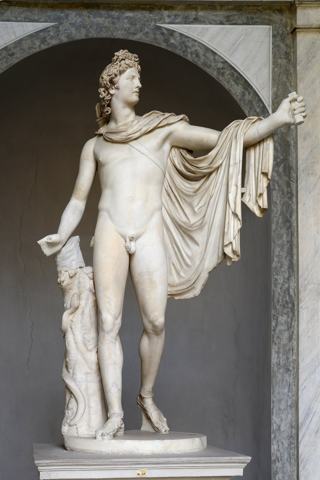
Twin of Artemis, lord of Delphi. God of prophecy, music, healing and plague — the far-shooter whose arrows bring both the cure and the sickness.
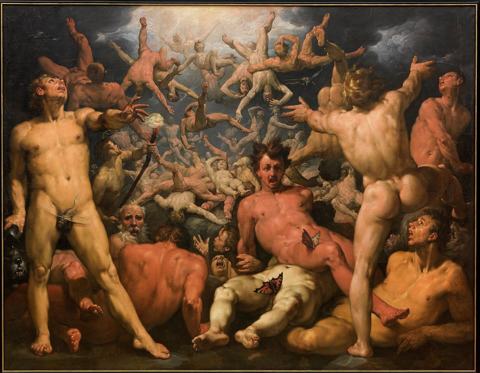
The twelve children of Sky and Earth who ruled before Zeus. Cronus, Rhea, Oceanus, Prometheus' line — and the ten-year war that buried them in Tartarus.
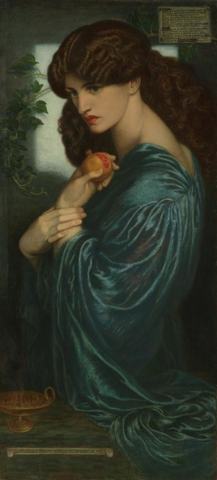
The girl carried off in a chariot and the dread queen of the dead. Persephone divides her year between the grain above and the throne below.
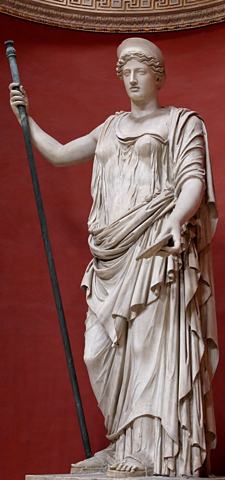
Queen of the gods. Zeus's sister, wife and most dangerous opponent — goddess of marriage in cult, and in Homer the one Olympian he is genuinely wary of.
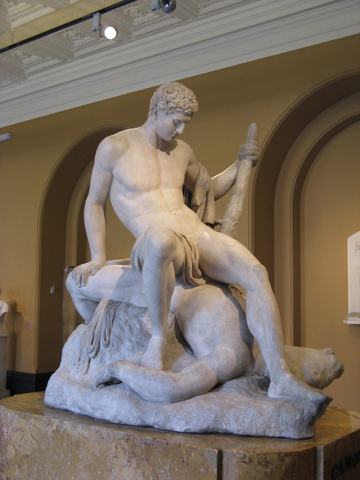
Athens's founding hero - slayer of the Minotaur, unifier of Attica, and the man whose forgotten sail cost his own father's life.
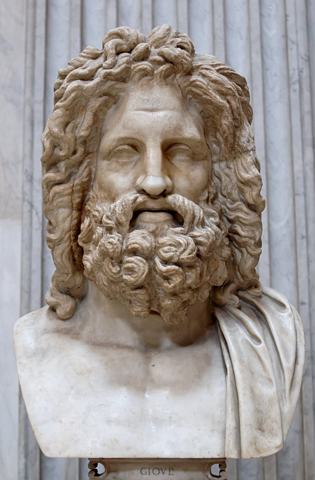
King of the gods and lord of the sky, thunder and justice. He overthrew his own father, divided the universe by lot, and guaranteed the laws of hospitality.
Sources & Further Reading
- 1.Euripides, Bacchae (produced posthumously, c. 405 BC).
- 2.Homeric Hymn 7, To Dionysus (the pirates), and Hymn 26 (c. 7th-6th century BC).
- 3.Homer, Iliad — Book 6, the tale of Lycurgus (c. 8th-7th century BC).
- 4.Hesiod, Theogony (c. 700 BC).
- 5.Apollodorus, Bibliotheca (Library), 1st-2nd century AD.
- 6.Pausanias, Description of Greece — Books 1, 2 and 8 (c. AD 160-180).
- 7.Burkert, Walter. Greek Religion. Trans. John Raffan. Harvard University Press, 1985.
- 8.Seaford, Richard. Dionysos. Routledge (Gods and Heroes of the Ancient World), 2006.
Spot an error or have a source to suggest? Write to info@viseterna.com. We cite primary sources and modern scholarship, and we correct fast.