
Pandora
The first mortal woman, built by the gods and sent to open a sealed storage jar that let misery into the world — an ancient jar, not the box of later legend.
Pandora, John William Waterhouse, 1896 · Public domain · source
Made by the Gods
Pandora is the first woman in Greek myth, and unlike nearly everyone else in the tradition she was never born. Hesiod tells the story twice, in the Theogony and in Works and Days, and both times the making is a divine assembly line. Zeus orders the smith-god Hephaestus to mix earth and water into the shape of a modest young woman, and the other gods finish her in turn: Athena dresses her and teaches her weaving, Aphrodite pours grace and painful longing over her head, and Hermes gives her "a shameless mind and a deceitful nature," along with lies and crafty words 1,2. Every Olympian contributes something, which is where the name comes from: Hesiod says she was called Pandora because everyone on Olympus gave her a gift, for men's ruin 1.
Zeus's Revenge
The gift is a trap, and the trap has a backstory. After the Titan Prometheus tricks Zeus over a sacrifice and then steals fire for humanity, Zeus decides the punishment should not land on Prometheus alone. Pandora is made and sent, fully adorned, to Prometheus's brother Epimetheus — whose name means "afterthought," or "he who understands too late." Prometheus had specifically warned him never to accept a gift from Zeus, but Epimetheus takes her in anyway and only sees the mistake once the harm is already done 1. Hesiod does not soften the moral: from Pandora, he writes, "is descended the destructive race and tribes of women," a bane living among mortal men, useful in wealth but not in poverty 1.
The Jar, Not the Box
Pandora arrives with a sealed pithos, the kind of large ceramic storage jar Greek households used for wine, oil, or grain — not a hinged casket. Hesiod says she lifts the lid and releases what is inside — sorrow, disease, and toil — leaving only Elpis, hope or expectation, trapped under the rim 1. Ancient readers already argued over whether hope's survival is a mercy or one more suffering withheld, and Hesiod never actually settles it 1,6. The "box" most people picture today is a translation accident: writing in Latin in his Adagia in 1508, the humanist Erasmus rendered pithos as pyxis, a small box, apparently folding Pandora's jar together in his memory with the sealed box of Cupid and Psyche from Apuleius. The Panofskys trace how completely that slip reshaped European art, so that painters from the Renaissance onward gave Pandora a box she never actually holds in Hesiod 3,4.
What the Name Means
Hesiod's own gloss reads "Pandora" as pan-dora, "all-gift," because every god added something to her. A rival reading takes the name the other way, as "all-giving," an epithet that fits an earth goddess who gives up her produce more naturally than it fits a punishment, and some scholars think Hesiod inherited an older cult title and bent its sense to suit his story of a first, ruinous woman 5,6. The disagreement has never been settled from the Greek alone, and it matters, because it asks whether Pandora began as a bringer of abundance later recast as a bringer of disaster, or was invented as a disaster from the start 6.
Two Poems, One Woman
The Works and Days version is a farmer's parable, addressed to Hesiod's brother Perses, and it treats Pandora and womankind together as the price men pay for fire. The Theogony version is shorter and colder, calling her kalon kakon, a "beautiful evil," and dwelling less on the jar than on the fact that men who refuse marriage end up with no one to care for them in old age, while men who marry get daughters of Pandora instead 1,2. Modern readings split roughly the way the poems do. Vernant treats Pandora as one half of a sacrificial logic that also explains why humans burn bones rather than meat for the gods, tying her directly to Prometheus's original trick 7; Clay reads her as the hinge on which Hesiod's whole cosmic history turns, the point where an earlier age of easy living ends and human life as it actually is begins 6.
After Hesiod
The jar stayed a jar in most ancient art, painted on vases as an ordinary storage vessel with small winged troubles fluttering out of it. It is the post-Erasmus box that took over the popular imagination: Dante Gabriel Rossetti and John William Waterhouse both painted Pandora with a golden, ornamented chest rather than a jar, and Waterhouse's 1896 canvas is now the image most people call to mind 4. "Pandora's box" has since become an English idiom for any small, apparently harmless action that unleashes disproportionate consequences — a piece of everyday language built on a five-hundred-year-old mistranslation of a much older myth about the danger of accepting gifts from the wrong hands 3,4.
Continue Exploring
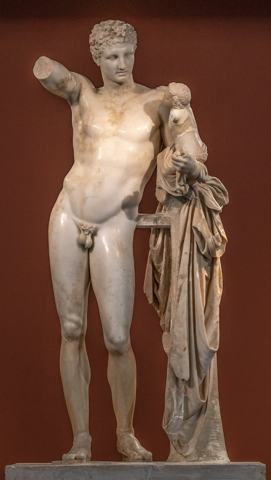
Messenger of the gods and guide of the dead. Patron of travellers, traders, heralds and thieves, and the only Olympian who crosses every boundary at will.
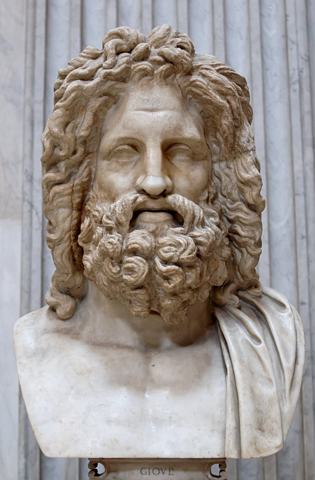
King of the gods and lord of the sky, thunder and justice. He overthrew his own father, divided the universe by lot, and guaranteed the laws of hospitality.
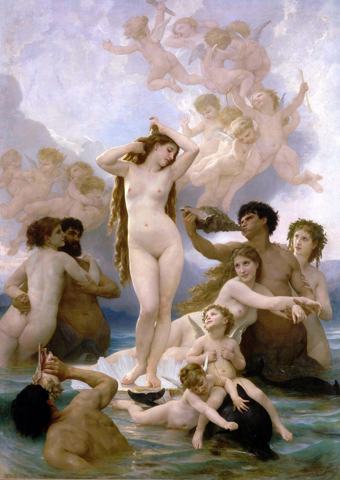
Born from sea foam or fathered by Zeus — the goddess of desire, whose power over gods and mortals starts wars as easily as marriages.
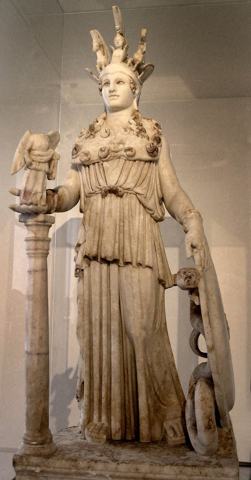
Goddess of wisdom, strategy and craft, born fully armed from the head of Zeus. Patron of Athens, of heroes, and of Odysseus above all.
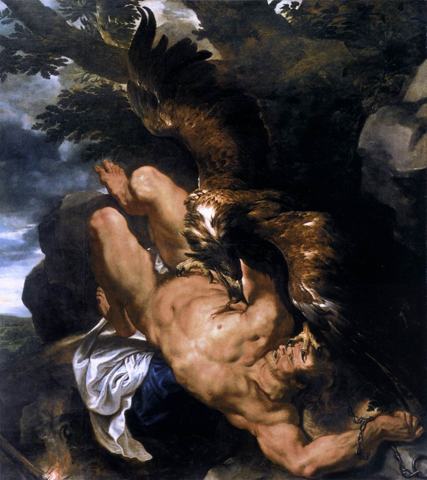
The Titan who tricked Zeus, stole fire for humanity, and paid with an eagle sent daily to eat his regenerating liver - freed, in the end, by Heracles.
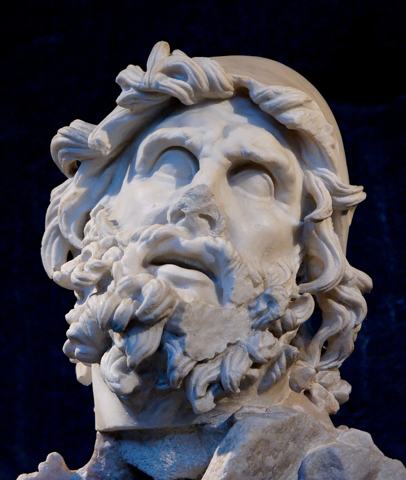
King of Ithaca and the man of many turns. Homer's cleverest hero, who took ten years to sail home from Troy and had to fight for his own house.
Sources & Further Reading
- 1.Hesiod, Works and Days (c. 700 BCE), lines 42-105.
- 2.Hesiod, Theogony (c. 700 BCE), lines 507-616.
- 3.Erasmus, Desiderius. Adagia (1508).
- 4.Panofsky, Dora and Erwin. Pandora's Box: The Changing Aspects of a Mythical Symbol. Pantheon Books (Bollingen Series), 1956.
- 5.West, M. L., ed. Hesiod: Works and Days. Oxford University Press (Clarendon Press), 1978.
- 6.Clay, Jenny Strauss. Hesiod's Cosmos. Cambridge University Press, 2003.
- 7.Vernant, Jean-Pierre. Mortals and Immortals: Collected Essays. Ed. Froma I. Zeitlin. Princeton University Press, 1991.
Spot an error or have a source to suggest? Write to info@viseterna.com. We cite primary sources and modern scholarship, and we correct fast.