
Ra
The sun itself as a god — Ra sails the sky by day, fights the serpent of chaos by night, and is reborn on the horizon every dawn.
Ra-Horakhty, ancient Egyptian statue (British Museum); photo Jl FilpoC, CC BY-SA 4.0 · CC BY-SA 4.0 · source
The Sun as a God
Ra — also written Re, the Egyptian word for "sun" — is not a god who owns the sun or drives it. He is the sun, understood as a living being with a body, a daily route, an old age, and a rebirth 6,7. That identity is why he became the axis of Egyptian state religion. From the Fourth Dynasty onward the pharaoh took the title sa-Ra, "Son of Ra," and Fifth Dynasty kings built open-air sun temples at Abu Ghurab whose focus was not a statue in a dark sanctuary but a squat obelisk standing in the light 6.
The Pyramid Texts, the oldest religious corpus in the world, are largely concerned with getting the dead king up into that daily circuit — to board Ra's boat, to be counted among the imperishable stars, to rise where Ra rises 1.
Creation at Heliopolis
The priesthood of Iunu, which the Greeks called Heliopolis, taught that before anything there was Nun, the inert primordial water. Out of it rose a mound, and on the mound the creator — Atum, identified with Ra as Atum-Ra — brought himself into being and then produced Shu (air) and Tefnut (moisture) from his own body 1,6. From that pair came Geb (earth) and Nut (sky), and from them Osiris, Isis, Set, and Nephthys — the Ennead, the group of nine that organised Egyptian theology for three thousand years 1,6.
The sun's daily cycle rehearses this first sunrise. Every dawn is the creation happening again, which is why Egyptian texts treat the sunrise less as a certainty than as an achievement 7.
The Barque and the Three Faces of the Sun
Ra crosses the sky in the day barque, Mandjet, and the underworld in the night barque, Mesektet, accompanied by a crew of gods 2,6. His form changes with the hour: Khepri, the scarab pushing the disc up at dawn; Ra in full strength at noon, often falcon-headed and crowned with the disc; and Atum, the aged sun going down in the west 6,7.
The New Kingdom netherworld books — the Amduat, the Book of Gates — map the night in detail. Twelve hours, twelve regions of the Duat, each with its gate, its guardians, and its inhabitants. At the deepest hour the sun god unites with the mummified body of Osiris, and from that union the light is regenerated for the morning 2,7. Egyptian religion's central hope for the dead is modelled on this: what happens to the sun each night is what can happen to a person 2.
Apophis and the Nightly Battle
The voyage is contested. Apophis (Apep), a colossal serpent embodying non-existence and disorder, waits in the underworld to swallow the barque and stop the sun 2,6. Every night the crew fights him off — speared, bound, cut apart, and never permanently destroyed, because chaos in Egyptian thought is not eliminated but held back 7. Set, elsewhere the murderer of Osiris, stands in the prow as Apophis's most effective opponent, a good illustration of how Egyptian gods resist being sorted into good and evil 6,7. Priests at Karnak performed rituals of "Overthrowing Apophis," complete with wax figures to be burned and trampled 6.
The Eye of Ra
The Eye of Ra is a goddess: a fiery, mobile extension of the sun god's power, identified variously with Hathor, Sekhmet, Bastet, Wadjet, or Mut 6. In the Book of the Heavenly Cow, an ageing Ra learns that humanity is plotting against him and sends his Eye down as the lioness Sekhmet. She slaughters so enthusiastically that Ra repents and has beer dyed red and poured across the fields; she drinks the flood believing it to be blood, falls asleep, and wakes appeased 3. Ra then withdraws from the earth on the back of the sky-cow Nut, leaving the world in the hands of a divine and eventually human kingship 3,6.
Isis and the Secret Name
The Legend of Ra and Isis turns the sun god's power into a puzzle about names. Isis, wanting authority equal to his, moulds a serpent from earth and the saliva that drips from the mouth of the aged Ra, and lays it on his path. Bitten and burning with a poison no god can name, Ra is forced to surrender his hidden name to her in exchange for the cure — and with it, the leverage that makes Isis the greatest magician among the gods 5. The story is preserved as a healing spell: it was recited over snakebite victims 5,6.
Amun-Ra, Ra-Horakhty, and After
Egyptian gods combine rather than compete. Ra fused with the Theban god Amun to produce Amun-Ra, effectively the imperial god of the New Kingdom, and with Horus as Ra-Horakhty, "Ra-Horus of the Two Horizons" 6,7. Akhenaten's short-lived Aten religion, which worshipped the visible solar disc alone, grew out of this same solar theology even as it tried to demolish the rest of the pantheon 6.
Hornung's point about Egyptian religion applies to Ra better than to anyone: these gods are "the one and the many" at once — Ra can be a single creator, a boat's captain, three creatures of morning, noon, and evening, and half of a compound god, without any of it being felt as a contradiction 7.
Continue Exploring
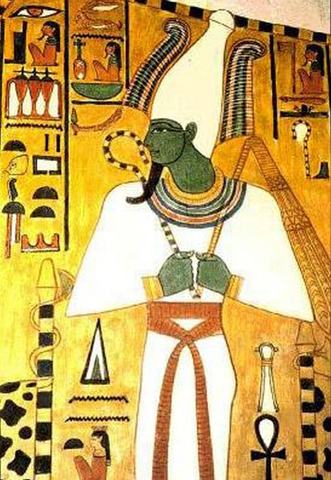
Lord of the afterlife — the murdered king remade as the first mummy, whose resurrection promised every Egyptian a life beyond the grave.
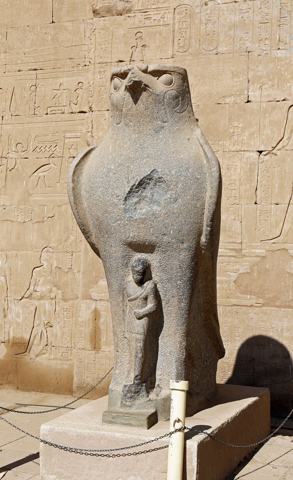
The sky falcon — god of kingship whose torn-out eye became the symbol of healing, and who won Egypt's throne from Set after eighty years of litigation.
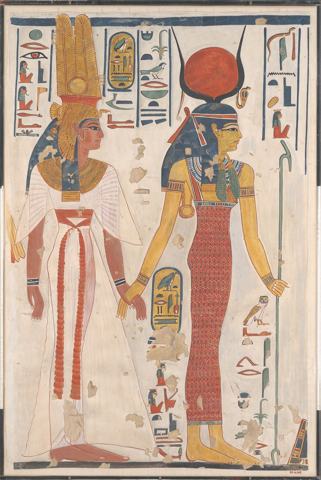
Goddess of magic — the widow whose spells restored Osiris, the mother who hid Horus in the marshes, and the one Egyptian deity Rome adopted whole.
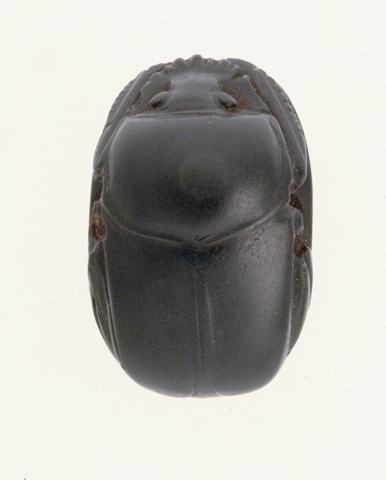
The self-created scarab god who pushes the morning sun into the sky, and whose beetle form became ancient Egypt's most common amulet of rebirth.
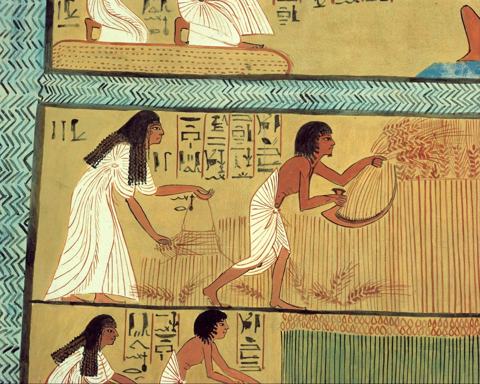
The Egyptian underworld — the night country crossed by the sun in twelve hours and by every dead Egyptian hoping to come out reborn at dawn.
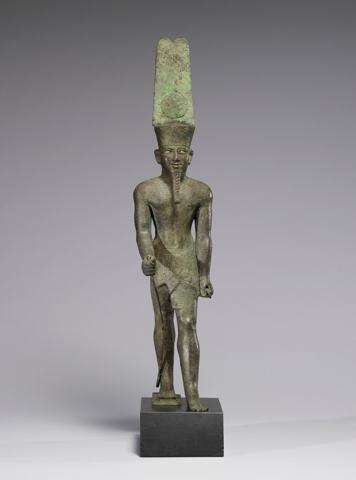
The imperial god of the New Kingdom — a once-minor Theban god whose name means "hidden," fused with Ra until Akhenaten tried to erase him from Egypt.
Also mentioned inAnkh (Egyptian Symbol of Life)AnubisApophis (Apep)Bastet (Bast)Bennu (Egyptian Phoenix)Bes (Egyptian Household Protector)HathorKa and Ba (the Egyptian Soul)Karnak Temple ComplexMa'atNut and Geb (Egyptian Sky and Earth)PtahSekhmetThe Great Sphinx of GizaThe Pyramid Texts
Sources & Further Reading
- 1.Pyramid Texts (Old Kingdom, c. 2400–2300 BCE).
- 2.The Amduat and the Book of Gates (New Kingdom royal netherworld books).
- 3.The Book of the Heavenly Cow (New Kingdom; Destruction of Mankind).
- 4.The Egyptian Book of the Dead (Book of Going Forth by Day), New Kingdom.
- 5.The Legend of Ra and Isis (Papyrus Turin 1993, New Kingdom).
- 6.Wilkinson, Richard H. The Complete Gods and Goddesses of Ancient Egypt. Thames & Hudson, 2003.
- 7.Hornung, Erik. Conceptions of God in Ancient Egypt: The One and the Many. Trans. John Baines. Cornell University Press, 1982.
Spot an error or have a source to suggest? Write to info@viseterna.com. We cite primary sources and modern scholarship, and we correct fast.