
Bennu (Egyptian Phoenix)
Heliopolis's solar heron, the ba of Ra, whose myth reached the Greek historian Herodotus and became, centuries later, the Greek phoenix.
The bennu bird, tomb of Irynefer, Deir el-Medina · Public domain · source
A Heron at the Mound of Creation
The bennu is Heliopolis's own sacred bird, usually shown as a tall heron with two long crest feathers, sometimes crowned with the sun disk or the atef 5. Its cult centred on the benben, the primeval mound or capstone at the temple of Ra-Atum in Heliopolis (Egyptian Iunu), where later tradition placed the bird perched on a sacred willow or ished tree 1,5. Egyptian and modern scholars alike connect its name to the verb weben, "to rise" or "to shine," though the derivation is not certain and some Egyptologists treat it as folk etymology attached after the fact 5,7. What is firmly attested is the association itself: the Pyramid Texts already invoke "the Mansion of the Bennu" at Heliopolis as a place of the dead king's transfiguration, tying the bird to solar rebirth from the very beginning of Egyptian religious writing 1.
Soul of the Sun
Egyptian texts identify the bennu as a ba, the mobile, personality-bearing aspect the Egyptians believed a god or a justified dead person could put on and travel in — the same concept explored for human beings in Ka and Ba 1,6. As Ra's ba the bennu belongs to the same solar family as Ra himself, and later funerary texts extend the identification to Osiris, whose own rebirth the bird's flight from the tomb into daylight closely mirrors 6,7. Quirke reads the bennu less as a distinct personality than as an image the solar cult reached for whenever it needed to say that Ra's power could move and act apart from the sun disk itself 6.
Becoming the Bennu
That mobility is exactly what New Kingdom funerary practice tried to give the ordinary dead. Spell 83 of the Book of the Dead, "for taking the form of a bennu," lets its owner rise from the tomb in the bird's shape, escaping the confinement of the burial and the dark of the Duat for the open sunlight the bennu was already understood to inhabit 2. Like most transformation spells in the Book of the Dead, it borrows a god's standing form as a vehicle: the deceased does not become a new kind of thing so much as put on a shape that already has the freedom of movement the tomb denies 2,7.
Herodotus and a Bird He Never Saw
The Greek historian Herodotus, visiting Egypt in the fifth century BCE, reports what priests at Heliopolis told him about a marvellous bird, the phoinix, that came to the temple only once in five hundred years, carrying its dead parent enclosed in an egg of myrrh 3. He is careful to mark the story as secondhand and doubtful: he has "never seen it, but only pictures," and adds that he does not believe the part about how the bird carries its burden 3. Notably absent from Herodotus's account is the detail modern readers most expect — there is no fire, no self-immolation, and no rising from ashes anywhere in his telling 3,4. Whatever the Heliopolis priests actually said, the bird Herodotus describes is recognisably a Greek retelling of the Egyptian bennu tradition rather than a direct transcription of it, and how much of the five-hundred-year cycle and the myrrh egg is genuinely Egyptian versus his own or his informants' embellishment is a question the sources cannot settle 4.
From Egg of Myrrh to Rising From Ashes
The image now most associated with "the phoenix" — bursting into flame and being reborn from its own ashes — belongs to Roman-era classical and early Christian writers working centuries after Herodotus, not to the Egyptian bennu tradition itself 4. Van den Broek's survey of the classical sources traces the self-immolation motif as a gradual accretion, layered onto the Heliopolis story by later Greek and Latin authors and then taken up by early Christian writers as an image of resurrection 4. The result is a bird that carries an Egyptian name and an Egyptian home city but whose most famous feature was built somewhere else, long after the bennu itself had stopped being a live cult image in Egypt 4,5.
Bennu in Egyptian Life
Unlike Ra or Osiris, the bennu never anchored a major independent cult with its own priesthood and festival calendar; it belonged to Heliopolis's solar theology as a symbol rather than as an object of separate worship 5,6. Its closest relative in Egyptian material culture is the benben stone itself, echoed in the pyramidion capstones that topped obelisks and pyramids across Egypt as small solar monuments in their own right 5,7. That modesty of cult is part of why the bird travelled so well: a name, a city, and an image of self-renewal were portable in a way a full temple establishment was not, and it was exactly that portable core that Greek visitors carried home and reworked into one of the most durable symbols in Western literature 4,7.
Continue Exploring
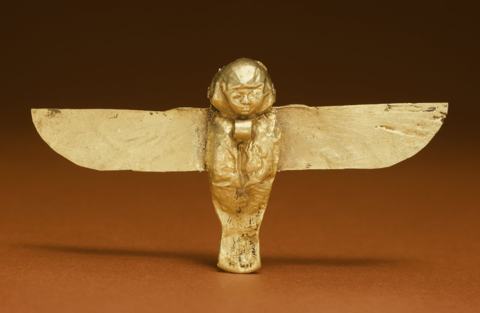
Ancient Egypt's answer to the soul: the ka that needs feeding, the ba that can fly, and the akh a person only becomes after death.
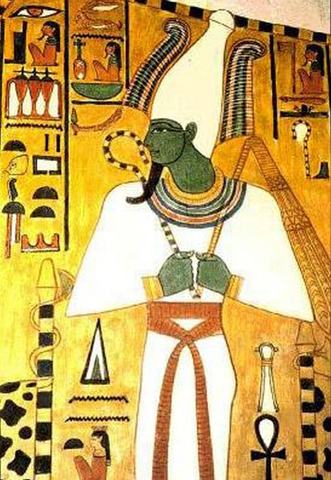
Lord of the afterlife — the murdered king remade as the first mummy, whose resurrection promised every Egyptian a life beyond the grave.
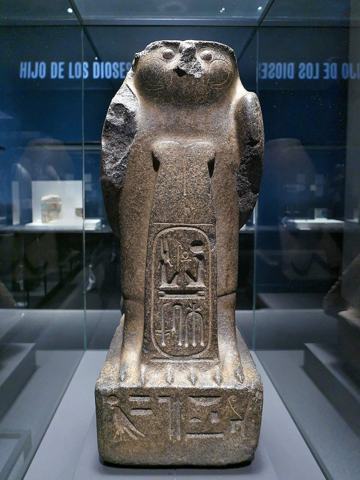
The sun itself as a god — Ra sails the sky by day, fights the serpent of chaos by night, and is reborn on the horizon every dawn.
The Egyptian underworld — the night country crossed by the sun in twelve hours and by every dead Egyptian hoping to come out reborn at dawn.
The self-created scarab god who pushes the morning sun into the sky, and whose beetle form became ancient Egypt's most common amulet of rebirth.
Guardian of the dead — the black jackal god who embalmed Osiris, watched over the necropolis, and weighed the heart against the feather of truth.
Sources & Further Reading
- 1.Pyramid Texts (Old Kingdom, c. 2400–2300 BCE).
- 2.The Egyptian Book of the Dead (Book of Going Forth by Day), New Kingdom — Spell 83.
- 3.Herodotus, Histories, Book 2; trans. A. D. Godley, Loeb Classical Library, 1920.
- 4.Van den Broek, R. The Myth of the Phoenix, According to Classical and Early Christian Traditions. Brill, 1972.
- 5.Wilkinson, Richard H. The Complete Gods and Goddesses of Ancient Egypt. Thames & Hudson, 2003.
- 6.Quirke, Stephen. The Cult of Ra: Sun-Worship in Ancient Egypt. Thames & Hudson, 2001.
- 7.Pinch, Geraldine. Egyptian Mythology: A Guide to the Gods, Goddesses, and Traditions of Ancient Egypt. Oxford University Press, 2002.
Spot an error or have a source to suggest? Write to info@viseterna.com. We cite primary sources and modern scholarship, and we correct fast.