
Ka and Ba (the Egyptian Soul)
Ancient Egypt's answer to the soul: the ka that needs feeding, the ba that can fly, and the akh a person only becomes after death.
Ba Bird amulet, Egyptian, gold (Walters Art Museum) · Public domain · source
Not One Soul, But Several
Ancient Egyptian has no single word that lines up with the English "soul." Instead, funerary texts describe a person as a bundle of linked but distinct elements — among them the ka, the ba, and, after death, the akh — alongside the name (ren), the shadow (shut), and the heart (ib), each covering a different aspect of what kept a person a person and each requiring its own kind of care after death 6,7. Trying to force these into a tidy Western scheme of body, soul, and spirit has misled more than one generation of readers; Egyptologists now generally treat them as overlapping functions of a single living person that only become visibly separate once death has pulled them apart 6,7.
The Ka: A Double Born With You
The ka was a person's vital force and double, created alongside them at birth — temple reliefs show the ram-headed craftsman god Khnum shaping a child and its ka together on the potter's wheel — and it stayed attached to them, and to their statues and images, for as long as they were remembered 1,5. Bolshakov's study of Old Kingdom tomb art argues that the ka is best understood not as a ghost but as the aspect of a person that could inhabit a substitute body: a statue placed in a tomb's sealed chapel was a residence for the ka, which explains why so much Old Kingdom sculpture was never meant to be seen by the living at all 5. By the Middle Kingdom, Coffin Text spells extend this same care beyond the royal court, addressing offerings and protection directly to the kas of non-royal dead as elite burial practice widened 2,5. After death the ka needed feeding exactly as the living body once had, which is why funerary formulas dedicate bread, beer, and meat "for the ka of" the deceased, and why to "go to one's ka" was ordinary Egyptian for dying 1,5.
The Ba: What Can Fly
Where the ka is attachment, the ba is mobility. Usually shown as a human-headed bird, the ba was the aspect of a person capable of leaving the body and the tomb, moving between the world of the living and the realm of the dead 4. Zabkar's study of the concept across Egyptian religious literature stresses that the ba is not a separable "spirit" in any Platonic sense but a mode of a person's own effective presence and action — a living king already has a ba, and so does a god 4. Funerary texts equip the dead ba for exactly this mobility: the Book of the Dead includes spells letting the ba leave the tomb by day and return to the mummy by night, an arrangement mirrored on a cosmic scale in the Duat, where the ba of Ra unites nightly with the corpse of Osiris so that both may be renewed by morning 1,3.
Becoming an Akh
The akh, "the effective one" or "the luminous one," is not a third component present from birth but a status achieved — the transfigured, empowered state a person reached only after death, correct burial, and a favourable judgment had brought the ka and ba back into working unity 3,7. An akh was thought capable of acting on the world of the living, for good or ill: surviving "letters to the dead," left in tombs and addressed to specific deceased relatives, ask an akh for protection or accuse one of sending misfortune, treating the transfigured dead as a real, interested party rather than a closed chapter 7. Failing to become an akh was the true Egyptian fear of death — not extinction as such, but remaining an ineffective, "dead" dead, cut off from both the offering cult of the living and a working existence among the blessed 7.
Feeding the Ka, Housing the Ba
Egyptian tomb architecture is built around servicing both halves of this system at once. A false door let priests and family address offerings to a ka that could not physically eat, while chapel and shaft together gave a ba somewhere to return to and a body to return as; the entire elaborate machinery of embalming, tomb decoration, and ongoing funerary cult that also structures the Duat exists to keep these arrangements working indefinitely rather than for a single funeral day 6. Where the offerings failed or the family line died out, the textual and archaeological record is blunt about the consequence: an unfed ka and a homeless ba, and a dead person effectively lost 6.
Continue Exploring
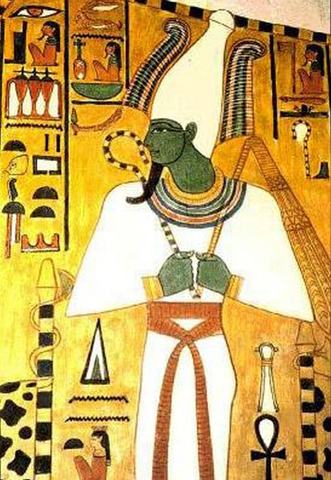
Lord of the afterlife — the murdered king remade as the first mummy, whose resurrection promised every Egyptian a life beyond the grave.
The sun itself as a god — Ra sails the sky by day, fights the serpent of chaos by night, and is reborn on the horizon every dawn.
The Egyptian underworld — the night country crossed by the sun in twelve hours and by every dead Egyptian hoping to come out reborn at dawn.
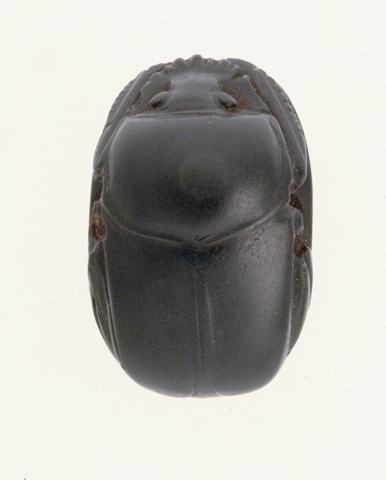
The self-created scarab god who pushes the morning sun into the sky, and whose beetle form became ancient Egypt's most common amulet of rebirth.
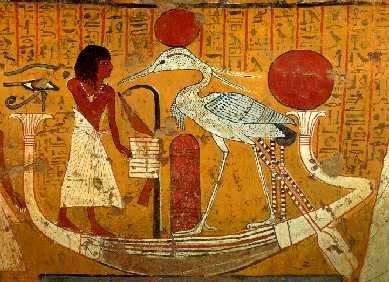
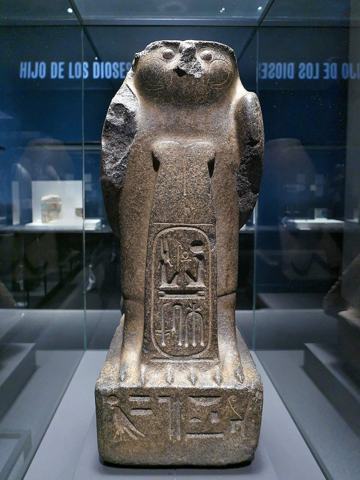
Heliopolis's solar heron, the ba of Ra, whose myth reached the Greek historian Herodotus and became, centuries later, the Greek phoenix.
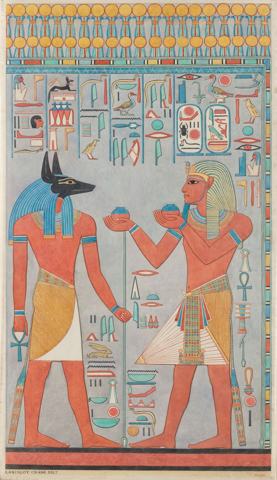
Guardian of the dead — the black jackal god who embalmed Osiris, watched over the necropolis, and weighed the heart against the feather of truth.
Sources & Further Reading
- 1.Pyramid Texts (Old Kingdom, c. 2400–2300 BCE).
- 2.Coffin Texts (Middle Kingdom, c. 2100–1800 BCE).
- 3.The Egyptian Book of the Dead (Book of Going Forth by Day), New Kingdom.
- 4.Zabkar, Louis V. A Study of the Ba Concept in Ancient Egyptian Texts. Studies in Ancient Oriental Civilization 34. University of Chicago Press, 1968.
- 5.Bolshakov, Andrey O. Man and his Double in Egyptian Ideology of the Old Kingdom. Agypten und Altes Testament 37. Harrassowitz, 1997.
- 6.Taylor, John H. Death and the Afterlife in Ancient Egypt. British Museum Press, 2001.
- 7.Assmann, Jan. Death and Salvation in Ancient Egypt. Cornell University Press, 2005.
Spot an error or have a source to suggest? Write to info@viseterna.com. We cite primary sources and modern scholarship, and we correct fast.