
Khepri (the Scarab God)
The self-created scarab god who pushes the morning sun into the sky, and whose beetle form became ancient Egypt's most common amulet of rebirth.
Heart Scarab of Khay, Egyptian (Metropolitan Museum of Art) · CC0 · source
Born of Himself
Khepri's name comes from the Egyptian verb kheper, "to come into being" or "to transform," and grammatically it means something close to "the one who is coming into being" 1. That is not incidental theology. Egyptians watched scarab beetles roll balls of dung across the ground and vanish into burrows, from which new beetles later emerged with no mating or egg-laying that anyone could see, so that the insect looked as though it created itself out of nothing 6. A god of self-generation needed exactly that image, and Khepri became the standard Egyptian shorthand for a thing coming into being on its own, the sun included 1,6.
Pushing the Sun Uphill
Khepri is not a rival to Ra but one of his faces: the sun at the moment of sunrise, distinct from Ra in his noon strength and from the aged Atum going down in the west 6. The logic follows the beetle directly — as the scarab rolls its ball of dung ahead of itself along the ground, Khepri is imagined rolling the solar disc up over the eastern horizon each morning, propelled by nothing but the god's own effort 1,6. The Pyramid Texts already use this image for the dead king's hoped-for ascent, asking that he rise as Khepri rises 1. In the solar theology mapped out by later netherworld books, Khepri is specifically the shape the sun takes at the last and darkest hour of its passage through the Duat, reborn as the beetle just before dawn 5,6.
The Heart That Will Not Testify
Khepri's most physically common form is not a temple statue but a small carved object: the heart scarab, a beetle-shaped amulet laid over the heart of the wrapped dead 4. Its underside carried a spell — with roots in Middle Kingdom Coffin Text material and standardised by the New Kingdom as Book of the Dead spell 30B — instructing the heart not to speak against its owner when weighed against the feather of Maat in the hall of judgment, a plea addressed to the heart as a separate, potentially unreliable witness to the life just finished 2,3. Choosing the scarab for this object was not arbitrary: a heart that must be trusted to give true testimony borrows the same self-renewing power the beetle already stood for, and by the New Kingdom almost no burial that could afford one went without a heart scarab in some form 3,4.
Amulet, Seal, and Souvenir
Long before it became mainly a funerary object, the scarab was Egypt's most common seal. From the Middle Kingdom on, officials and later ordinary people carried scarab seals engraved on the flat underside with names, titles, or good-luck mottoes, pressed into the wet clay or wax of a sealed document or jar stopper 4. Kings used the same format for public messaging: large "commemorative scarabs" issued under Amenhotep III record royal marriages, lion hunts, and building projects in a handful of lines, distributed widely enough that examples turn up across the eastern Mediterranean 4. Cheap to produce in faience and glazed steatite, scarabs were also simply worn, given, and traded as protective jewellery, making Khepri, in sheer number of surviving objects, one of the best-attested gods in the entire pantheon 4,6.
A God With No House
For all that, Khepri had no major independent temple and no widely told adventure story of his own; Egyptologists generally treat him less as a personality than as a name for a moment — the instant of coming-into-being, applied above all to the sunrise 5,6. His image stayed correspondingly plain: a beetle pure and simple, or occasionally a human body with a scarab in place of a head, never developing the rich iconographic vocabulary of gods like Osiris or Ra proper 6. That reticence suited the theology. Khepri names the part of the solar cycle that has no witnesses — the turn from night to day, from the sealed dark of the Duat to a heart cleared for whatever came next, the very question explored for the wider Egyptian person in Ka and Ba 5,6.
Continue Exploring
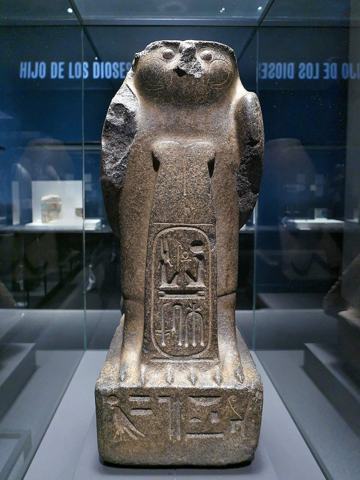
The sun itself as a god — Ra sails the sky by day, fights the serpent of chaos by night, and is reborn on the horizon every dawn.
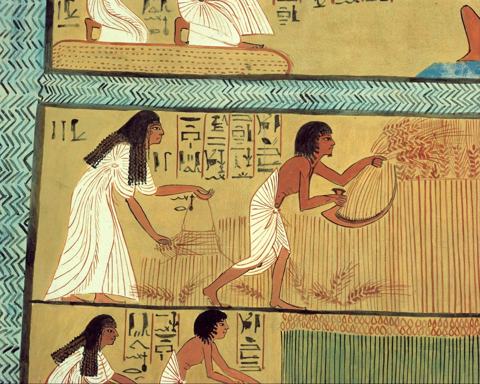
The Egyptian underworld — the night country crossed by the sun in twelve hours and by every dead Egyptian hoping to come out reborn at dawn.
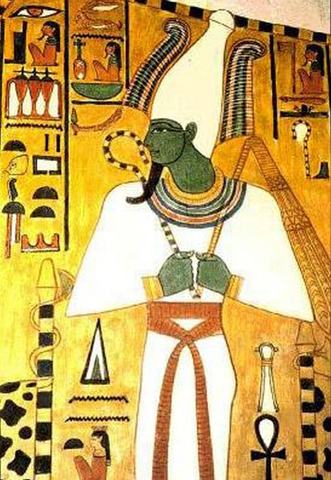
Lord of the afterlife — the murdered king remade as the first mummy, whose resurrection promised every Egyptian a life beyond the grave.
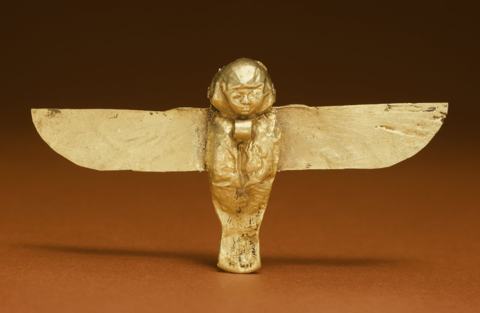
Ancient Egypt's answer to the soul: the ka that needs feeding, the ba that can fly, and the akh a person only becomes after death.
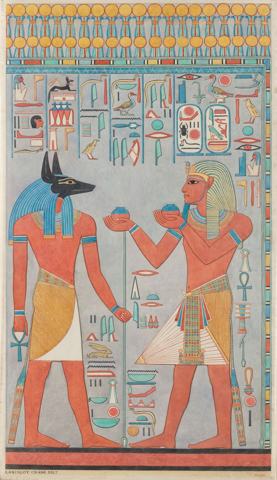
Guardian of the dead — the black jackal god who embalmed Osiris, watched over the necropolis, and weighed the heart against the feather of truth.
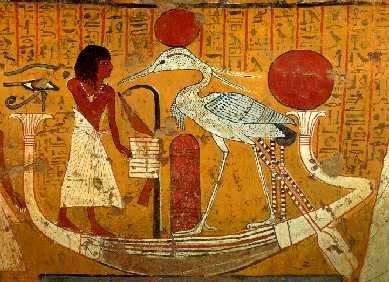
Heliopolis's solar heron, the ba of Ra, whose myth reached the Greek historian Herodotus and became, centuries later, the Greek phoenix.
Sources & Further Reading
- 1.Pyramid Texts (Old Kingdom, c. 2400–2300 BCE).
- 2.Coffin Texts (Middle Kingdom, c. 2100–1800 BCE).
- 3.The Egyptian Book of the Dead (Book of Going Forth by Day), New Kingdom — esp. Spell 30B.
- 4.Andrews, Carol. Amulets of Ancient Egypt. British Museum Press, 1994.
- 5.Quirke, Stephen. The Cult of Ra: Sun-Worship in Ancient Egypt. Thames & Hudson, 2001.
- 6.Wilkinson, Richard H. The Complete Gods and Goddesses of Ancient Egypt. Thames & Hudson, 2003.
Spot an error or have a source to suggest? Write to info@viseterna.com. We cite primary sources and modern scholarship, and we correct fast.