
Bastet (Bast)
Egypt's cat goddess — a lioness of the Eye of Ra who softened into the guardian of the home, honoured at Bubastis with the loudest festival in Egypt.
The Gayer-Anderson Cat, unknown Egyptian artist, c. 664–332 BCE (British Museum); photo Peter D. Tillman, 2008 · CC BY-SA 2.0 · source
Name and Home
Bastet — earlier written Bast or Bastet, and rendered by the Greeks as Boubastis — takes her name from her city. Per-Bastet, "House of Bastet", stood in the eastern Nile Delta at the site now called Tell Basta near Zagazig, and the Greeks turned the place-name into Bubastis 4,7. The goddess's own name is usually explained as containing bas, the sealed alabaster jar used for precious ointment, which would make her something like "she of the ointment jar"; the reading is plausible and widely repeated, but it remains a proposal rather than a settled fact 4,5.
She is old. Her name appears on Second Dynasty stone vessels, and the Pyramid Texts already invoke her as a protective power standing behind the king, which places her among the earliest attested Egyptian deities 1,4.
From Lioness to Cat
The most striking thing about Bastet is that she changed species. In her earliest representations she is a lioness or a lion-headed woman, effectively indistinguishable in form from Sekhmet, and her early character matches: a fierce solar defender, one of the dangerous daughters of Ra 4,5. Over roughly a millennium, and decisively by the first millennium BCE, the lioness head gives way to the head of a domestic cat, and the goddess most often appears as an elegant seated cat in bronze, or as a slim woman with a cat's head carrying a sistrum, an aegis and a basket, sometimes with kittens at her feet 4,5.
Scholars generally read this as a division of labour rather than a demotion: as Egyptian theology sorted the two aspects of the leonine goddess, Sekhmet kept the rage and Bastet kept the protection, so that the pair function as the same power angry and the same power appeased 4,5. Bastet still belongs to the myth cycle of the Eye of Ra, the goddess who leaves Egypt in fury and must be lured home with music, dance and beer, returning pacified; Egyptian texts assign that role variously to Hathor, Sekhmet, Tefnut and Bastet, and the interchange is the point 3,5.
Her feline form did not make her harmless. Cats kill snakes, and Bastet is repeatedly shown doing exactly that on behalf of the sun god — a duty she shares with the Great Cat of Heliopolis who beheads Apophis in the vignettes of the Book of Going Forth by Day 3,5.
The Festival at Bubastis
Herodotus visited Egypt in the fifth century BCE and gave Bubastis one of his most memorable passages. Pilgrims travelled to the festival by river barge, he writes, the women aboard clapping and playing castanets, the men piping, and at each riverside town the boats pulled in so the passengers could shout and jeer at the local women. On arrival there were great sacrifices, and — his detail, and a famous one — more wine was drunk at that single festival than in the whole of the rest of the year. He puts the attendance at seven hundred thousand adults 2.
Herodotus is a foreign traveller writing for Greeks and his numbers are not evidence in the modern sense, but the archaeology supports the scale. Édouard Naville's excavations at Tell Basta in the 1880s uncovered a great red granite temple complex built up over many reigns, set in a hollow so that, as Herodotus also noticed, the visitor looked down into it from the surrounding city 2,7. Bastet's political fortunes peaked under the Twenty-Second Dynasty, whose Libyan-descended kings ruled from Bubastis and promoted her to something close to a state goddess 4.
Cats, Mummies and Devotion
Herodotus also reports that when a household cat died the family shaved their eyebrows in mourning, and that dead cats were carried to Bubastis to be embalmed and buried in sacred vaults 2. Enormous cat cemeteries at Bubastis, Saqqara and elsewhere confirm the practice, though modern work reframes it. Most of these animals were not beloved pets but votive offerings: cats bred, killed young and mummified in bulk so that a pilgrim could buy one and deposit it as a petition to the goddess. X-ray and CT studies of surviving bundles show a high proportion of young animals, alongside a number of packages containing only rags, bones or nothing much at all 6.
Reverence for the living animal was real all the same. Herodotus tells of Egyptians rescuing cats from burning houses before the house itself, and the classical tradition preserves stories of lynchings over a killed cat — anecdotes to be handled with care, but consistent with the legal protection that the sacred animals enjoyed 2,6.
Character and Afterlife
The Bastet of the first millennium BCE is a goddess of the household and everything that keeps it going: childbirth and children, women's health, music and dance, perfume and ointment, and defence against snakes, scorpions and the unseen malice the Egyptians took equally seriously 4,5. Thousands of small bronze cats survive from this period, most of them dedications left in her temples by ordinary people — the Gayer-Anderson Cat in the British Museum, with its gold nose-ring and incised protective collar, is the best-known example.
When the Greeks arrived they matched her to Artemis, mistress of animals and protector of women in childbirth, and the Greco-Roman sources treat the two as one 2,4. Her cult at Bubastis outlasted the pharaohs and continued well into the Roman period.
Continue Exploring
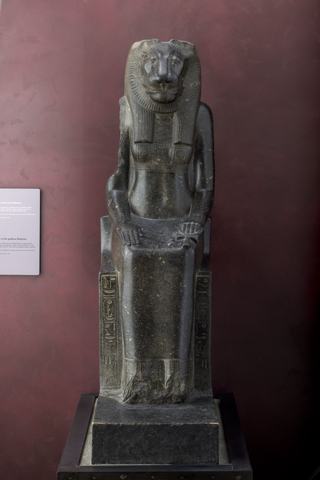
The lion-headed Eye of Ra — Sekhmet is slaughter, fever and desert heat, and the same power that heals when the gods can persuade her to stop.
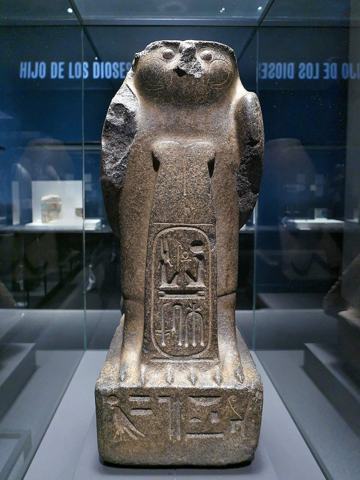
The sun itself as a god — Ra sails the sky by day, fights the serpent of chaos by night, and is reborn on the horizon every dawn.
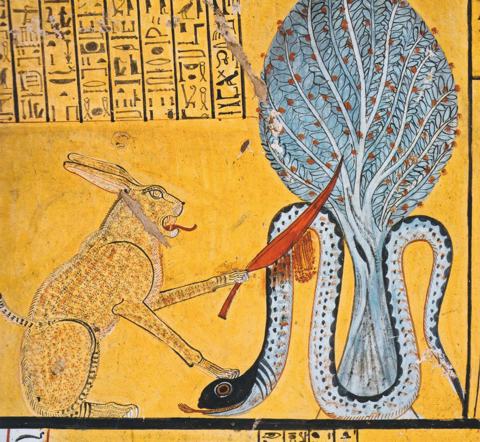
The great serpent who attacks the sun boat every night — Apophis is Egypt's embodiment of chaos, repelled again each dawn but never finally destroyed.
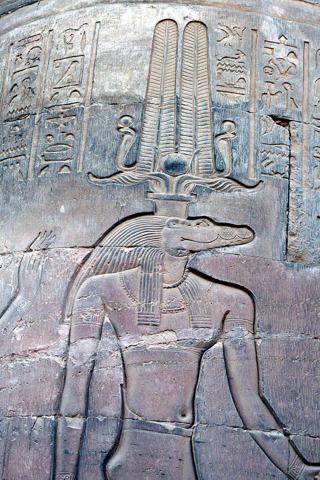
Crocodile god of the Nile, the marshes and raw pharaonic power — Sobek is the danger in the water turned into a protector, worshipped with living crocodiles.
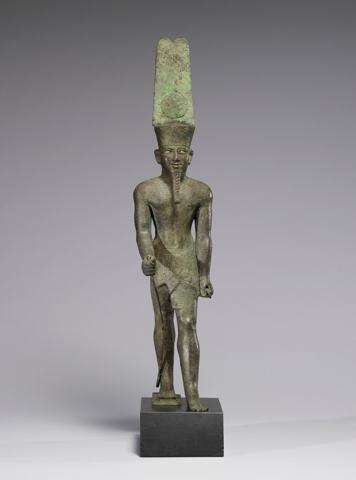
The imperial god of the New Kingdom — a once-minor Theban god whose name means "hidden," fused with Ra until Akhenaten tried to erase him from Egypt.
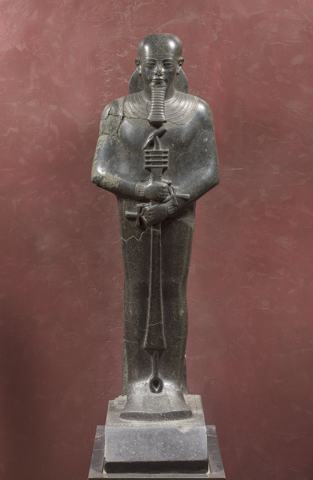
The creator who made the world by thinking it and speaking it — Ptah of Memphis, patron of sculptors and architects, and lord of the Apis bull.
Sources & Further Reading
- 1.Pyramid Texts (Old Kingdom, c. 2400–2300 BCE).
- 2.Herodotus, Histories II.59–60, 66–67 and 137–138 (c. 430 BCE).
- 3.The Myth of the Distant Goddess / the Eye of Ra, preserved in Ptolemaic temple texts and Demotic papyri.
- 4.Wilkinson, Richard H. The Complete Gods and Goddesses of Ancient Egypt. Thames & Hudson, 2003.
- 5.Pinch, Geraldine. Egyptian Mythology: A Guide to the Gods, Goddesses, and Traditions of Ancient Egypt. Oxford University Press, 2002.
- 6.Ikram, Salima (ed.). Divine Creatures: Animal Mummies in Ancient Egypt. American University in Cairo Press, 2005.
- 7.Naville, Édouard. Bubastis (1887–1889). Egypt Exploration Fund, 1891.
Spot an error or have a source to suggest? Write to info@viseterna.com. We cite primary sources and modern scholarship, and we correct fast.