
The Trojan Horse
The hollow wooden horse that let the Greeks inside Troy's walls — absent from the Iliad, first told in the lost Epic Cycle, and made famous by Virgil.
The Procession of the Trojan Horse in Troy, Giovanni Domenico Tiepolo, c. 1760 (National Gallery, London) · Public domain · source
Missing From the Iliad
The most famous object in Greek myth is not in Homer's Iliad. That poem covers only a few weeks of the war's tenth year and ends with Hector's funeral, well before Troy falls, so the device that actually ends the siege never appears in it at all. The earliest surviving mentions are brief and almost offhand, both in the Odyssey: the bard Demodocus sings of the "horse of wood" that Epeius built with Athena's help and the Greeks filled with fighting men, and Menelaus recalls Helen circling the horse in the dark, mimicking the voices of the hidden Greeks' own wives, while Odysseus held his men silent inside 1.
First Told, Then Lost
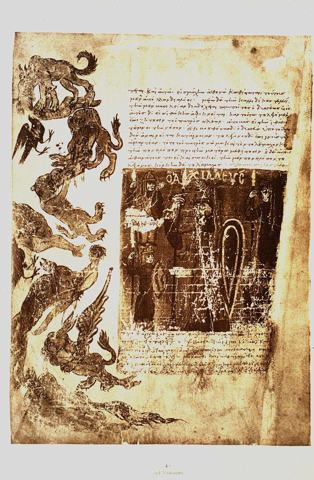
The full story — building the horse, the Trojans' debate over whether to bring it inside, the death of Laocoon, the procession through the walls — belonged to two poems of the Epic Cycle that no longer survive complete. The Little Iliad, attributed to Lesches, covered events from the death of Achilles through the building of the horse; the Iliou Persis, attributed to Arctinus of Miletus, carried the story from the horse's entry to the city's actual sack. Both are known today mainly through a late summary by the grammarian Proclus, preserved in the margins of the medieval Venetus A manuscript of the Iliad, along with scattered quotations in other ancient authors 5.
Virgil's Fuller Telling
The version most people actually know is Roman, not Greek. In Book II of the Aeneid, Aeneas narrates the fall of Troy to Dido: the Greeks pretend to sail away, leaving behind the horse and a lone man, Sinon, who lets himself be captured and convinces the Trojans that the horse is a peace offering built deliberately too large to pass through their gates, so that dragging it inside would forfeit its protection rather than gain it. The priest Laocoon throws a spear at its flank and is then crushed along with his sons by sea serpents, which the Trojans read as punishment for doubting the horse rather than for anything Laocoon actually got wrong 2. Virgil wrote from the losing side's perspective by design, and his Trojans come across as more sympathetic, and more thoroughly deceived, than Homer's own brief allusions suggest 2,6.
Built by Epeius, Blessed by Athena
Every ancient version agrees on the builder, if not always the details. Epeius, a minor Greek fighter mocked elsewhere for having no skill with weapons, constructs the horse from timber cut on Mount Ida under Athena's direct instruction, and the finished structure carries a dedication to her — part of why the Trojans talk themselves into believing it would be sacrilege to destroy it rather than let it stand. Apollodorus gives the fullest ancient headcount of who actually hides inside: by his tally, around thirty picked men, including Odysseus, Menelaus, and Neoptolemus, with Epeius himself among them to work the hidden door 3.
A Gift Nobody Should Have Trusted
The Trojans' mistake is presented, almost everywhere the story is told, as a failure to listen rather than a failure to see. Cassandra warns them and is ignored, as she always is; Laocoon is right and is killed for it; and Quintus Smyrnaeus's later retelling, composed centuries after Virgil but in Greek rather than Latin, still has the Trojans debate burning the horse, throwing it off a cliff, or dragging it inside as an offering, and choose the one option that dooms them 4. Ancient rationalists occasionally tried to strip the marvel out of the story — proposing the "horse" was really a siege engine or a battering ram sheathed in horsehide, or reading it as a garbled memory of an earthquake, since Poseidon was worshipped at Troy as both horse-god and earthquake-god — but no ancient source actually commits to that reading, and it survives mainly as a footnote in modern discussions of the story's plausibility 6,7.
After Troy
The phrase "beware of Greeks bearing gifts," loosely adapted from Virgil's Laocoon, is now proverbial for any dangerous present, and "Trojan horse" has become the standard English term for malicious software disguised as something harmless — a twentieth-century metaphor built directly on a lie Sinon tells in a poem written around 19 BCE. Painters kept returning specifically to the procession scene, showing the horse mid-journey through Troy's gates rather than the ambush that follows, because that moment — a city choosing, with its own hands, to pull the danger inside — is the part the story is actually about 2,6.
Continue Exploring
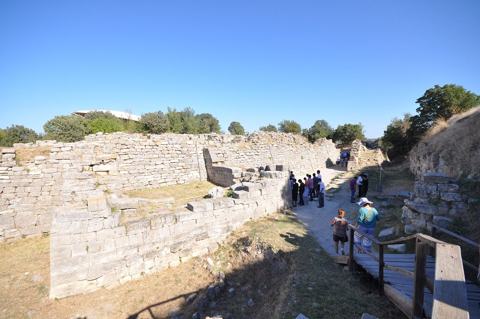
The ten-year siege of Troy that Homer sang, and the real Bronze Age city at Hisarlik whose ruins keep the question of a historical war unresolved.
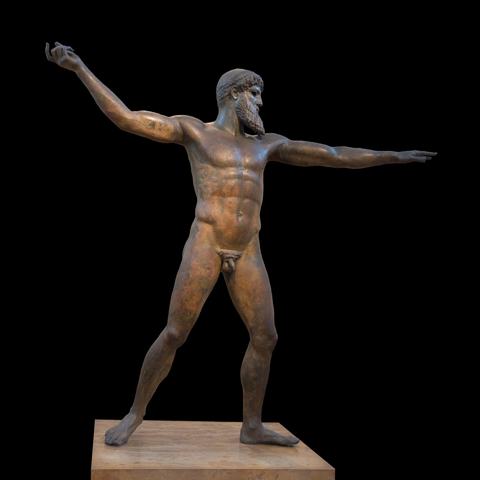
God of the sea, earthquakes and horses. Brother of Zeus, wielder of the trident, and the divine enemy who keeps Odysseus from reaching home.
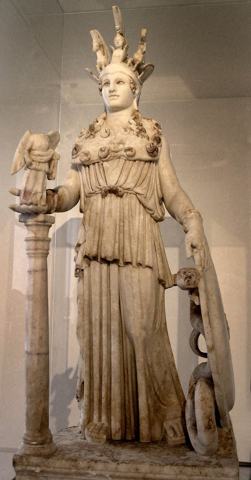
Goddess of wisdom, strategy and craft, born fully armed from the head of Zeus. Patron of Athens, of heroes, and of Odysseus above all.
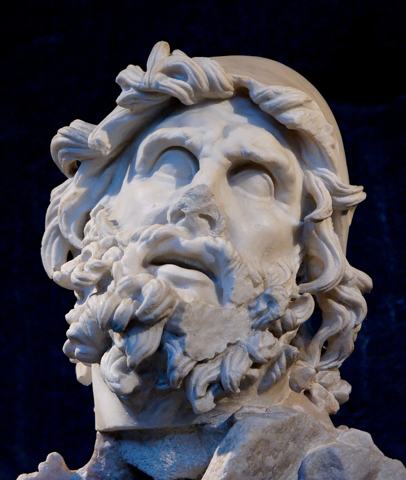
King of Ithaca and the man of many turns. Homer's cleverest hero, who took ten years to sail home from Troy and had to fight for his own house.
Homer's epic of the final weeks of the Trojan War, opening with Achilles's rage and closing with the ransom of Hector's body.
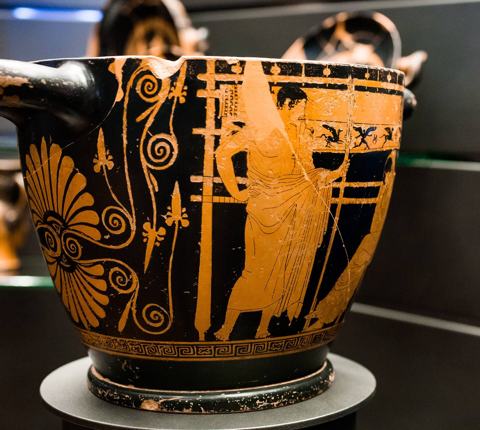
Queen of Ithaca and wife of Odysseus. She held a kingdom together for twenty years with a loom, a riddle, and a bow contest nobody could win.
Also mentioned inThe Palladium
Sources & Further Reading
- 1.Homer, Odyssey (c. 8th century BCE), Books 4, 8, and 11.
- 2.Virgil. Aeneid (19 BCE), Book II. Trans. Robert Fagles. Viking, 2006.
- 3.Apollodorus, Epitome (1st-2nd century CE), 5.14-21.
- 4.Quintus Smyrnaeus, Posthomerica (c. 4th century CE), Book 12.
- 5.Proclus, Chrestomathy, summarizing the Little Iliad (attributed to Lesches) and the Iliou Persis (attributed to Arctinus of Miletus).
- 6.Burgess, Jonathan S. The Tradition of the Trojan War in Homer and the Epic Cycle. Johns Hopkins University Press, 2001.
- 7.West, M. L. The Epic Cycle: A Commentary on the Lost Troy Epics. Oxford University Press, 2013.
Spot an error or have a source to suggest? Write to info@viseterna.com. We cite primary sources and modern scholarship, and we correct fast.