
Tiresias
The blind prophet of Thebes who lived seven generations, spent seven years as a woman, and kept his mind intact among the dead.
Teiresias Foretells the Future to Odysseus, Henry Fuseli, c. 1780-85 (Albertina, Vienna) · Public domain · source
The Seer of Thebes
Tiresias is the prophet attached to Thebes across its entire mythical history — a span the Greeks reckoned at seven generations, from Cadmus who founded the city to its destruction by the Epigoni. He is the son of the shepherd Everes, of the line of the Spartoi sown from the dragon's teeth, and the nymph Chariclo, a companion of Athena 5,7. Blind, staff in hand, always led by a child or a daughter, he is the standard image of the seer in Greek literature: the man who cannot see and knows everything.
His authority in the tragedies comes from a simple structural fact — he is never wrong, and he is never believed in time. Sophocles' Oedipus accuses him of conspiracy for naming the killer of Laius; Sophocles' Creon dismisses him as bribed, then reverses himself minutes too late to save Antigone or his own son; Euripides' Pentheus mocks him for taking up the worship of Dionysus and is torn apart for it 2,3,7.
Two Stories About the Blinding
Greek tradition preserved two incompatible accounts of how he lost his sight, and both make the blindness a trade rather than a punishment alone.
In the Theban version told by Callimachus, the young Tiresias came upon Athena bathing in the spring of Hippocrene on Helicon with his mother Chariclo. The law is absolute — a mortal who sees a goddess unwilling loses his sight — and Athena blinds him at once, then, unable to undo it and moved by Chariclo's grief, gives him the seer's gifts instead: prophecy, understanding of the speech of birds, a staff to walk by, and a mind that will stay whole after death 4,7.
In the version Ovid and Apollodorus give, he was walking on Mount Cyllene when he came on two snakes coupling and struck them with his stick; he was immediately turned into a woman and lived as one for seven years, until he found the same pair again and struck them again and was changed back. Because he had been both, Zeus and Hera called him to settle an argument about which sex takes more pleasure in love. He answered — in Ovid's telling — that of ten parts a woman takes nine, and Hera, losing the argument, struck him blind. Zeus, unable to reverse another god's act, gave him prophecy and a life of seven generations in compensation 5,6,7.
The Ghost Who Kept His Mind
Tiresias' most consequential appearance is in the Odyssey, after his death. Circe tells Odysseus that he cannot sail home until he has gone to the house of Hades and consulted the seer's ghost — "to whom alone Persephone has granted mind, even in death; the rest are flitting shadows" 1. The detail is theologically striking: in Homer's underworld the dead are witless and must drink sacrificial blood before they can speak, but Tiresias is a permanent exception 1,8.
He gives Odysseus the prophecy the whole rest of the poem obeys. The ship will come to Thrinacia, and if the crew touch the cattle of the Sun they will all die and Odysseus will come home late, on a stranger's ship, alone, to a house full of trouble. He will kill the suitors. Then he must take a well-cut oar and walk inland until he meets people who know nothing of the sea and salt food, and who mistake the oar on his shoulder for a winnowing fan; there he must plant it and sacrifice to Poseidon. Death will come to him "from the sea", gently, in a prosperous old age, with his people happy around him 1.
The scene became the model for the underworld consultation in later literature — Virgil's Aeneas and Anchises, and through Virgil, Dante — and studies of Greek underworld narrative treat it as the earliest full example of the journey undertaken specifically to obtain knowledge rather than to rescue or steal 8.
Thebes, and the End
Between those bookends he is the city's conscience. He identifies Oedipus as the polluter of Thebes and is called a fraud for it; he tells Creon that Thebes is sick because a body lies unburied; in Euripides' Phoenician Women he declares that the city can be saved from the Argive army only by the sacrifice of Creon's son Menoeceus, and the boy kills himself on the walls 2,3,7. He is also credited with advising Amphitryon and Alcmene about the infant Heracles, and with declaring Narcissus would live long only if he never knew himself 6,7.
He survives the city he served. When Thebes finally fell to the Epigoni, Tiresias left with the refugees and died at the spring of Tilphussa, having drunk its water — in some tellings on the day of the flight itself, an old man who had outlived seven generations of the people he warned 5,7. His daughter Manto was sent as spoil to Delphi and became a prophet in her turn, and an oracle of Tiresias was maintained at Orchomenos in Boeotia 5,7.
The Figure Since
Tiresias holds an unusual place in modern reception for a secondary mythic figure, largely because he combines three ideas that later ages found irresistible: blindness as the price of insight, prophecy that no one heeds, and a life lived in both sexes. T. S. Eliot made him the central consciousness of The Waste Land (1922) and said in his own notes that what Tiresias sees is the substance of the poem; twentieth-century writers on gender have returned to the snake episode repeatedly 7.
In Popular Culture
The blind seer is now a stock character type — the sightless oracle who speaks in warnings — across fantasy fiction, film and games, usually without attribution. The 2026 wave of interest in the Odyssey around Christopher Nolan's adaptation has renewed attention to Book 11, the poem's journey to the dead, where Tiresias delivers the prophecy that shapes everything after it.
Continue Exploring
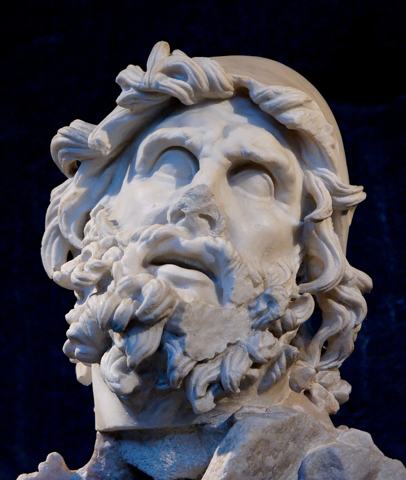
King of Ithaca and the man of many turns. Homer's cleverest hero, who took ten years to sail home from Troy and had to fight for his own house.
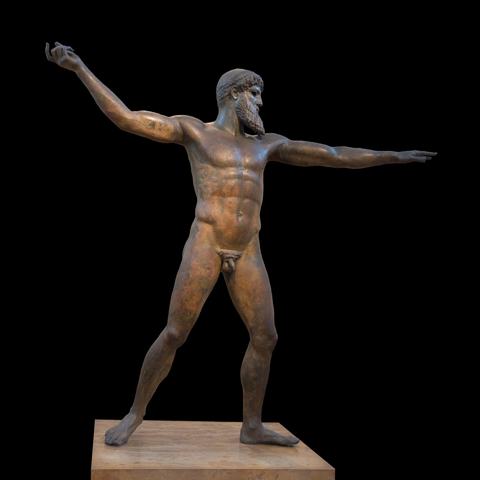
God of the sea, earthquakes and horses. Brother of Zeus, wielder of the trident, and the divine enemy who keeps Odysseus from reaching home.
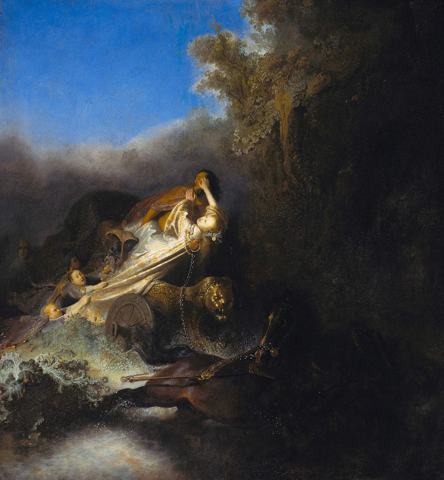
Lord of the underworld and of the wealth beneath the earth. Not a devil — a grim, lawful king whose only rule is that no one leaves.
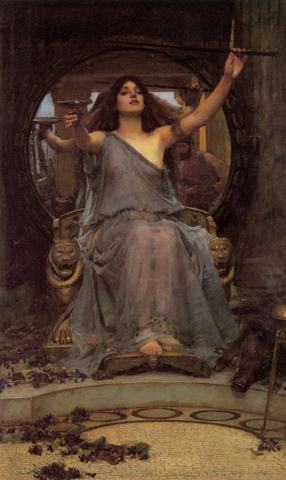
Goddess-enchantress of the island of Aiaia. She turned Odysseus' crew into swine, then became the one guide who told him how to reach the dead.
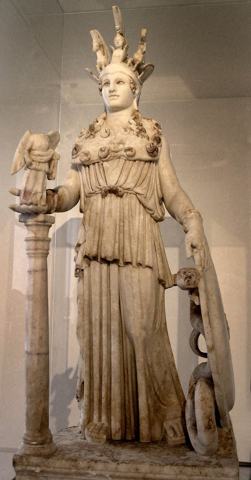
Goddess of wisdom, strategy and craft, born fully armed from the head of Zeus. Patron of Athens, of heroes, and of Odysseus above all.
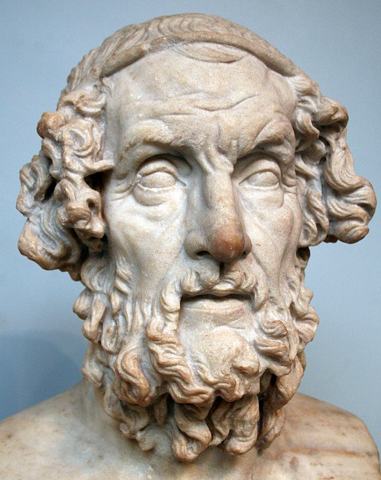
Homer's epic of Odysseus's ten-year voyage home from Troy, the founding adventure story of Western literature and the subject of a 2026 film.
Sources & Further Reading
- 1.Homer, Odyssey (c. 8th-7th century BCE), esp. Books 10-11.
- 2.Sophocles, Oedipus Tyrannus and Antigone (5th century BCE).
- 3.Euripides, Bacchae and Phoenician Women (5th century BCE).
- 4.Callimachus, Hymn 5, The Bath of Pallas (3rd century BCE).
- 5.Apollodorus, Bibliotheca, Book 3 (1st-2nd century CE).
- 6.Ovid, Metamorphoses, Book 3 (c. 8 CE).
- 7.Gantz, Timothy. Early Greek Myth: A Guide to Literary and Artistic Sources. Johns Hopkins University Press, 1993.
- 8.Edmonds, Radcliffe G., III. Myths of the Underworld Journey: Plato, Aristophanes, and the 'Orphic' Gold Tablets. Cambridge University Press, 2004.
Spot an error or have a source to suggest? Write to info@viseterna.com. We cite primary sources and modern scholarship, and we correct fast.