
Telemachus
Prince of Ithaca and son of Odysseus. The Odyssey opens with his coming of age: a boy with no father learning how to be a man in a hall full of enemies.
Telemachus, Urged by Mentor, Leaving the Island of Calypso, Charles Meynier, 1800 (Cleveland Museum of Art) · Public domain · source
Who Was Telemachus?
Telemachus is the only son of Odysseus and Penelope, born shortly before his father sailed for Troy and therefore twenty years old when the Odyssey begins. His name means something like "far from the fight" — usually taken as a reference to the war his father left to join, and a fair summary of his problem: he is the heir of the most formidable man of his generation and has never done anything 1,5.
The poem takes him seriously from the first line onward. Four of its twenty-four books, the so-called Telemachy, follow him rather than Odysseus, and their subject is not adventure but education. Nineteenth-century analytical scholars often treated these books as a separate poem awkwardly stitched on; modern commentary reads them as structurally essential, since they establish the state of Ithaca, the reputation Odysseus must live up to, and the ally he will need in the hall 5,6.
A House Under Occupation
Telemachus' situation is legally and physically hopeless. Something over a hundred suitors from Ithaca and the nearby islands have installed themselves in his house, feasting on his herds daily, on the argument that Odysseus is dead and Penelope must remarry. Ithacan custom gives Telemachus no mechanism to expel them: he cannot force his mother to choose, he cannot make her leave without forfeiting his inheritance, and he cannot fight a hundred men 1,5.
His first act is to summon an assembly — the first held on Ithaca in twenty years — and state his case publicly. It fails. The suitors' spokesmen simply blame Penelope's weaving trick and refuse to disperse. But the failure matters: the boy who has been silent for two decades has spoken in public, and Athena, who has come to the house disguised as his father's old friend Mentes, has set him in motion 1.
The Journey to Pylos and Sparta
Athena sends him abroad to ask after his father, and the two visits that follow are the poem's portrait of the world Odysseus is trying to get back to. At sandy Pylos he finds old Nestor presiding over a functioning kingdom, mid-sacrifice on the beach, surrounded by sons who defer to him — everything Ithaca is not. At Sparta he finds Menelaus and Helen, wealthy, reconciled, and haunted, and hears the tale of the Old Man of the Sea, Proteus, who reported Odysseus alive but held captive on the island of the nymph Calypso 1,5.
Menelaus also supplies the poem's grimmest counterexample: Agamemnon, who came home to be murdered by his wife's lover. The story of Orestes avenging his father is held up to Telemachus three separate times by three different speakers as the model of what a son is supposed to do 1,5. Meanwhile the suitors, alarmed that he has slipped away, set an armed ambush in the straits for his return — the first time anyone has treated him as a threat.
The Return and the Killing in the Hall
Warned by Athena, Telemachus evades the ambush and lands away from the town, at the hut of the swineherd Eumaeus. There he meets a ragged beggar, and there — after Athena restores his appearance — Odysseus reveals himself to his son before he reveals himself to anyone else. It is the only recognition scene in the poem that requires no test and no token; Telemachus at first refuses to believe a god has not tricked him, then breaks down 1.
From that point he is a co-conspirator. He removes the weapons from the hall on his father's signal, takes the suitors' insults without retaliating so as not to break cover, and helps manage the bow contest — he very nearly strings the bow himself before a look from his father stops him, a detail the poem plants carefully 1,5. In the slaughter of Book 22 he fights beside Odysseus and Eumaeus, kills the suitor Amphinomus, and afterwards is given the ugliest task in the epic: the execution of the twelve maids who had slept with the suitors. In Book 24 three generations — Laertes, Odysseus, Telemachus — stand in line of battle together against the suitors' kinsmen before Athena imposes peace 1.
Later Traditions
Post-Homeric sources scattered Telemachus into other stories, mostly to close narrative gaps. The lost epic Telegony and its summaries had him marry Circe after his father's death, while Telegonus, Odysseus' son by Circe, married Penelope — a symmetrical tidying-up that no one has ever found convincing 2,4. Other late sources give him a marriage to Nausicaa, the Phaeacian princess, or to Nestor's daughter Polycaste, who bathes him at Pylos in the Odyssey itself 2,3,4.
He acquired an unexpected second life in modern Europe through Fenelon's Les Aventures de Telemaque (1699), a didactic novel written for the education of a French royal pupil, which became one of the most reprinted books of the eighteenth century and fixed Telemachus as an emblem of the well-tutored prince. The word "mentor" entered European languages from the same tradition — Mentor is the Ithacan elder whose form Athena borrows to guide him 6,7.
In Popular Culture
Telemachus is played by Tom Holland in Christopher Nolan's The Odyssey (2026), opposite Matt Damon and Anne Hathaway. He is also the structural model for James Joyce's Stephen Dedalus in Ulysses (1922), whose opening section Joyce titled "Telemachus" — the son searching for a father he has not met on his own terms.
Continue Exploring
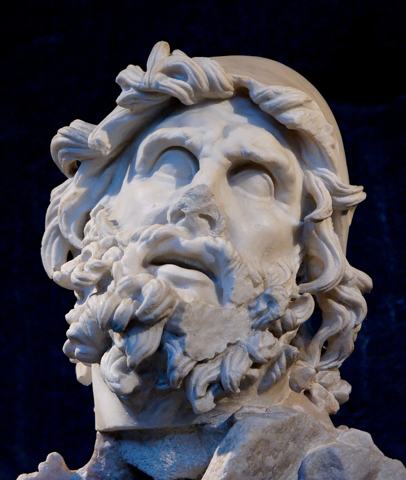
King of Ithaca and the man of many turns. Homer's cleverest hero, who took ten years to sail home from Troy and had to fight for his own house.
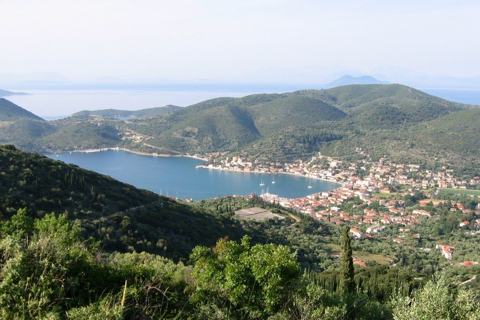
The rocky island kingdom of Odysseus and the destination of the Odyssey — a small, goat-grazed place worth ten years of sailing to get back to.
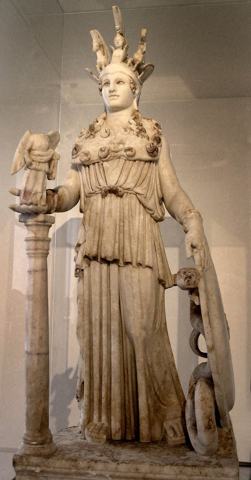
Goddess of wisdom, strategy and craft, born fully armed from the head of Zeus. Patron of Athens, of heroes, and of Odysseus above all.
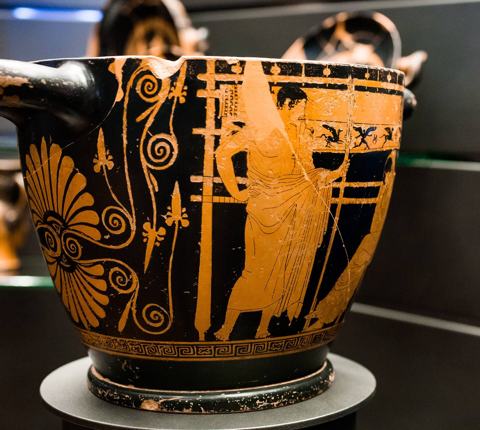
Queen of Ithaca and wife of Odysseus. She held a kingdom together for twenty years with a loom, a riddle, and a bow contest nobody could win.
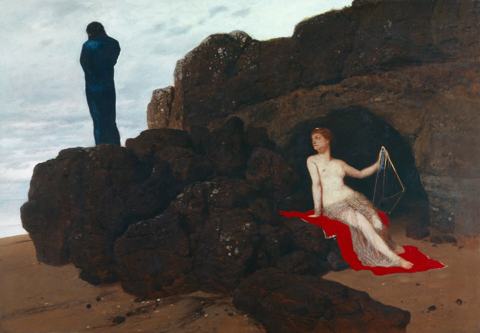
Immortal nymph of the hidden island of Ogygia. She kept Odysseus for seven years and offered him deathlessness; he chose a mortal wife and a rocky island.
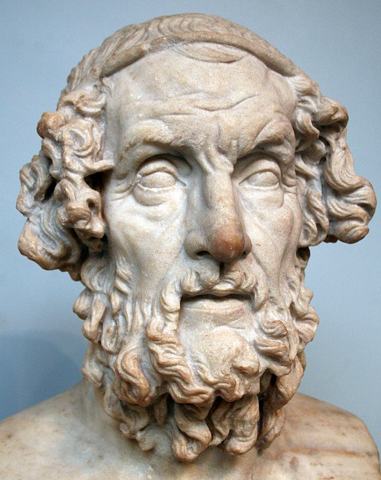
Homer's epic of Odysseus's ten-year voyage home from Troy, the founding adventure story of Western literature and the subject of a 2026 film.
Sources & Further Reading
- 1.Homer, Odyssey (c. 8th-7th century BCE), esp. Books 1-4, 15-17, 21-22, 24.
- 2.Apollodorus, Bibliotheca and Epitome (1st-2nd century CE).
- 3.Hyginus, Fabulae (c. 1st-2nd century CE).
- 4.Gantz, Timothy. Early Greek Myth: A Guide to Literary and Artistic Sources. Johns Hopkins University Press, 1993.
- 5.Heubeck, A., S. West, J. B. Hainsworth, A. Hoekstra, J. Russo and M. Fernandez-Galiano. A Commentary on Homer's Odyssey, 3 vols. Oxford: Clarendon Press, 1988-1992.
- 6.Hornblower, S., A. Spawforth and E. Eidinow, eds. The Oxford Classical Dictionary, 4th ed. Oxford University Press, 2012.
- 7.Stanford, W. B. The Ulysses Theme: A Study in the Adaptability of a Traditional Hero. Oxford: Blackwell, 1954.
Spot an error or have a source to suggest? Write to info@viseterna.com. We cite primary sources and modern scholarship, and we correct fast.