
Calypso
Immortal nymph of the hidden island of Ogygia. She kept Odysseus for seven years and offered him deathlessness; he chose a mortal wife and a rocky island.
Odysseus and Calypso, Arnold Bocklin, 1882 (Kunstmuseum Basel) · Public domain · source
The Concealer
Calypso is the immortal nymph who holds Odysseus on the island of Ogygia for seven of his ten lost years. Her name comes from the Greek verb kalypto, "to cover" or "to conceal", and it is unusually transparent even by Homeric standards: she is the goddess who hides a man from the world, and Ogygia is "the navel of the sea", so far from any shipping lane that no one — mortal or divine — comes there 1,7.
Her parentage varies. Homer calls her the daughter of Atlas, which places her in the Titan generation rather than among the Olympians and explains her interest in the sea's deep places; Hesiod lists a Calypso among the daughters of Ocean and Tethys, and later mythographers offer still other fathers, including Nereus 1,2,6. Jennifer Larson's study of Greek nymph cult notes how loosely such figures were pinned to any single genealogy: a nymph is defined by her place and function far more than by her family 4.
The Island of Ogygia
Homer gives Ogygia one of the most detailed landscapes in early Greek poetry. Hermes, arriving with the gods' ultimatum, finds a great cave with a fire of split cedar and juniper scenting the whole island, four springs running clear in different directions, meadows of violet and wild parsley, a vine heavy with grapes trained around the cave mouth, and owls, falcons and sea-crows nesting in the alders and cypresses. Even a god, Homer says, would stop and admire it 1,7.
The description is doing structural work. Ogygia is a paradise with no society: no city, no neighbours, no assembly, no work, no death. It is the exact inverse of the domestic Ithaca that Odysseus is trying to reach, and the poem sets the two against each other deliberately. Gregory Crane's monograph argues that the Calypso episode is built out of older poetic conventions about journeys to the edge of the world, adapted to make an argument about what its hero actually wants 5.
The Offer of Immortality
Calypso saves the shipwrecked Odysseus, takes him as a lover, and offers him what no other figure in Greek myth offers a mortal hero on such plain terms: she will make him deathless and ageless forever if he stays 1. He refuses. In the poem's most quoted exchange he concedes everything she says — Penelope is indeed no match for a goddess in beauty or stature, since one is mortal and the other is not — and says he wants to go home anyway, even if a god wrecks him again on the way.
Homer is careful to note that by the seventh year he no longer desires her and spends his days on the shore looking at the water, weeping. The reunion is nightly and joyless: "she willing, he unwilling" 1,7. Ancient readers found the arrangement uncomfortable, and it remains one of the clearest statements in Greek literature of the epic's core value — that a human life, with its limits and its attachments, is preferable to an endless one without them.
The Gods Intervene
Odysseus is released only because Athena raises his case in the assembly of the gods while Poseidon is away feasting among the Ethiopians. Zeus sends Hermes across the water with the order, and Calypso's reply is the sharpest speech any minor deity makes in Homer: she accuses the gods of jealousy, listing goddesses — Dawn and Orion, Demeter and Iasion — who took mortal lovers and had them destroyed for it 1,4,6.
She complies anyway. She gives Odysseus bronze tools, timber from the island's trees, cloth for a sail, provisions, and a following wind, and he builds a raft in four days and sails on the fifth. Poseidon smashes it eighteen days later within sight of Scheria 1. The detail that Calypso equips the man who is leaving her, competently and without sabotage, is easy to miss and is a large part of why the character has held modern interest.
Afterlife of the Figure
Calypso left few traces in cult and comparatively little later myth — no temples, no festivals, and only stray genealogies in which Odysseus fathers sons on her, variously named Nausithous, Nausinous or Latinus depending on the source 3,6,8. What she left instead was a literary situation: the beautiful captor whose prisoner will not stay. Fenelon's Les Aventures de Telemaque (1699) opened on her island and made her a fixture of European art, and the eighteenth and nineteenth centuries painted the parting scene repeatedly.
Attempts to locate Ogygia on a real map — Gozo in the Maltese archipelago is the most persistent candidate, with Ceuta and various Ionian islets also proposed — go back to antiquity and have never produced agreement, which suits an island whose defining property is that it cannot be found 7,8.
In Popular Culture
Calypso is a standard episode in screen and stage treatments of the Odyssey, and the renewed interest around Christopher Nolan's 2026 film has brought the seven lost years on Ogygia back into general awareness. She has also become a favourite of modern retellings that reconsider the poem's women — most visibly Madeline Miller's Circe (2018), which treats the immortal-and-the-mortal problem from the goddess's side rather than the hero's.
Continue Exploring
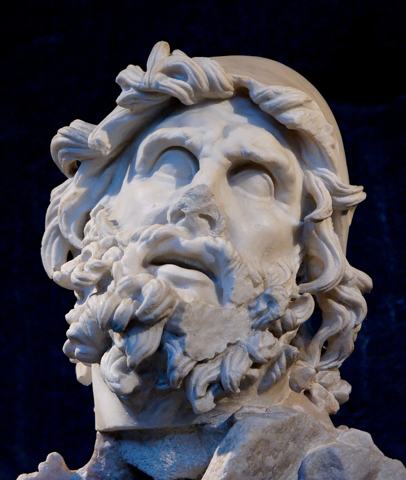
King of Ithaca and the man of many turns. Homer's cleverest hero, who took ten years to sail home from Troy and had to fight for his own house.
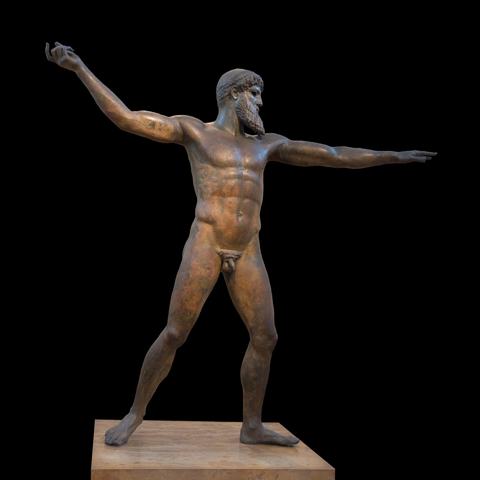
God of the sea, earthquakes and horses. Brother of Zeus, wielder of the trident, and the divine enemy who keeps Odysseus from reaching home.
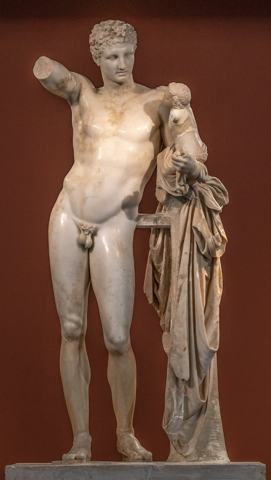
Messenger of the gods and guide of the dead. Patron of travellers, traders, heralds and thieves, and the only Olympian who crosses every boundary at will.
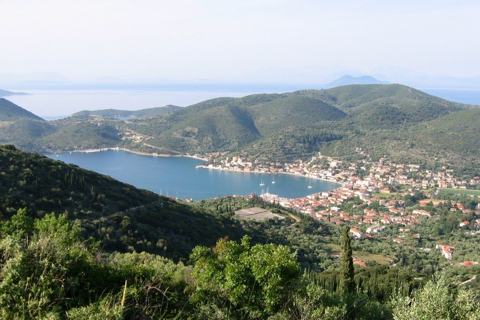
The rocky island kingdom of Odysseus and the destination of the Odyssey — a small, goat-grazed place worth ten years of sailing to get back to.
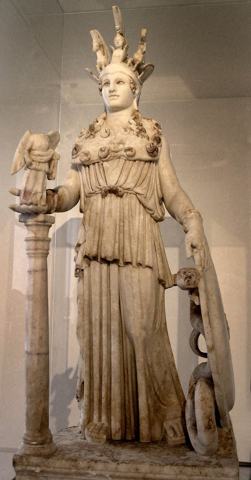
Goddess of wisdom, strategy and craft, born fully armed from the head of Zeus. Patron of Athens, of heroes, and of Odysseus above all.
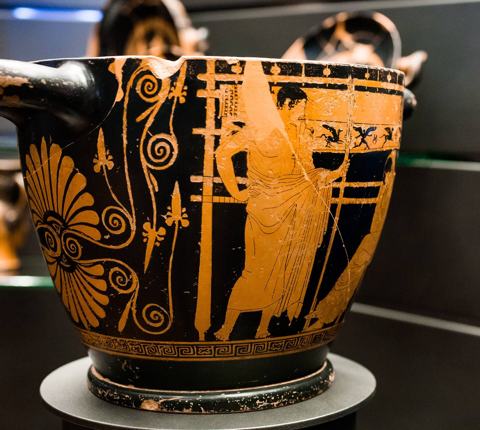
Queen of Ithaca and wife of Odysseus. She held a kingdom together for twenty years with a loom, a riddle, and a bow contest nobody could win.
Also mentioned inTelemachusThe Lotus-EatersThe Odyssey (Homer's Epic)
Sources & Further Reading
- 1.Homer, Odyssey (c. 8th-7th century BCE), esp. Books 1, 5, 7 and 12.
- 2.Hesiod, Theogony (c. 700 BCE).
- 3.Apollodorus, Bibliotheca and Epitome (1st-2nd century CE).
- 4.Larson, Jennifer. Greek Nymphs: Myth, Cult, Lore. Oxford University Press, 2001.
- 5.Crane, Gregory. Calypso: Backgrounds and Conventions of the Odyssey. Frankfurt: Athenaeum, 1988.
- 6.Gantz, Timothy. Early Greek Myth: A Guide to Literary and Artistic Sources. Johns Hopkins University Press, 1993.
- 7.Heubeck, A., S. West, J. B. Hainsworth, A. Hoekstra, J. Russo and M. Fernandez-Galiano. A Commentary on Homer's Odyssey, 3 vols. Oxford: Clarendon Press, 1988-1992.
- 8.Hornblower, S., A. Spawforth and E. Eidinow, eds. The Oxford Classical Dictionary, 4th ed. Oxford University Press, 2012.
Spot an error or have a source to suggest? Write to info@viseterna.com. We cite primary sources and modern scholarship, and we correct fast.