
Penelope
Queen of Ithaca and wife of Odysseus. She held a kingdom together for twenty years with a loom, a riddle, and a bow contest nobody could win.
Penelope at her loom with Telemachus, Attic red-figure skyphos by the Penelope Painter, c. 440 BC (Museo Archeologico, Chiusi); photo ArchaiOptix, CC BY-SA 4.0 · CC BY-SA 4.0 · source
Who Was Penelope?
Penelope is the queen of Ithaca, daughter of the Spartan Icarius, wife of Odysseus and mother of Telemachus. She is also the only major figure of the Odyssey who never leaves the house — and, arguably, the one who does the most difficult work in it. For twenty years, ten of war and ten of her husband's wandering, she holds a kingdom that has no king, no functioning assembly, and an heir too young to enforce anything 1,8.
Her name was already being played with in antiquity. Ancient etymologies linked it to pene, the thread of a weft, which suits her defining trick; others connected it to a duck-like bird, and a Peloponnesian tradition made her the mother of the god Pan 3,7. Homer's own epithets for her are steadier: periphron, "circumspect", and echephron, "of sound mind" — she is characterised, exactly as her husband is, by intelligence 1.
The Shroud of Laertes
The most famous of her stratagems is told three separate times in the poem, by three different speakers. Besieged by suitors demanding she choose a new husband, Penelope announced that she must first finish a funeral shroud for her father-in-law Laertes — it would shame the house if the old man lay unburied without one. She wove the great web by day and unpicked it by night, and for three years no suitor could reasonably object to a work of piety that never seemed to end. The trick failed only when a disloyal maid informed on her 1,8.
The shroud is the female counterpart of the wooden horse: a delay disguised as an obligation, a lie made of the most respectable material available. Modern scholarship generally reads the repeated tellings as Homer's way of establishing that Penelope's metis is of the same order as Odysseus' — the poem's ideal of marriage is homophrosyne, likemindedness, and the two are matched in exactly the quality the poem values most 5,6.
The Suitors and the Contest of the Bow
By the time the poem opens the situation has become untenable. Something over a hundred young nobles from Ithaca and the neighbouring islands occupy the hall, eat the estate's herds, sleep with its servants, and plot to ambush Telemachus. Penelope's position is legally precarious: her father's household would take her back, but returning would mean abandoning her son's inheritance to whoever married her 1,8.
Her solution is the contest of the bow. She brings out Odysseus' great backsprung bow and proposes to marry whichever suitor can string it and shoot an arrow through the sockets of twelve axe-heads set in a row — a feat only Odysseus has ever performed. Whether she has already guessed the identity of the ragged beggar sitting by the door is one of the oldest interpretive questions in Homeric criticism. Marylin Katz's influential study argues that the poem deliberately keeps her motives undecidable, and that this indeterminacy is a structural feature rather than an inconsistency to be explained away 5. What is not in doubt is the effect: the contest disarms the suitors and arms her husband.
Recognition, and the Secret of the Bed
After the killing in the hall, Penelope refuses to acknowledge the stranger. Telemachus rebukes her for a hard heart; Eurycleia swears to the boar scar; she remains unmoved and sets one last test. She instructs the nurse to move the marriage bed out of the chamber for him — and Odysseus breaks, because he built that bed himself around the living trunk of an olive tree rooted in the floor, and no man can move it without cutting it. Only the two of them, and one old servant, have ever known 1.
It is the finest recognition scene in Greek epic, and it works because the token is a shared secret rather than a physical mark: she does not identify a body, she identifies a mind. The immovable bed is also the poem's image of the marriage itself — grown into the ground of the house, and destroyed the moment it is uprooted 5,8.
Reputation and Later Tradition
Penelope became the ancient world's standard of the faithful wife, invoked in epitaphs and moral handbooks for centuries, and given a first-person literary voice in Ovid's Heroides, where she writes to a husband who may be dead 4. But the tradition was never unanimous. Alternative strands, preserved by Apollodorus and by Pausanias' Arcadian traditions, accused her of infidelity with the suitors — in one version with all of them, producing the god Pan — and had Odysseus send her home to her father in disgrace 2,3,7. These variants sit uneasily beside Homer and were probably local or rationalising responses to a figure whose central quality is, after all, concealment.
Feminist Homeric scholarship since the 1990s has reframed the question again, reading Penelope less as a monument to chastity than as a study of how a woman exercises power in a household where she formally has none, and examining how the poem's internal audiences of women shape the way her story is told 5,6.
In Popular Culture
Penelope has been the subject of a modern retelling wave, most prominently Margaret Atwood's The Penelopiad (2005), which narrates the Odyssey from her side and gives voice to the twelve maids hanged in Book 22. In Christopher Nolan's The Odyssey (2026) she is played by Anne Hathaway opposite Matt Damon's Odysseus.
Continue Exploring
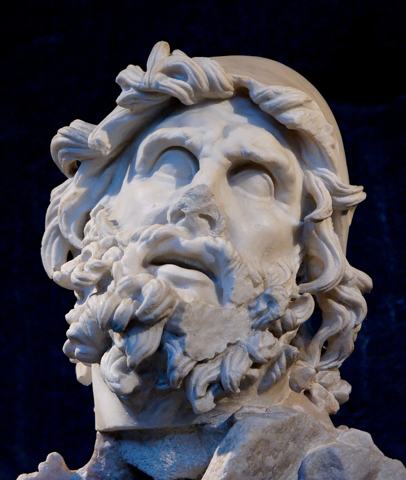
King of Ithaca and the man of many turns. Homer's cleverest hero, who took ten years to sail home from Troy and had to fight for his own house.
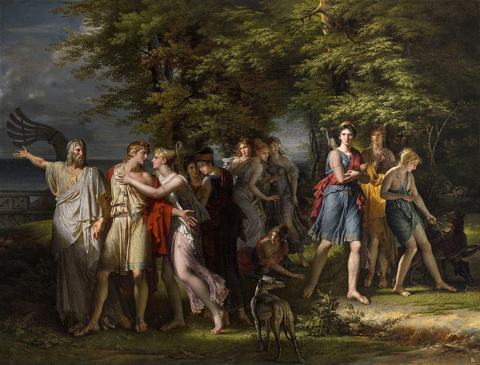
Prince of Ithaca and son of Odysseus. The Odyssey opens with his coming of age: a boy with no father learning how to be a man in a hall full of enemies.
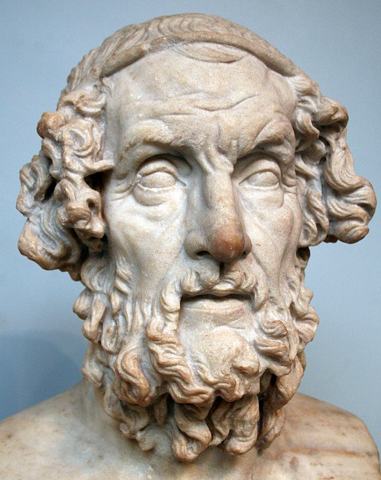
Homer's epic of Odysseus's ten-year voyage home from Troy, the founding adventure story of Western literature and the subject of a 2026 film.
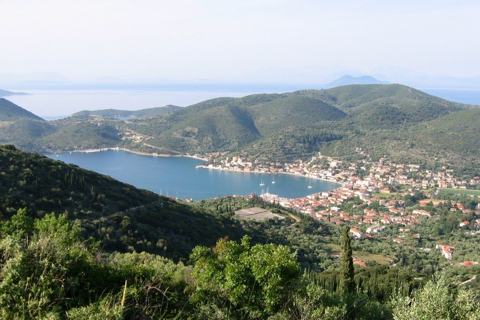
The rocky island kingdom of Odysseus and the destination of the Odyssey — a small, goat-grazed place worth ten years of sailing to get back to.
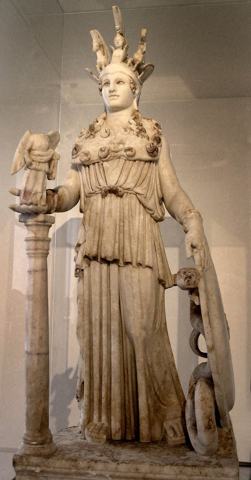
Goddess of wisdom, strategy and craft, born fully armed from the head of Zeus. Patron of Athens, of heroes, and of Odysseus above all.
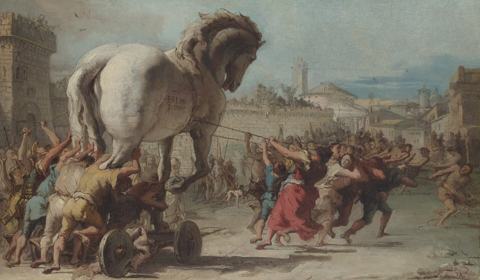
The hollow wooden horse that let the Greeks inside Troy's walls — absent from the Iliad, first told in the lost Epic Cycle, and made famous by Virgil.
Also mentioned inCalypso
Sources & Further Reading
- 1.Homer, Odyssey (c. 8th-7th century BCE), esp. Books 1-2, 4, 17-19, 21, 23.
- 2.Apollodorus, Bibliotheca and Epitome (1st-2nd century CE).
- 3.Pausanias, Description of Greece, Book 8 (2nd century CE).
- 4.Ovid, Heroides 1 (c. 20-15 BCE).
- 5.Katz, Marylin A. Penelope's Renown: Meaning and Indeterminacy in the Odyssey. Princeton University Press, 1991.
- 6.Doherty, Lillian E. Siren Songs: Gender, Audiences, and Narrators in the Odyssey. University of Michigan Press, 1995.
- 7.Gantz, Timothy. Early Greek Myth: A Guide to Literary and Artistic Sources. Johns Hopkins University Press, 1993.
- 8.Heubeck, A., S. West, J. B. Hainsworth, A. Hoekstra, J. Russo and M. Fernandez-Galiano. A Commentary on Homer's Odyssey, 3 vols. Oxford: Clarendon Press, 1988-1992.
Spot an error or have a source to suggest? Write to info@viseterna.com. We cite primary sources and modern scholarship, and we correct fast.