
Ithaca
The rocky island kingdom of Odysseus and the destination of the Odyssey — a small, goat-grazed place worth ten years of sailing to get back to.
Vathy harbour, Ithaki (Ithaca), Greece; photo Saltmarsh, 2006, CC0 · CC0 · source
The Island Worth Going Back To
Ithaca is the home of Odysseus, the kingdom he spends ten years of wandering trying to reach, and the argument the Odyssey is making. It is not a rich place. Homer has Telemachus politely refuse a gift of horses from Menelaus on the grounds that Ithaca has no broad courses or meadows — it is goat country, rugged, with no room to run a chariot, though good for grazing and kind to its people 1,6.
That is the point. The poem sets this stony island against everything Odysseus is offered instead: Calypso's paradise island with immortality attached, Circe's year of comfort on Aiaia, the fabulous Phaeacian court of Scheria with its orchards that never stop bearing. He turns all of it down for a rock in the western sea with a wife, a son, an old father, and a household to put back in order 1,6.
Homer's Geography
The Odyssey gives Ithaca a surprisingly specific set of landmarks. There is Mount Neriton, "covered in trembling leaves"; the harbour of Phorcys with its olive tree and the cave of the Naiads where Odysseus hides the Phaeacian treasure; the spring of Arethusa and the Raven's Crag where the swineherd Eumaeus keeps his pigs; the town with its assembly place and the palace hall where the suitors feast; and the orchard on the hillside where Laertes has withdrawn to work the soil in mourning 1,6.
It also gives a description that has caused two and a half thousand years of argument. Odysseus tells the Phaeacians that Ithaca lies low, "furthest out toward the dark", with the islands of Doulichion, Same and wooded Zacynthus lying apart from it toward the dawn 1. Modern Ithaki is mountainous rather than low, and lies east of Cephalonia rather than west of it — the reverse of what the lines seem to say. Strabo already knew the passage was a problem and offered a linguistic solution, reading the disputed word as "close to the mainland" rather than "low-lying" 2,6.
Where Is Homer's Ithaca?
The default identification, held since antiquity and by most classicists today, is the modern Ionian island of Ithaki, east of Cephalonia — about 96 square kilometres of steep limestone with two lobes joined by a narrow isthmus 6,7. The competing theories are worth knowing because they turn up constantly in popular coverage:
- Lefkada. Wilhelm Dorpfeld, Schliemann's collaborator, argued around 1900 that the island of Lefkada fitted the "furthest toward the dark" description better and excavated there for years. The theory retains a small following and no consensus support 6,7.
- Paliki. Robert Bittlestone's Odysseus Unbound (2005), written with the classicist James Diggle and the geologist John Underhill, proposed that the Paliki peninsula of Cephalonia was a separate island in the Bronze Age, cut off by a channel since filled by earthquake debris, and that Paliki is Homer's Ithaca. The geological case prompted real fieldwork and remains genuinely contested rather than settled either way 5.
The sober position, taken by most commentators, is that the Odyssey is a poem rather than a sailing manual, and that its western geography mixes remembered places, poetic convention and invention in proportions no map can recover 6,7.
Archaeology and the Cult of Odysseus
What the island does have is a cult. Excavations at the Polis Bay cave on the west coast of Ithaki recovered a remarkable deposit of bronze tripod-cauldrons of the ninth to eighth centuries BCE — the very object the Phaeacians load onto Odysseus' ship as parting gifts — along with later votive material including a fragmentary Hellenistic inscription naming Odysseus 4,7. Whatever the site was originally, by the classical period Ithacans were honouring the hero there.
Irad Malkin's study places this in a wider frame: the nostoi, the homecoming stories, were used by Greek communities across the Mediterranean to explain who they were and how they got there, and Odysseus in particular became a proto-colonial figure claimed by settlements from Epirus to Etruria 4. Mycenaean-period remains have also been excavated in northern Ithaki at the site traditionally called the School of Homer, though no find has yet identified any structure as a palace 5,7.
Ithaca in the Poem's Second Half
From Book 13 the island becomes the stage. Odysseus is landed asleep by the Phaeacians and does not recognise his own coast until Athena lifts the mist; he is disguised as a beggar and sent to Eumaeus' hut; Telemachus returns from Sparta by an unwatched route; the two meet, plan, and walk into town. Everything that follows — the insults in the hall, the dog Argos dying on the dung-heap, the recognition by the old nurse, the contest of the bow, the killing, the test of the marriage bed, and the near civil war stopped by Athena in Book 24 — happens within a few square miles 1,6.
In Popular Culture
Ithaca has outgrown its own myth as a metaphor for the destination that matters less than the journey, fixed in that sense by C. P. Cavafy's poem "Ithaka" (1911), which is among the most widely quoted modern Greek poems in English translation. The island is a working tourist destination today, and interest has risen sharply with the 2026 film wave around Christopher Nolan's The Odyssey.
Continue Exploring
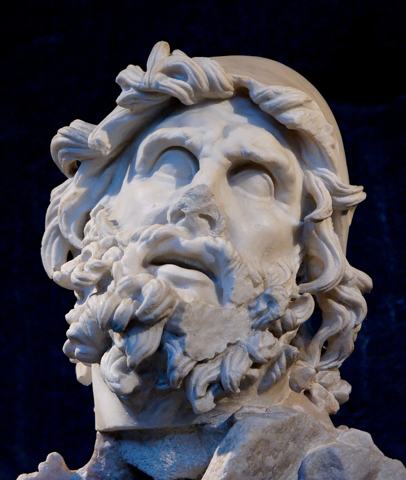
King of Ithaca and the man of many turns. Homer's cleverest hero, who took ten years to sail home from Troy and had to fight for his own house.
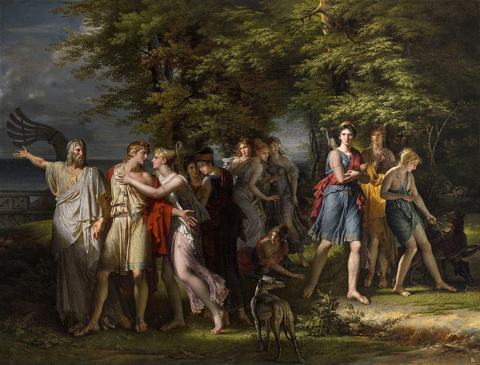
Prince of Ithaca and son of Odysseus. The Odyssey opens with his coming of age: a boy with no father learning how to be a man in a hall full of enemies.
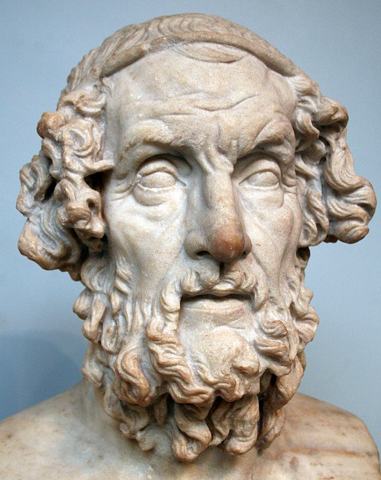
Homer's epic of Odysseus's ten-year voyage home from Troy, the founding adventure story of Western literature and the subject of a 2026 film.
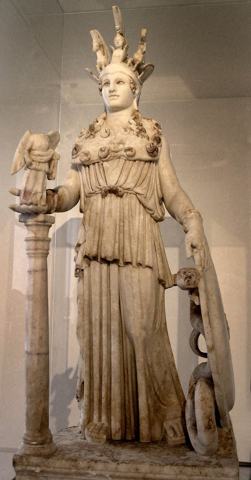
Goddess of wisdom, strategy and craft, born fully armed from the head of Zeus. Patron of Athens, of heroes, and of Odysseus above all.
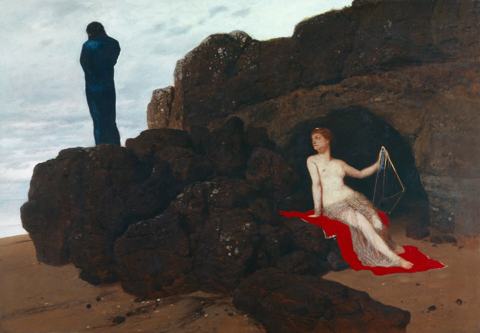
Immortal nymph of the hidden island of Ogygia. She kept Odysseus for seven years and offered him deathlessness; he chose a mortal wife and a rocky island.
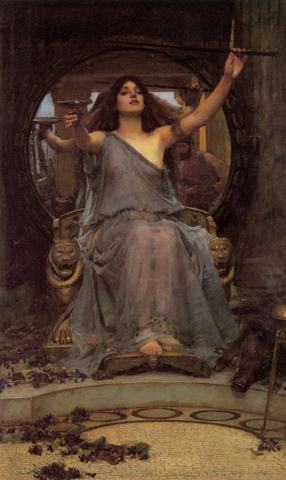
Goddess-enchantress of the island of Aiaia. She turned Odysseus' crew into swine, then became the one guide who told him how to reach the dead.
Also mentioned inAeolusPenelopeThe Lotus-Eaters
Sources & Further Reading
- 1.Homer, Odyssey (c. 8th-7th century BCE), esp. Books 1, 4, 9, 13-17 and 21-24.
- 2.Strabo, Geography, Book 10 (c. 7 BCE - 23 CE).
- 3.Apollodorus, Bibliotheca and Epitome (1st-2nd century CE).
- 4.Malkin, Irad. The Returns of Odysseus: Colonization and Ethnicity. University of California Press, 1998.
- 5.Bittlestone, Robert, with James Diggle and John Underhill. Odysseus Unbound: The Search for Homer's Ithaca. Cambridge University Press, 2005.
- 6.Heubeck, A., S. West, J. B. Hainsworth, A. Hoekstra, J. Russo and M. Fernandez-Galiano. A Commentary on Homer's Odyssey, 3 vols. Oxford: Clarendon Press, 1988-1992.
- 7.Hornblower, S., A. Spawforth and E. Eidinow, eds. The Oxford Classical Dictionary, 4th ed. Oxford University Press, 2012.
Spot an error or have a source to suggest? Write to info@viseterna.com. We cite primary sources and modern scholarship, and we correct fast.