
Perun
God of thunder and the striking bolt — the oak-crowned sky lord of the early Slavs, sworn by in treaties and thrown into the Dnieper at Rus' baptism.
Perun, miniature from the Radzivill Chronicle (15th-century copy of a 13th-century Rus' original) · Public domain · source
The Striker
Perun is the thunder god of the pagan Slavs and the closest thing their scattered records offer to a chief deity 5. The name is transparent: Proto-Slavic Perunъ derives from a root meaning "to strike," and it belongs to a family that includes Lithuanian Perkūnas and Latvian Pērkons, the Baltic thunderers 4,5. The linguistic match is one of the strongest pieces of evidence we have about him, and it points to a very old Indo-European sky-and-storm figure lying behind the Slavic god 5.
He is not, however, a well-documented god. Everything below is drawn from Christian chronicles, hostile or uninterested, plus much later folklore and comparative reconstruction. The Slavs left no scriptures and no pagan literature of their own 5.
What the Chronicles Say
The key text is the Primary Chronicle, compiled in Kyiv around 1113 from older materials. Under the year 980 it reports that Prince Vladimir set up idols on the hill outside his palace court: Perun of wood with a head of silver and a moustache of gold, and beside him Khors, Dazhbog, Stribog, Simargl, and Mokosh 1. This is the only near-contemporary list of a Slavic pantheon that we have, and it may reflect Vladimir's political programme as much as inherited religion 1,5.
Perun also appears in the Rus'–Byzantine treaties the chronicle preserves. In 945 and 971 the pagan members of the Rus' delegations swear by Perun — laying down their weapons, shields, and gold rings — and call down on themselves the curse of being cut by their own blades if they break the oath; the god named alongside him is Veles, god of cattle 1. Perun's sphere is therefore the sworn word and the weapon, not merely the weather 1,5.
Helmold of Bosau, writing in the twelfth century about the still-pagan West Slavs of the Baltic, describes a religious landscape of sacred groves and local high gods, evidence that the pattern extended well beyond Kyiv even where the names differ 3.
Oaks, Weapons, and Thunder Stones
Perun's tree is the oak — the tree most often struck by lightning, and the standard sacred tree of Indo-European thunder gods 4,5. Constantine Porphyrogenitus, describing the Rus' trade route down the Dnieper around 950, records that after passing the last rapids the merchants stopped at an island with a gigantic oak, where they sacrificed live cocks and set out bread and meat, casting lots to decide the offering 2. He does not name a god, but the site has long been connected with Perun's cult 2,5.
In folklore his weapon persists as physical objects. Belemnite fossils and prehistoric stone axes turned up by ploughing were called thunder-stones or "Perun's arrows," kept in houses as protection against lightning and fire, and the six-petalled "thunder mark" rosette was carved into roof beams for the same purpose 4. In South Slavic languages the iris is still called perunika 4.
Perun and Veles
The most widely repeated Slavic myth — that Perun pursues the serpentine, cattle-owning Veles across the sky, striking at him with lightning as he hides beneath a tree, a stone, an animal, and finally a man, until Veles is driven back into the waters and the rain falls — is not written down anywhere in a pre-Christian source 5. It is a twentieth-century reconstruction, assembled by the Soviet scholars Vyacheslav Ivanov and Vladimir Toporov out of folk songs, charms, riddles, place-names, and comparison with Baltic and Vedic material 5.
The reconstruction is elegant and it has been enormously influential; it is also exactly the kind of synthesis Kalik and Uchitel warn against, arguing that a great deal of the reconstructed Slavic pantheon rests on chains of inference rather than on evidence 5. The paired appearance of Perun and Veles in the oath formulas of the 971 treaty is genuine 1. The duel between them is a hypothesis, and the storm-serpent motif in folklore — the figure of the Zmey — need not descend from it 4,5.
The Fall of the Idol
In 988, having accepted Christianity, Vladimir ordered the idols destroyed. The Primary Chronicle gives Perun's end in unusual detail: the image was tied to a horse's tail, dragged down the hill to the Dnieper, beaten the whole way with sticks by twelve men, and thrown into the river, with men posted to push it away from the banks until it passed the rapids 1. A parallel account describes the Novgorod idol at Peryn being thrown into the Volkhov 1.
The scene is meant to be read as a humiliation of a false god rather than a report of what a mob felt, but the beating of the image and the escorting of it downstream have struck many readers as a ritual expulsion in its own right — a god being sent away rather than merely smashed 4,5.
After Christianity
Perun's functions did not vanish; they were reassigned. In East Slavic popular Christianity the thunder belongs to Elijah the Prophet, Ilya, whose chariot wheels make the noise across the sky and whose feast on 20 July inherited the storm-god's calendar; Saint George absorbed other parts of the complex 4. Ivanits documents this layered religion — dvoeverie, "double faith" — in which peasant practice kept thunder-stones, sacred trees, and weather charms alongside the Church for centuries 4.
How Much Do We Really Know?
Enough to say that a thunder god named for the strike stood at the head of the Kyivan idols in 980, that warriors swore by him with their weapons, that his tree was the oak, and that his cult was violently dismantled in 988 1,2. Beyond that, the picture thins quickly into folklore and reconstruction. Perun is a real god about whom we know remarkably little — which is worth saying plainly, because a great deal of confident detail about Slavic mythology in circulation today was invented in the nineteenth and twentieth centuries 5.
Continue Exploring
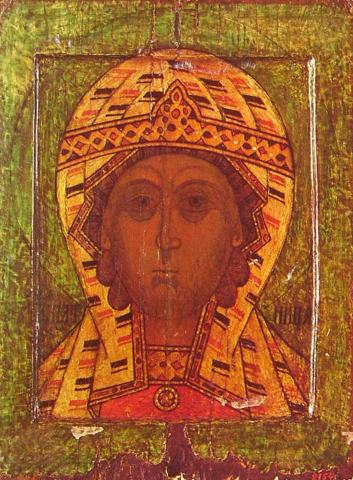
Mother of the damp earth and the spun thread — the only goddess on Vladimir's hill, who outlived her own cult as a night spirit and as Saint Friday.
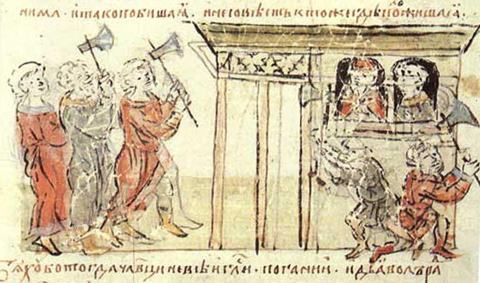
The founding chronicle of Kyivan Rus', c. 1113 - the only narrative source for Vladimir's pagan pantheon of 980 and its fall eight years later.
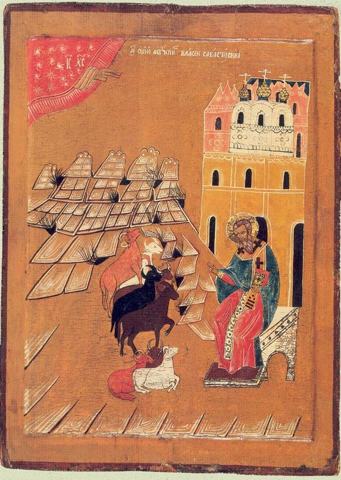
Lord of the cattle and the world below — the second god the Rus' swore by, whose name survived as a curse, a saint's herd, and a beard of grain in the field.
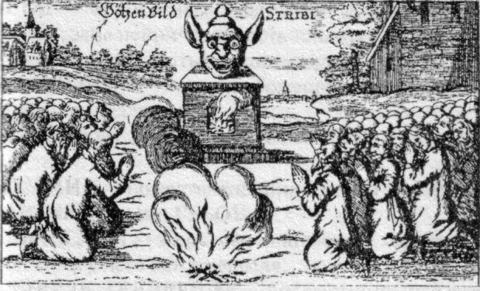
Wind god of the pagan Kyivan pantheon, remembered in the Tale of Igor's Campaign as the ancestor whose grandsons are the winds themselves.
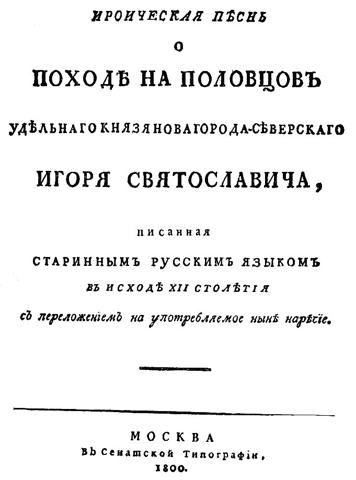
Sun god of the Kyivan pantheon and, in the Tale of Igor's Campaign, the mythical ancestor of the Rus' people themselves.
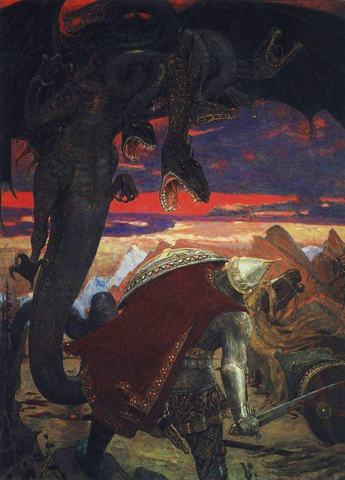
The many-headed dragon — the fire-breathing serpent of Russian epic song, met at a river crossing, and beaten only by a hero who refuses to stop swinging.
Also mentioned inChernobog and Belobog (Black God and White God)Jarilo (Yarilo)Koliada (Slavic Winter Festival)Koschei the DeathlessKupala Night (Ivan Kupala)Lada (Slavic Goddess)Likho (One-Eyed Misfortune)Morana (Marzanna)NavRod and the RozhanitsySvarogSvetovid (Sventovit)The Zbruch IdolTriglav (Three-Headed Slavic God)Vyraj (Iriy, the Slavic Otherworld Paradise)
Sources & Further Reading
- 1.The Russian Primary Chronicle (Povest' vremennykh let, c. 1113).
- 2.Constantine Porphyrogenitus, De Administrando Imperio (c. 950), ch. 9.
- 3.Helmold of Bosau, Chronica Slavorum (12th century).
- 4.Ivanits, Linda J. Russian Folk Belief. M.E. Sharpe, 1989.
- 5.Kalik, Judith & Alexander Uchitel. Slavic Gods and Heroes. Routledge, 2019.
Spot an error or have a source to suggest? Write to info@viseterna.com. We cite primary sources and modern scholarship, and we correct fast.