
Mokosh
Mother of the damp earth and the spun thread — the only goddess on Vladimir's hill, who outlived her own cult as a night spirit and as Saint Friday.
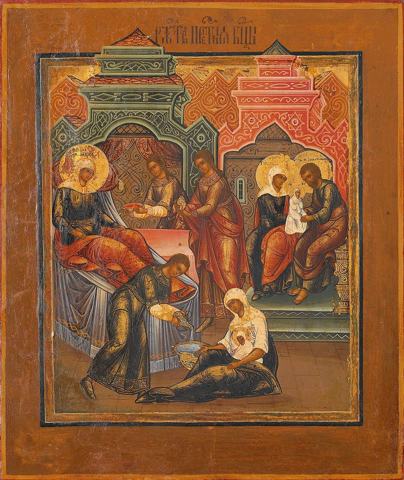
Icon of Saint Paraskeva Pyatnitsa, unknown painter, Novgorod, 16th century (State Russian Museum, St Petersburg) - the Christian figure who inherited Mokosh's Friday cult · Public domain · source
The Only Goddess on the Hill
In 980, according to the Primary Chronicle, Prince Vladimir set idols on the hill outside his court in Kyiv: Perun with a silver head and golden moustache, then Khors, Dazhbog, Stribog, Simargl, and last in the list, Mokosh 1. She is the only female name on it, which is the single most-cited fact about her and very nearly the only contemporary one 1,6.
Eight years later the idols went into the Dnieper, and Mokosh disappears from official record 1. She does not disappear from the sources that matter most for actual belief. Old Russian sermons attacking pagan survivals list her name alongside the vily and rozhanitsy, the fate spirits, among the things Christians were still doing when they should not have been, and confessional questionnaires used by priests include, among the questions put to women, whether the penitent had gone to Mokosha 2,3. A god the Church still needs to ask about three hundred years later is a god with a functioning cult 4.
A Name Nobody Agrees About
The etymology is contested and the two leading options pull in different directions. One derives the name from the Slavic root mok-, "wet" or "to moisten," which would make her a goddess of moisture and, by extension, of the fertile damp earth 5,6. The other connects it to a root for spinning and plaiting, which fits the folklore evidence far better 4,6.
The two readings do not have to be exclusive, and both are argued from the name alone, since no medieval text says what she governed 6. Kalik and Uchitel's general warning applies: a single name in a list, plus later folklore under a similar name, is a slender basis for a portrait of a goddess, and much of what is written about Mokosh is portrait-painting 6.
Mokusha, Who Shears the Sheep
The folklore is where she becomes concrete. In the Russian north, ethnographers recorded belief in a female spirit called Mokusha or Mokosha well into the nineteenth century 4. She walks the houses during Lent, and her presence is known by signs: a woman hears moaning at night, or finds that flax left on the distaff has been spun while the household slept, or discovers sheep sheared without a hand touching them 4.
She is not benign and not quite hostile. Women left offerings for her — a tuft of wool by the distaff, shorn wool in a pair of shears set out overnight — to keep her satisfied, and the rule was to not leave work unfinished where she could get at it 4. Ivanits records this as a living peasant belief in its own right; whether it descends unbroken from the goddess of 980 is a reasonable inference from the name, not a documented lineage 4.
Friday, and the Ban on Spinning
Mokusha belongs to a much larger complex of women's-work taboos attached to Friday. Across Russian and Ukrainian ethnography, Friday was a day on which women must not spin, weave, wash, or comb, and the prohibition was enforced by a personified Pyatnitsa, "Friday" — a woman who appears to those who break it, sometimes covered in needles and spindle-wounds from the work done on her day, sometimes tearing the offender's hands 4.
The pattern is remarkably consistent: a female supernatural, associated with thread, water, and the household, who inspects women's labour and punishes those who work when they should rest 4. Whatever Mokosh was on Vladimir's hill, the popular figure who occupies that role afterwards is unmistakably built out of the same materials 4,5.
Moist Mother Earth
Mat' syra zemlia, "moist mother earth," is the other tradition regularly attached to her name, and it deserves separating out. The earth in Russian peasant belief was a genuinely sacred entity: oaths were sworn by swallowing a lump of it or holding it on the head, sins were confessed to it where a priest was unavailable, it was addressed in healing charms, and it was considered pregnant and unstrikeable between the Annunciation and a fixed day in spring 4.
None of these practices names Mokosh. The identification of the goddess with Moist Mother Earth is a modern scholarly proposal, resting on the "wet" etymology and on the general fit, and it should be labelled as such 4,5,6. What is documented is a powerful earth cult and a goddess whose name may mean "moisture," which is suggestive rather than conclusive.
Paraskeva Pyatnitsa
The Christian successor is unusually clear. Saint Paraskeva carries a Greek name that simply means "Friday" or "preparation," and in Russian she is Paraskeva Pyatnitsa, "Paraskeva Friday" 4. She became the patron of women, of spinning and women's crafts, of marriage and childbirth, of springs and wells — chapels were built at water sources under her name — and of markets, which were held on Fridays 4.
Her icons were carried in processions for rain and for cattle, and the Friday work prohibitions transferred to her intact 4. The functional continuity between the folk Pyatnitsa and the canonised Paraskeva is documented in ethnographic detail, and the Church's periodic complaints about the "false Friday" processions show it was aware of the overlap 4.
Reconstruction and Its Limits
Ivanov and Toporov placed Mokosh in their reconstructed Slavic myth as the wife of the thunder god, taken by his adversary and recovered by lightning — the Slavic reflex of a wider Indo-European pattern 5. The proposal is coherent and it is the reason Mokosh is so often called Perun's consort in popular writing 5.
There is no source for it. No medieval text pairs them, no folklore preserves the abduction, and the reconstruction is built from comparative parallels and the placement of names 5,6. The honest summary of Mokosh is smaller and, on its own terms, more interesting: a goddess named once in a chronicle list; a spirit women still fed by the distaff eight centuries later; and a saint whose feast day is a day of the week 1,3,4.
Continue Exploring
God of thunder and the striking bolt — the oak-crowned sky lord of the early Slavs, sworn by in treaties and thrown into the Dnieper at Rus' baptism.
The founding chronicle of Kyivan Rus', c. 1113 - the only narrative source for Vladimir's pagan pantheon of 980 and its fall eight years later.
A name condemned in medieval Russian sermons alongside birth-spirits called the rozhanitsy - read by some as a supreme creator god, by others as no god at all.
Wind god of the pagan Kyivan pantheon, remembered in the Tale of Igor's Campaign as the ancestor whose grandsons are the winds themselves.
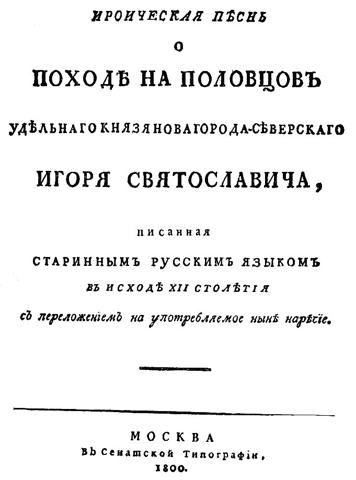
Sun god of the Kyivan pantheon and, in the Tale of Igor's Campaign, the mythical ancestor of the Rus' people themselves.
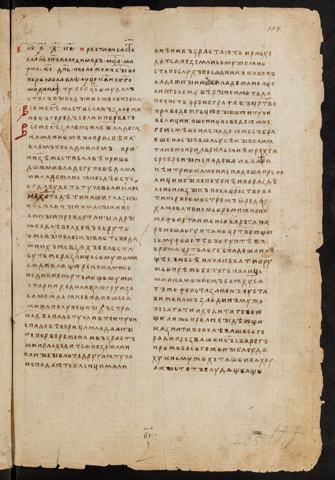
God of fire and the forge — a smith-god known from one glossed line in a Kyivan chronicle, and one of the most over-reconstructed figures in Slavic myth.
Also mentioned inKoliada (Slavic Winter Festival)Kupala Night (Ivan Kupala)Lada (Slavic Goddess)The Zbruch IdolVelesVyraj (Iriy, the Slavic Otherworld Paradise)
Sources & Further Reading
- 1.The Russian Primary Chronicle (Povest' vremennykh let, c. 1113), s.a. 980 — Vladimir's idols.
- 2.Old Russian anti-pagan homilies: the Sermon of the Christ-Lover and the Sermon of St. Gregory on how the pagans worshipped idols (12th–14th centuries).
- 3.Old Russian confessional questionnaires and penitentials (14th–16th centuries).
- 4.Ivanits, Linda J. Russian Folk Belief. M.E. Sharpe, 1989.
- 5.Ivanov, V. V. & V. N. Toporov. Issledovaniia v oblasti slavianskikh drevnostei. Nauka, Moscow, 1974.
- 6.Kalik, Judith & Alexander Uchitel. Slavic Gods and Heroes. Routledge, 2019.
Spot an error or have a source to suggest? Write to info@viseterna.com. We cite primary sources and modern scholarship, and we correct fast.