
Stribog (Slavic God of Winds)
Wind god of the pagan Kyivan pantheon, remembered in the Tale of Igor's Campaign as the ancestor whose grandsons are the winds themselves.
Stribi (Stribog), engraving from Georg Adam Schleusing, La religion ancienne et moderne des Moscovites, 1698 · Public domain · source
A Name Nobody Can Fully Explain
Stribog is one of only two Slavic wind gods to survive in a written medieval source, and he arrives with almost no context attached — a name on a list, then a metaphor in a poem, and very little else 1,2. Even his etymology is disputed. The older proposal derives Stri- from a Slavic root meaning "to extend" or "to spread out," fitting a god whose business is scattering the winds across the earth; other scholars have proposed an Iranian loan connected to ideas of fatherhood or supremacy, given the plausible Scythian and Sarmatian influence on early Slavic religious vocabulary 4,6. No version of the argument is conclusive, which is itself typical of how little text Stribog has to work with 4.
Among Vladimir's Idols
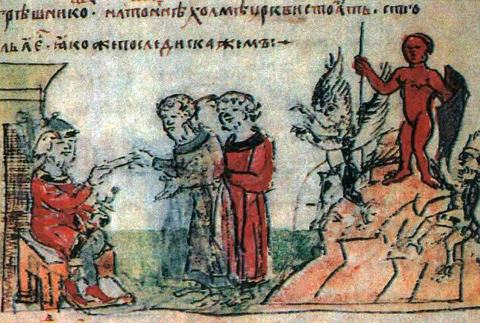
Stribog's one unambiguous appearance in a near-contemporary source is administrative. The Primary Chronicle records that in 980 Prince Vladimir raised a row of idols on the hill above Kyiv: Perun first, then Khors, Dazhbog, Stribog, Simargl, and Mokosh 1. The chronicle offers no image, no priesthood, and no ritual detail for him — only a place in the lineup, which is nonetheless significant, since the list represents the only surviving attempt by a Slavic state to formally name its own gods 1,4.
Scholars generally treat the 980 pantheon as a political statement as much as a religious one, an attempt by Vladimir to unify Rus' cult practice under gods with wide currency, rather than a full census of what ordinary people actually worshipped in their villages 4.
Grandsons of Stribog
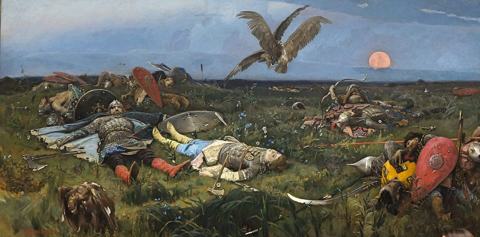
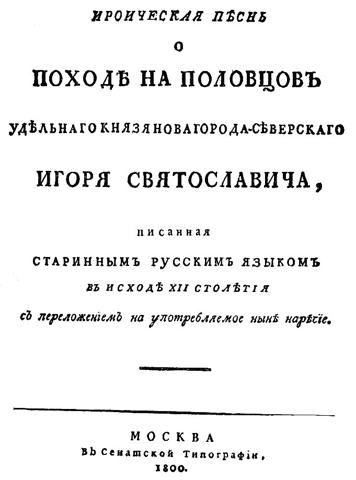
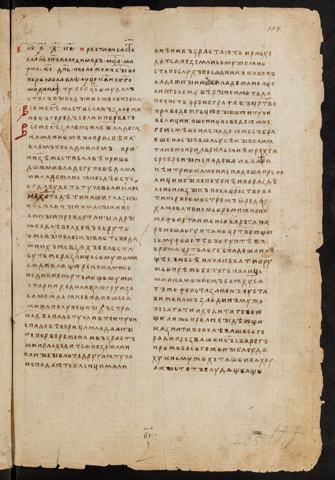
Stribog's second appearance is the one that gives him a personality, if only a borrowed one. The Tale of Igor's Campaign describes the winds turning against the doomed Rus' army with the line, in modern renderings, that "the winds, the grandsons of Stribog, blow arrows from the sea" against Prince Igor's forces 2. It is the only line of surviving Slavic literature that treats Stribog as an active mythological agent rather than a name, and it establishes his one clear mythic relationship: not to other gods, but to the winds themselves, poetically cast as his descendants 2,4.
As with the parallel phrase "Dazhbog's grandsons" describing the Rus' people in the same poem, this is very likely literary inheritance rather than live theology — a twelfth-century Christian poet reaching for pre-Christian imagery because it was evocative, not because he worshipped Stribog 2,6.
A Western Christian Caricature
Stribog's afterlife took an unflattering turn in early modern Europe. Georg Adam Schleusing's 1698 tract on Russian religion, illustrated for a Western audience largely hostile to both Orthodoxy and the paganism it had displaced, depicts "Stribi" as a leering, bat-eared demon's head mounted on a smoking altar, worshipped by kneeling Muscovites 3. The image has no connection to any authentic description of a Stribog idol — none survives — and instead reflects a stock convention of the period, in which any non-Christian devotion, however distant in time, was drawn as devil-worship for a European print market 3.
It is useful precisely as a record of reception rather than of religion: how a wind god known only from a chronicle's list and a poet's line had, by the late seventeenth century, become raw material for anti-Muscovite polemic 3.
Later Imagination
Stribog fared better in early twentieth-century Russian art. In 1910 the sculptor Sergei Konenkov carved a monumental wooden figure titled Stribog — bearded, horned, wrapped in what looks like a fan of feathers or wind-blown fur — now held in the State Tretyakov Gallery 4. Konenkov's Stribog owes nothing to medieval evidence, which supplies no physical description at all; it belongs instead to the wider Russian Symbolist interest in reimagining a pre-Christian past that written sources had left almost entirely blank 4.
How Much Do We Really Know?
Strip away the reconstructions and Stribog reduces to two hard facts: a name among the six idols Vladimir erected in 980, and a poetic epithet describing the winds as his grandsons 1,2. Everything else — his appearance, his rites, even the confident modern gloss "god of the winds and storms" — is inference from that single line, from etymology, and from comparison with better-documented Indo-European wind deities 4,5,6. In that thinness he keeps company with Svarog, a god absent from Vladimir's hill altogether whose entire surviving record is barely longer than Stribog's own. Honestly stated, Stribog is a name we can be sure mattered and a character we can barely describe.
Continue Exploring
God of thunder and the striking bolt — the oak-crowned sky lord of the early Slavs, sworn by in treaties and thrown into the Dnieper at Rus' baptism.
A 12th-century epic of a failed raid, its only manuscript burned in Moscow in 1812, and the two-century forgery debate that followed it.
Sun god of the Kyivan pantheon and, in the Tale of Igor's Campaign, the mythical ancestor of the Rus' people themselves.
God of fire and the forge — a smith-god known from one glossed line in a Kyivan chronicle, and one of the most over-reconstructed figures in Slavic myth.
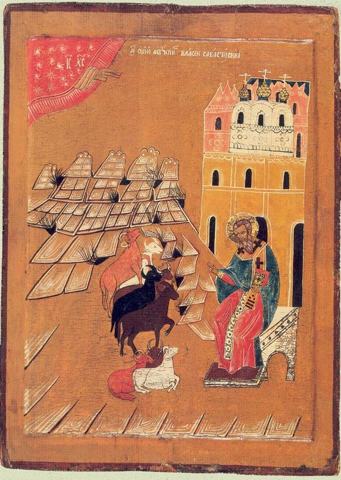
Lord of the cattle and the world below — the second god the Rus' swore by, whose name survived as a curse, a saint's herd, and a beard of grain in the field.
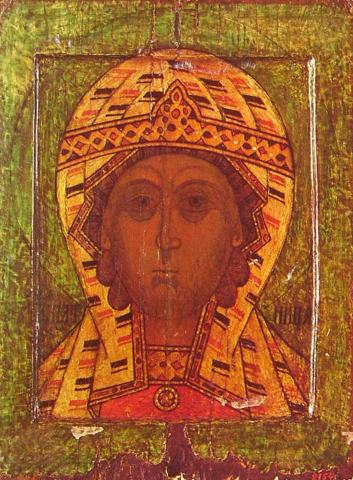
Mother of the damp earth and the spun thread — the only goddess on Vladimir's hill, who outlived her own cult as a night spirit and as Saint Friday.
Also mentioned inJarilo (Yarilo)The Primary Chronicle (Tale of Bygone Years)
Sources & Further Reading
- 1.The Russian Primary Chronicle (Povest' vremennykh let, c. 1113), trans. Samuel Hazzard Cross & Olgerd P. Sherbowitz-Wetzor. Medieval Academy of America, 1953.
- 2.The Tale of Igor's Campaign (Slovo o polku Igoreve, late 12th century).
- 3.Schleusing, Georg Adam. La religion ancienne et moderne des Moscovites. 1698.
- 4.Kalik, Judith & Alexander Uchitel. Slavic Gods and Heroes. Routledge, 2019.
- 5.Machal, Jan. Slavic Mythology, in The Mythology of All Races, vol. III. Marshall Jones, 1918.
- 6.Dixon-Kennedy, Mike. Encyclopedia of Russian and Slavic Myth and Legend. ABC-CLIO, 1998.
Spot an error or have a source to suggest? Write to info@viseterna.com. We cite primary sources and modern scholarship, and we correct fast.