
Kupala Night (Ivan Kupala)
Slavic midsummer's eve of bonfires, floating flower wreaths and the legend of a fern that blooms once a year - grafted onto the feast of St John the Baptist.
Bajka o kwiecie paproci (The Tale of the Fern Flower), Antoni Piotrowski, c. 1910 · Public domain · source
A Night Out of Season
Kupala Night — Russian and Ukrainian Ivan Kupala, Polish Noc Świętojańska or Sobótka, Belarusian Kupalle — falls on the shortest night of the year, at the summer solstice, and is one of the best-documented calendar rites anywhere in Slavic folk custom 2,3,4. Where a figure like Perun or Mokosh survives in a handful of chronicle sentences, Kupala Night comes down through dense, repeated nineteenth-century ethnographic description — Ivan Sakharov and Alexander Afanasyev both recorded it in detail from living practice, not from a single contested clause in a sermon 2,3. That density of attestation does not settle every question about the night's origin, but it does mean the rite itself, as performed, is genuinely well grounded 2,3,4,5.
Fire and Water Together
The core of the night is a pairing of the two elements. Villages built bonfires at dusk, and young men and women jumped over them in couples, hand in hand — a test of nerve, a courtship display, and by local belief a protection against sickness and evil for the coming year, with cattle sometimes driven through the embers for the same purpose 3,4,6. Girls wove wreaths of wildflowers, set candles in them, and floated them on a river or pond after dark, reading a sweetheart's fortune from how the wreath moved: drifting steadily meant a good match, sinking or catching on the bank meant delay, quarrel, or worse 3,4. James Frazer's comparative survey of European midsummer fire-festivals places the Russian bonfires and the burning or drowning of a straw effigy of Kupalo, recorded in some regions, alongside a continent-wide pattern of solstice fires, though Frazer's own explanatory framework of surviving vegetation-magic is now treated by folklorists as one hypothesis among several rather than a proven history 6.
Is "Kupala" a God?
Eighteenth-century Russian mythographers, working in the same speculative style that inflated Lada from a song refrain into a goddess, presented Kupala as a full-fledged deity of summer fertility with an established cult. The word itself is much better explained without one: it derives from the Slavic root kupati, "to bathe" or "to boil," which fits the night's bathing and washing customs directly and requires no invented god behind it 3,7. What the older, denser layer of evidence actually documents is a rite and a name for that rite's night, not a worshipped personality with a temple or an idol, and modern reference works are generally cautious about promoting "Kupala" from a calendar term to a goddess 4,7.
The Fern That Blooms Once
The night's best-known legend is also its strangest, because it describes something that cannot literally happen. Deep in the forest, at midnight on Kupala Night and for that moment only, the fern is said to put out a single flower of fire — ferns reproduce by spores and never flower at all, which the storytellers plainly knew and made central to the tale rather than an oversight 3,4,7. Whoever finds and picks it, braving the dark forces that guard the spot, gains the power to understand the speech of animals, to see buried treasure through the earth, or simply extraordinary luck; most tellings agree that the flower is desperately hard to keep hold of and that the seeker is tested, frightened, or tricked before any reward is possible 3,4,7.
Gogol's Eve
The legend reached a national and international audience through fiction rather than ethnography. Nikolai Gogol's short story "St John's Eve," published in 1831 in his Evenings on a Farm Near Dikanka, follows a poor young man who accepts a stranger's help to find the fern flower and the treasure it promises, in order to win the girl he loves — and pays a price the story makes clear from the start no honest shortcut avoids 1. Gogol's version is literature, built for readers, not a transcription of what any particular village believed, but it did more than any folklore collection to fix the fern-flower legend as the representative Slavic midsummer story for readers outside the culture that told it 1,4.
A Christian Overlay
The rite's modern name welds a saint onto an older bathing festival: it falls on the eve of the Nativity of St John the Baptist in the Orthodox calendar, and "Ivan Kupala" is literally "John the Bather," an etymological coincidence the tradition made the most of 3,4,7. Church writers complained for centuries about the licentious reputation of the night — young people out until dawn, fires jumped in mixed company, divination practiced in open defiance of the Church — in terms that closely echo the objections recorded against the spring drowning of Morana, and for the same underlying reason: a rite too popular and too widely practiced to suppress was instead given a Christian label and left largely alone 4,6. How much of the fire-and-water complex predates Christianity in the form recorded is, honestly, not fully recoverable from the evidence; what is certain is that the night survived the label, and Kupala fires are still lit across Slavic Europe every June 3,4.
Continue Exploring
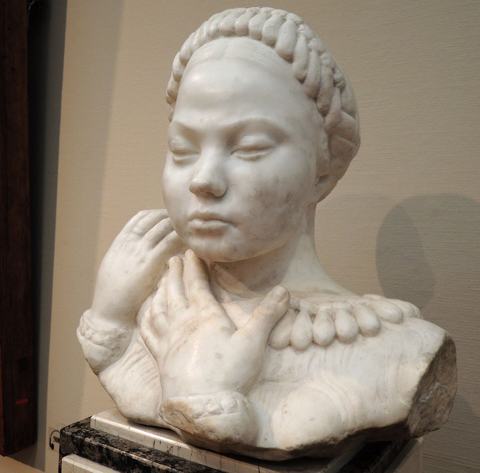
Popularly the Slavic goddess of love, spring and marriage. Most Slavists think she began as a song refrain misread as a divine name.
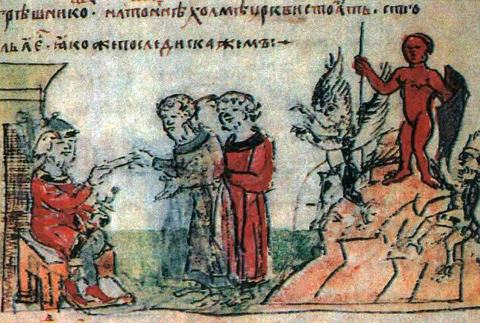
God of thunder and the striking bolt — the oak-crowned sky lord of the early Slavs, sworn by in treaties and thrown into the Dnieper at Rus' baptism.
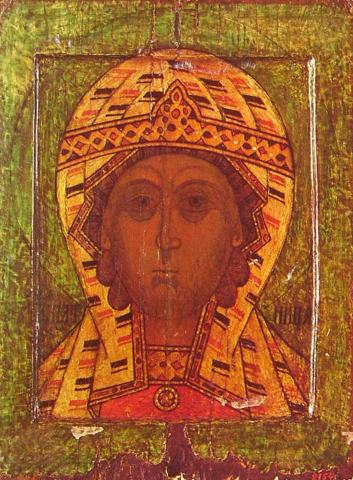
Mother of the damp earth and the spun thread — the only goddess on Vladimir's hill, who outlived her own cult as a night spirit and as Saint Friday.
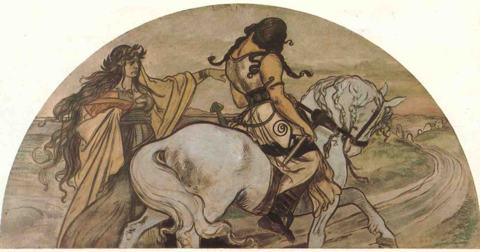
Slavic winter-and-death figure, drowned in effigy every spring. The rite is documented from 1420; whether a real goddess stood behind it is debated.
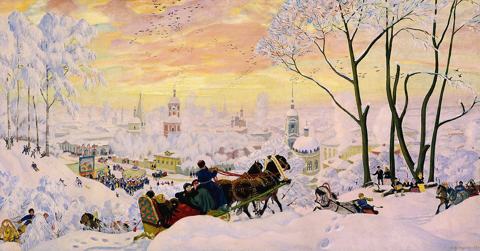
A week of pancakes, sledding and a burned straw effigy before Orthodox Lent - folk sun-worship by reputation, church calendar by attestation.
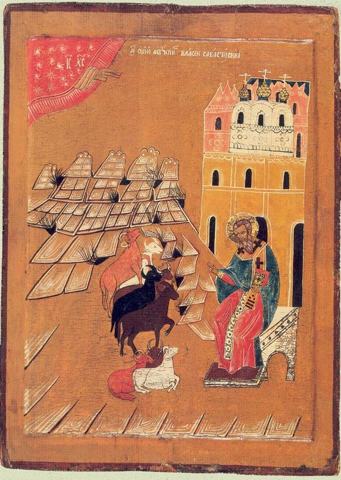
Lord of the cattle and the world below — the second god the Rus' swore by, whose name survived as a curse, a saint's herd, and a beard of grain in the field.
Sources & Further Reading
- 1.Gogol, Nikolai. "St John's Eve" ("Vecher nakanune Ivana Kupala"), in Evenings on a Farm Near Dikanka, 1831.
- 2.Sakharov, Ivan P. Skazaniia russkogo naroda o semeinoi zhizni svoikh predkov (Tales of the Russian People about the Family Life of Their Ancestors). St Petersburg, 1836.
- 3.Afanasyev, Alexander. Poeticheskie vozzreniia slavian na prirodu (The Poetic Views of the Slavs on Nature), 3 vols. Moscow, 1865-1869.
- 4.Ivanits, Linda J. Russian Folk Belief. M.E. Sharpe, 1989.
- 5.Warner, Elizabeth. Russian Myths. British Museum Press, 2002.
- 6.Frazer, James George. Balder the Beautiful - The Fire-Festivals of Europe and the Doctrine of the External Soul (The Golden Bough, Part VII, vol. 1). Macmillan, 3rd ed., 1913.
- 7.Dixon-Kennedy, Mike. Encyclopedia of Russian and Slavic Myth and Legend. ABC-CLIO, 1998.
Spot an error or have a source to suggest? Write to info@viseterna.com. We cite primary sources and modern scholarship, and we correct fast.