
Chernobog and Belobog (Black God and White God)
A genuinely attested "black god" of the Baltic Slavs, paired since the 1600s with a "white god" no medieval source actually names.
Cernobog and Tribog, idealized plate from Jan Machal, Slavic Mythology (The Mythology of All Races vol. III), 1918 · Public domain · source
Helmold's Black God
Almost everything solid known about Chernobog comes from a single medieval sentence. Helmold, a Saxon priest writing his Chronica Slavorum around 1168–72 about the still partly pagan Wagri and Obodrites of the Baltic coast, describes a custom at Slavic feasts: a ceremonial bowl passed among the guests, over which words are spoken "not of blessing but of cursing," invoking both a good god and a bad one, and crediting the bad god with all misfortune. Helmold names him in Slavic as Zcerneboch — "that is, the black god" 1.
That is the entire medieval textual basis for Chernobog: one hostile ethnographic aside, in Latin, from a churchman who is more interested in condemning the custom than in describing it fully. Everything else attached to his name in later retellings — a specific cult, an idol, a mythology of conflict with a rival — is later addition 1,2.
A Ritual, Not a Temple
What Helmold actually documents is a drinking ritual and its accompanying formula, not a shrine or a statue; no Chernobog idol is described by any source, in contrast to the well-attested images of Triglav at Szczecin or Svetovid at Arkona 1,2. Some scholars read Helmold's "black god" as evidence of a genuine dualistic strand in Baltic Slavic belief, in which fortune and misfortune were formally assigned to opposed powers; others, including Gieysztor, treat it as more likely a local application of the widespread Slavic habit of naming misfortune-bringing spirits as "black," filtered through a churchman primed to see devil-worship and binary heresy wherever he looked 3.
Chernobog's name did go on to have a real afterlife in Slavic folk speech — "black god" and related phrases survive in later Russian and South Slavic curses and charms associated with bad luck — which at least confirms that a "black" numinous figure of some kind was culturally current well beyond Helmold's account, even if its exact shape in the twelfth century is unrecoverable 2,5.
Where Is the White God?
Belobog, the "white god" now routinely paired with Chernobog in popular Slavic mythology, appears in no medieval source at all — not in Helmold, not in Saxo Grammaticus, not in any chronicle 2,3. His entire evidentiary basis is indirect: a scatter of place names across the former West Slavic lands containing elements read as bel- ("white") plus bog ("god") — a hill here, a village there — and a single often-cited episode in which a monastery founded in 1163 near Treptow in Pomerania was given the name Belbuk, glossed at the time as "white god," specifically to contrast the Christian foundation with the "black god" of its pagan predecessors 2.
That gloss is suggestive but thin: place-name elements meaning "white" do not automatically encode a forgotten deity, or even a personified concept, any more than an English hill called Whitehill implies a god named White 2,3. Kalik and Uchitel are blunt about the imbalance: the evidence for Belobog as an actual object of worship is, in their assessment, effectively nonexistent, resting on inference from Chernobog's existence rather than on anything said about Belobog himself 2.
An Invented Dualism?
The pairing itself has a documented birthdate, and it is centuries later than Helmold. Antiquarians of the sixteenth and seventeenth centuries, working from the logic that a "black god" implied a symmetrical "white god," began constructing an explicit Chernobog–Belobog dualism, which later scholarship compared to the Zoroastrian opposition of Ahriman and Ohrmazd — sometimes proposing an Iranian, Scythian, or Sarmatian channel of influence on early Slavic religion 2,3. Gieysztor's study of Slavic mythology treats the neat good-god/bad-god scheme less as recovered theology and more as a construction shaped by observers already thinking in Christian or Zoroastrian dualist terms, projected back onto fragmentary Slavic material that may never have been organized that way at all 3.
Idealized Idols
No authentic image of either god survives from antiquity, which has not stopped later illustrators from supplying one. The plate accompanying this article, reproduced in Jan Machal's 1918 survey of Slavic mythology, is captioned "Cernobog and Tribog" and belongs to a set of frankly labelled "idealizations" — artistic reconstructions built on the antiquarian pantheon-building described above rather than on any excavated object or medieval description 4. It illustrates the tradition of imagining these gods rather than the gods themselves.
How Much Do We Really Know?
Chernobog rests on one real, if brief and hostile, twelfth-century sentence naming a "black god" invoked in a Baltic Slavic drinking ritual 1. Belobog rests on a monastery's Christian-era place name and the assumption that a black god needs a white counterpart 2,3. Put plainly: one of these two figures is thinly but genuinely attested, and the other is very likely a scholarly invention wearing the shape of a myth — a distinction that gets flattened every time the pair is presented as a matched set, alongside gods like Perun and Veles whose evidence, while still limited, is considerably harder to argue away 2,3.
Continue Exploring
Four-headed war-oracle god of the Rugian Slavs at Arkona, described in unmatched detail by Saxo Grammaticus before Danes destroyed his temple in 1168.
Chief god of the Pomeranian Slavs at Szczecin and Wolin, whose three joined heads were said to rule heaven, earth, and the underworld.
A Rugian temple-fortress with the best-documented pagan cult in the Slavic world - and the site of its most precisely dated destruction, in 1168.
God of thunder and the striking bolt — the oak-crowned sky lord of the early Slavs, sworn by in treaties and thrown into the Dnieper at Rus' baptism.
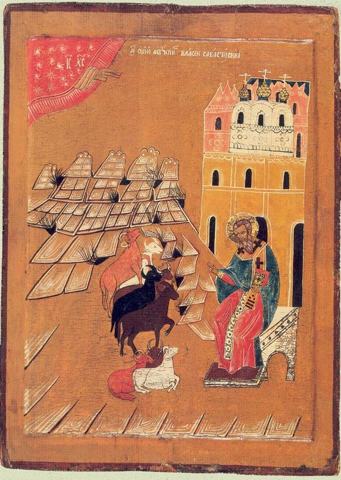
Lord of the cattle and the world below — the second god the Rus' swore by, whose name survived as a curse, a saint's herd, and a beard of grain in the field.
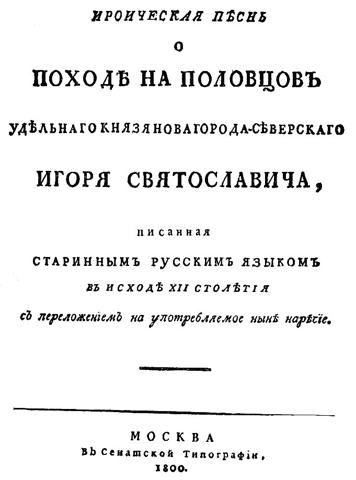
Sun god of the Kyivan pantheon and, in the Tale of Igor's Campaign, the mythical ancestor of the Rus' people themselves.
Sources & Further Reading
- 1.Helmold of Bosau, Chronica Slavorum (c. 1168-72).
- 2.Kalik, Judith & Alexander Uchitel. Slavic Gods and Heroes. Routledge, 2019.
- 3.Gieysztor, Aleksander. Mitologia Słowian. Wydawnictwa Uniwersytetu Warszawskiego, 2006 (rev. ed.; 1st ed. 1982).
- 4.Machal, Jan. Slavic Mythology, in The Mythology of All Races, vol. III. Marshall Jones, 1918.
- 5.Dixon-Kennedy, Mike. Encyclopedia of Russian and Slavic Myth and Legend. ABC-CLIO, 1998.
Spot an error or have a source to suggest? Write to info@viseterna.com. We cite primary sources and modern scholarship, and we correct fast.