
Helheim
The cold underworld. Down and to the north, past a gold-roofed bridge and a gate that does not open twice, the hall where most of the Norse dead actually go.
Odin rides to Hel, W. G. Collingwood, 1908 · Public domain · source
The Name and the Problem With It
Old Norse uses one word for the ruler of the dead and for the place she rules: Hel. When a poem says a man "goes to Hel", it can mean the goddess, the hall, or simply death, and the medieval audience did not need the distinction. The expanded compound Helheimr, "Hel's world", is rare in the medieval material and became the standard label only in later retelling — so this realm appears in the primary texts mostly under the same name as Hel herself 5,6.
A second name does recur: Niflhel, "misty Hel", used in Vafthrudnismal and Baldrs draumar for the lowest and darkest part of the underworld, below the ordinary dead 2,8. Snorri Sturluson, characteristically, tries to place Niflhel, Niflheim and Hel in relation to one another and does not entirely succeed 3,4.
The root is the ordinary Germanic verb for concealing — the same word behind English hell, hole and hall. Hel is the covered place, not a fiery one 5,6.
Down and to the North
The direction of travel is fixed. In the poems the dead go nidr ok nordr, down and northwards, away from sun and warmth, and the underworld road runs long enough that a rider needs nine nights to cross it 1,3,8. This is not the Christian below-the-earth so much as an intensification of the ordinary Norse geography: cold north, dark north, less and less inside the fence.
The boundaries are inventoried carefully. The river Gjoll, "the loud one", is crossed by Gjallarbru, a bridge thatched with shining gold and guarded by the maiden Modgudr, who counts the traffic and notices when a living man makes more noise on the planks than five troops of the dead 3. Below stands Helgrind or Nagrind, the corpse-gate, which shuts behind. Somewhere at the mouth of the cave Gnipahellir the hound Garmr is bound, howling, and Voluspa keeps returning to that howl as a countdown 1,8.
Hel's Household
Snorri gives the realm its most memorable description, and it is worth reading with a raised eyebrow. He says Odin threw Loki's daughter Hel down into Niflheim and gave her authority over nine worlds, to allot lodging to everyone sent to her — that is, those who die of sickness and of old age. Her hall is Eljudnir, "sprayed with sleet". Her dish is called Hunger and her knife Famine; her servants are Ganglati and Ganglot, both names meaning something like "slow-walker"; her threshold is Stumbling-Block, her bed Sick-Bed, and her bed-curtains Gleaming Misfortune 3.
The catalogue is a literary set-piece of a very medieval kind — a house where every object is an allegory — and scholars generally treat it as Snorri's own composition rather than inherited tradition 4,5,7. The one detail with older support is the criterion: Hel takes the straw-death, the people who died in bed.
Baldrs draumar offers a glimpse from a different angle. Odin rides down to the eastern door of the hall, wakes a long-dead seeress, and finds the benches strewn with gold and the mead standing brewed under a shield, waiting for a guest who has not yet arrived 1,8. That is not a torture chamber. It is a hall expecting company.
Nastrond and the Punishment of the Dishonoured
Against that, Voluspa describes a far worse quarter. On Nastrond, the Corpse-Shore, stands a hall away from the sun with its doors facing north, woven of serpents' spines, with venom dripping in through the roof-vents. Wading the thick poison-rivers there are oath-breakers, murderers, and men who seduced other men's wives, and Nidhoggr sucks the corpses while a wolf tears them 1,8.
This is the only clearly moral afterlife in the Eddic poems, and it is the passage most often suspected of Christian influence: Voluspa survives in manuscripts written two centuries after Iceland's conversion, and the three crimes it names are exactly the three that the church and the old law both punished 4,5,7. Whether the stanza preserves a pagan doctrine or a poet's synthesis remains open.
Hermodr's Ride and the One Condition
The best-known journey to the realm belongs to the death of Baldr. After Baldr is killed, his brother Hermodr rides Odin's horse Sleipnir nine nights through valleys so deep and dark that he sees nothing until he reaches Gjoll. He crosses the gold-roofed bridge, argues past Modgudr, and jumps Sleipnir clean over the corpse-gate. Inside he finds Baldr sitting in the high seat, honoured, with Nanna beside him 3.
Hel's answer to his request is the hinge of the whole mythology. She will release Baldr if every thing in the world, living and dead, weeps for him. Everything does — except one giantess, Thokk, who says that Hel should keep what she has, and who is generally understood to be Loki 3,4. The rule holds. Even the god everybody loves does not come back early.
What the Realm Actually Meant
Popular summary sets Helheim against Valhalla as a punishment for cowards against a reward for heroes. The sources do not support that cleanly. Baldr, the best of the gods, goes to Hel. Warriors in the sagas expect Hel routinely. Freyja takes half the battle-slain to Folkvangr, and archaeology shows burial customs — ship burials, grave goods, cremation and inhumation side by side — too varied to fit one doctrine 4,6,7.
What the texts do agree on is the tone: cold, quiet, sunless, and permanent until Ragnarok, when the ship Naglfar sails from the realm of the dead with Loki aboard and the road out finally opens 1,3,8. The Norse underworld is not designed to frighten. It is designed to be indifferent, which is worse.
Continue Exploring
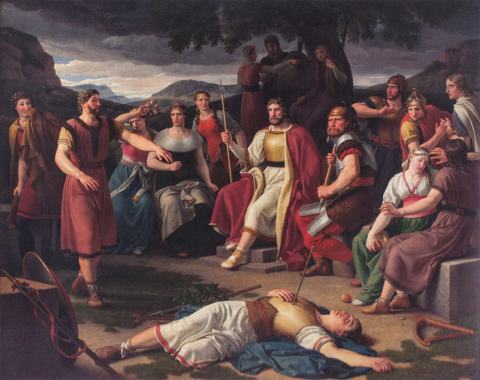
The first tragedy. A god made invulnerable by oath, killed by the one plant nobody asked — the murder that starts the clock on Ragnarok and cannot be undone.
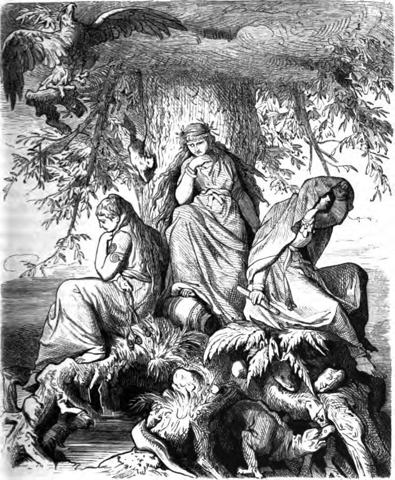
Gnawer of roots. The dragon chewing the world tree from below, feeding on oath-breakers, and flying up out of the dark in the last stanza of Voluspa.
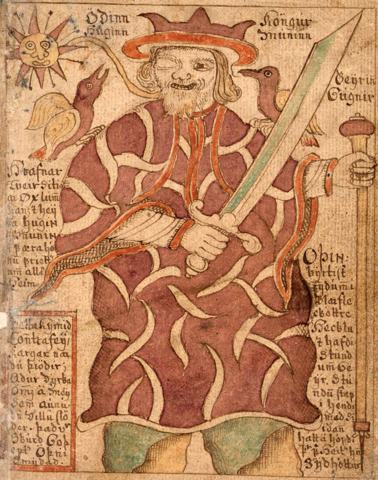
The Allfather. God of war, poetry and the dead who traded an eye for wisdom and hanged himself on the world tree to win the runes.
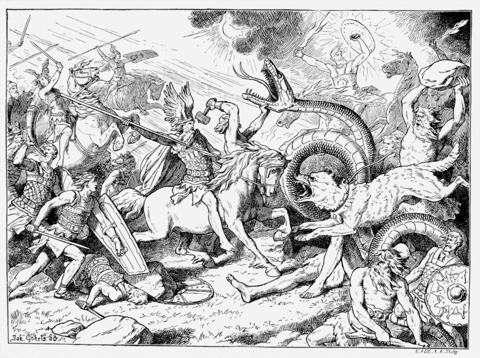
The Twilight of the Gods. The prophesied end: a killing winter, the breaking of every bond, a battle no one survives — and an earth that rises again.
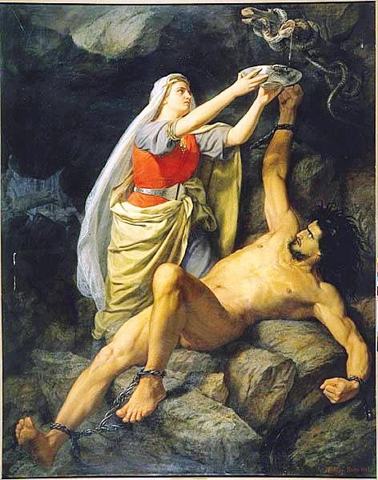
The Trickster. Shape-shifter of giant blood counted among the gods — their cleverest ally, the father of monsters, and the spark of Ragnarok.
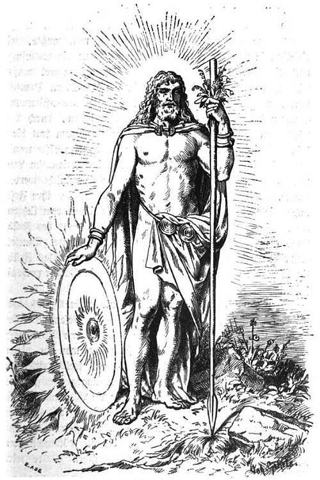
God of Light. The most beloved of the Aesir, made immune to all harm but one plant — and killed by it, which set the world's ending in motion.
Also mentioned inAegir and RanAsgardBifrost (The Rainbow Bridge)Draugr (Norse Undead)DraupnirMuspelheimNiflheimSurtrYggdrasil
Sources & Further Reading
- 1.Poetic Edda — Voluspa and Baldrs draumar (Codex Regius and AM 748 I 4to, 13th-14th century).
- 2.Poetic Edda — Vafthrudnismal and Grimnismal (Codex Regius, 13th century).
- 3.Snorri Sturluson, Prose Edda — Gylfaginning (c. 1220).
- 4.Lindow, John. Norse Mythology — A Guide to the Gods, Heroes, Rituals, and Beliefs. Oxford University Press, 2001.
- 5.Simek, Rudolf. Dictionary of Northern Mythology. Trans. Angela Hall. D.S. Brewer, 1993.
- 6.Turville-Petre, E.O.G. Myth and Religion of the North — The Religion of Ancient Scandinavia. Weidenfeld & Nicolson, 1964.
- 7.Abram, Christopher. Myths of the Pagan North — The Gods of the Norsemen. Continuum, 2011.
- 8.Larrington, Carolyne (trans.). The Poetic Edda. Rev. ed., Oxford World's Classics, 2014.
Spot an error or have a source to suggest? Write to info@viseterna.com. We cite primary sources and modern scholarship, and we correct fast.