
The Death of Baldr
The first tragedy. A god made invulnerable by oath, killed by the one plant nobody asked — the murder that starts the clock on Ragnarok and cannot be undone.
Baldrs dod (The Death of Baldr), Christoffer Wilhelm Eckersberg, 1817 · Public domain · source
Bad Dreams
It begins with sleep. Baldr the Good, son of Odin and Frigg, starts having dreams that threaten his life. He tells the AEsir, and the gods take counsel 3.
Baldrs draumar gives Odin's response in eleven tight stanzas: he saddles Sleipnir, rides down the long road to Helheim, and raises a dead seeress from her grave outside the eastern door. She tells him the benches are strewn with rings and the mead brewed and waiting. Whose, he asks. Baldr's. Who will kill him? Hodr will carry the branch. Who will avenge him? A son of Odin, one night old, who will not wash his hands nor comb his hair until he brings Baldr's killer to the pyre 1,8.
Odin comes home knowing everything and prevents none of it. The god of foreknowledge is not the god of prevention 6,7.
Every Oath but One
Snorri Sturluson's account in Gylfaginning is the version everyone knows. Frigg takes oaths from fire and water, every metal, stones, earth, trees, sicknesses, beasts, birds, poison and serpents, that none will harm Baldr 3.
The gods then invent a game out of it. They stand Baldr in the assembly and shoot at him, hack at him and throw stones, nothing touches him, and everyone thinks this a great honour 3. Loki, displeased, takes a woman's shape and gets Frigg chatting. Did everything really swear? Everything, she says, except one shoot growing west of Valhalla, called mistletoe, which seemed too young to ask 3.
Loki pulls the mistletoe and finds Hodr standing outside the ring of gods because he is blind, with nothing to throw. Loki puts the shoot in his hand and points him. The dart goes through Baldr and he falls dead to the ground 3.
Snorri then writes one of the great lines in the corpus: the AEsir stood without speech, and without hands able to lift him, and each looked at the other, all of one mind toward the one who had done it — but none could take vengeance, because the place was a sanctuary 3,5. The horror is procedural. A killing has happened where killing is forbidden, and the legal machinery of the gods jams.
The Pyre at the Water
The funeral is described in more detail than any other event in Norse myth. Baldr's body is carried to his ship Hringhorni, which the gods cannot launch. They send to Jotunheim for the giantess Hyrrokkin, who arrives riding a wolf with vipers for reins and shoves the ship out at the first push, sparks flying from the rollers. Thor has to be talked out of killing her 3.
Baldr's wife Nanna dies of grief on the spot and is laid on the pyre with him. Thor hallows the fire with Mjolnir and, in a small savage aside, kicks a passing dwarf into the flames. Odin lays his ring Draupnir on the pyre — burning his own source of gold with his son — and stoops to whisper something in the dead god's ear 3.
What Odin said is a riddle he later uses to win a wager with a giant in Vafthrudnismal, and the poem never gives the answer, because nobody but Odin can know it 2,8.
Everything Will Weep
Frigg asks who will ride to Hel to offer a ransom, and Hermodr, another son of Odin, takes Sleipnir and rides nine nights through valleys so dark he sees nothing, crosses the gold-thatched bridge over the river Gjoll, and leaps the corpse-gate. He finds Baldr in the high seat 3.
Hel makes a single condition. If everything in the world, alive and dead, weeps for Baldr, he goes home; if anything refuses, she keeps him. Messengers go out, and everything weeps — people, beasts, earth, stones, trees, every metal, the way those things weep when they come out of frost into heat 3.
On the way back the messengers find a giantess in a cave who gives her name as Thokk, and she says she will weep dry tears over Baldr's funeral, that she got no good of him living or dead, and let Hel hold what she has. Snorri adds the flat, damning gloss: people think that was Loki 3,5.
The universe complies with an impossible condition and it still fails, on a technicality, because of one person. Grief here is unanimous and useless 5,6.
Saxo's Completely Different Version
Around the same period, the Danish historian Saxo Grammaticus wrote a version with almost nothing in common. In Gesta Danorum Book 3, Balderus and Hotherus are rival warriors competing for the hand of Nanna. Hotherus obtains a special sword from a wood-being named Miming, wounds Balderus in battle, and Balderus dies three days later; Hotherus is afterwards killed by Bous, a son begotten by Othinus on Rinda for that purpose 4.
Saxo's Baldr is an arrogant suitor, not a beloved innocent, and the fight is a duel rather than a murder. Which account is closer to pre-Christian tradition is unsettled, and the disagreement warns how much any one medieval source can carry 4,5,7.
Vengeance, Binding, and What Comes After
Vengeance arrives exactly as the seeress said. Vali, Odin's son by Rindr, is one night old when he kills Hodr 1,8. The blind instrument is punished; the man who aimed him is not.
Loki is dealt with separately, and the reckoning ends the peace of the gods for good. In Lokasenna he throws the killing in their faces in open hall, and the hunt follows 2,8. He is bound over three stones with the entrails of his own son, a serpent fixed above his face to drip venom, his wife Sigyn holding a bowl to catch it — and when she turns away to empty it, the earth shakes 3.
John Lindow's study reads the whole complex as a feud narrative: a killing inside the kin-group that cannot be settled by payment or vengeance, because the killer is a household member and the victim cannot be replaced. On that reading, Baldr's death is not a tragic accident preceding Ragnarok but its legal cause 5,6.
The last word is a return. After the fire and the flood, Voluspa has the surviving gods meet on the field, and Baldr comes back with Hodr beside him, and they live in Odin's halls and talk over what happened 1,8. The murderer and the murdered come home together — the one clear act of forgiveness in Norse myth, reserved for after the end of the world.
Continue Exploring
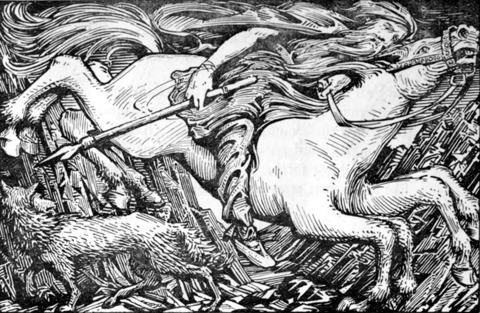
The cold underworld. Down and to the north, past a gold-roofed bridge and a gate that does not open twice, the hall where most of the Norse dead actually go.
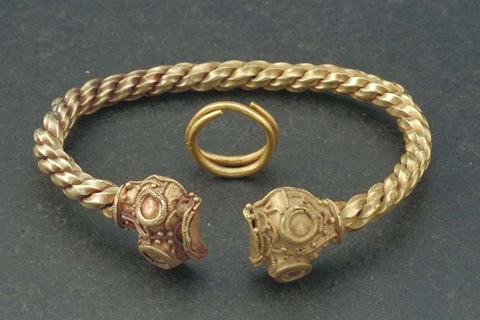
The dripping ring. Odin's gold arm-ring, which sheds eight more of its own weight every ninth night — burned on Baldr's pyre, and sent back from Hel.
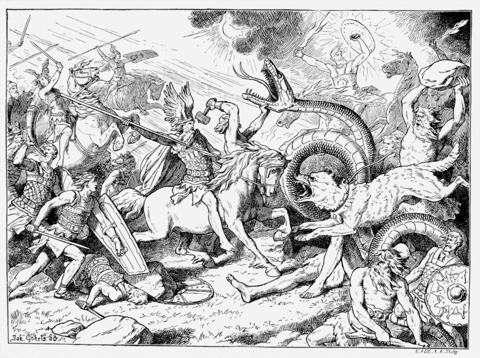
The Twilight of the Gods. The prophesied end: a killing winter, the breaking of every bond, a battle no one survives — and an earth that rises again.
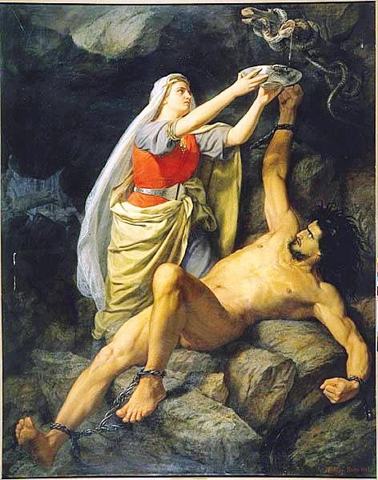
The Trickster. Shape-shifter of giant blood counted among the gods — their cleverest ally, the father of monsters, and the spark of Ragnarok.
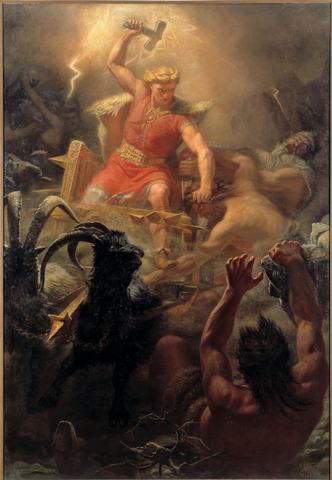
God of Thunder. Son of Odin and the earth, wielder of Mjolnir, and the gods' front line against the giants — fated to fall with the World Serpent.
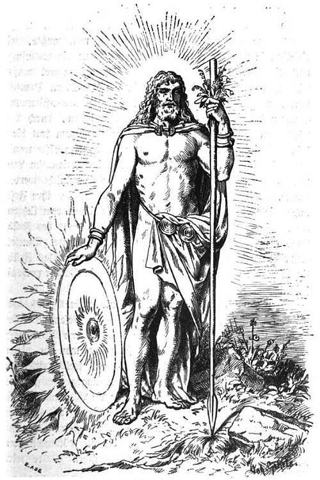
God of Light. The most beloved of the Aesir, made immune to all harm but one plant — and killed by it, which set the world's ending in motion.
Sources & Further Reading
- 1.Poetic Edda — Voluspa and Baldrs draumar (Codex Regius and AM 748 I 4to, 13th-14th century).
- 2.Poetic Edda — Lokasenna and Vafthrudnismal (Codex Regius, 13th century).
- 3.Snorri Sturluson, Prose Edda — Gylfaginning (c. 1220).
- 4.Saxo Grammaticus, Gesta Danorum, Book 3 (c. 1200).
- 5.Lindow, John. Murder and Vengeance Among the Gods — Baldr in Scandinavian Mythology. FF Communications 262, Academia Scientiarum Fennica, 1997.
- 6.Lindow, John. Norse Mythology — A Guide to the Gods, Heroes, Rituals, and Beliefs. Oxford University Press, 2001.
- 7.Simek, Rudolf. Dictionary of Northern Mythology. Trans. Angela Hall. D.S. Brewer, 1993.
- 8.Larrington, Carolyne (trans.). The Poetic Edda. Rev. ed., Oxford World's Classics, 2014.
Spot an error or have a source to suggest? Write to info@viseterna.com. We cite primary sources and modern scholarship, and we correct fast.