
The Sirens
Bird-bodied singers of the Odyssey whose song promises knowledge, not romance. Odysseus heard them lashed to his mast, his crew rowing with waxed ears.
Ulysses and the Sirens, Herbert James Draper, c. 1909 (Ferens Art Gallery, Hull) · Public domain · source
Birds, Not Mermaids
The Sirens of Greek myth are not fish-tailed women. In every ancient depiction from the seventh century BCE onward they are birds with women's heads — sometimes with human arms holding a lyre or pipes — perched on a rocky shore or an island meadow 7,8. The mermaid version is a medieval northern European development that later absorbed the classical name, helped by Romance languages in which sirena came to mean both. The confusion is now permanent in popular usage, but it has nothing to do with the creatures Homer describes.
Their number and parentage vary. Homer implies two; later sources usually give three and occasionally four, with names such as Thelxiepeia, Aglaope, Peisinoe, Molpe, Parthenope, Ligeia and Leucosia depending on the author. They are commonly made daughters of the river god Achelous by one of the Muses — Melpomene or Terpsichore — which conveniently explains where the singing comes from 4,5,7. Ovid adds an origin story: they were companions of Persephone, given wings so they could search the world for her after her abduction by Hades 5.
The Song in Homer
Homer's account is short, and its most important feature is what the Sirens actually sing. Warned by Circe, Odysseus plugs his crew's ears with kneaded beeswax and has himself lashed upright to the mast with orders that any struggling be answered with more rope. The sea goes flat and windless as they approach 1.
What the Sirens then offer is not sex and not even beauty. They call Odysseus by name, praise him as the glory of the Achaeans, and promise that anyone who listens sails on "knowing more" — they claim to know everything that happened at Troy and everything that happens on the nourishing earth. It is an offer of total knowledge, aimed precisely at a man defined by curiosity, and Homer notes the meadow around them is heaped with the bones of rotting men 1,6. Odysseus signals frantically to be released; the crew, hearing nothing, tie him tighter.
Lillian Doherty's study reads the episode as a comment on storytelling itself: the Sirens are rival bards singing the Iliad back to its own hero, and the poem's danger is the pleasure of listening 6. The scene has also served since Plato as the standard image of temptation resisted by prior arrangement rather than willpower — Odysseus survives because he bound himself in advance.
The Argonauts and Orpheus
The other canonical Siren encounter belongs to the Argonauts. In Apollonius' Argonautica the ship passes the island of Anthemoessa and Orpheus takes up his lyre and outplays them, drowning their voices so the crew rows on; only one man, Boutes, leaps overboard, and Aphrodite snatches him from the water and settles him at Lilybaeum 3,7. Where Odysseus survives by restraint, the Argonauts survive by making better music — a competition the Sirens are said to have lost fatally.
A recurring tradition held that the Sirens were fated to die if anyone ever passed them unharmed, and that after Odysseus' ship went by they threw themselves into the sea 4,7. The body of one, Parthenope, was said to have washed ashore at the Bay of Naples, where a cult and tomb were maintained and the city that grew there took her name — the reason "Parthenopean" still turns up as a poetic adjective for Naples 7,8.
Where They Lived
Ancient geographers placed them among the small islands off the Sorrentine peninsula and the coast of southern Italy — the Sirenusae, today the Li Galli archipelago near Positano — though Homer gives no location, only that they come after Circe's instructions and before Scylla and Charybdis 7,8. As with much of the Odyssey's geography, the identification is a later Greek and Roman attempt to map a poem that was never drawn from a chart.
Meaning and Afterlife
Sirens had a second, quieter life in Greek funerary art, where bird-women appear on grave monuments as mourners or as escorts of the dead — a function that fits creatures who sit in a meadow of bones and sing about the past 7,8. Classical scholarship generally treats the Homeric Sirens as figures of a knowledge that cannot be survived, and the enduring Western reading — desire that destroys the one who yields — is a later narrowing of that idea.
From Plato and Cicero through Dante, Kafka's brief parable on the Sirens' silence, and Adorno and Horkheimer's reading of the mast as an allegory of self-denying modern reason, the episode has attracted more philosophical commentary than almost any other twenty lines in Homer 6,7.
In Popular Culture
"Siren song" and "siren call" have been idioms for irresistible, ruinous attraction in English since the sixteenth century, and the mermaid-shaped Siren is now the default in film, games and brand imagery. The 2026 wave of interest in the Odyssey around Christopher Nolan's adaptation has given the original bird-bodied version an unusual amount of mainstream attention.
Continue Exploring
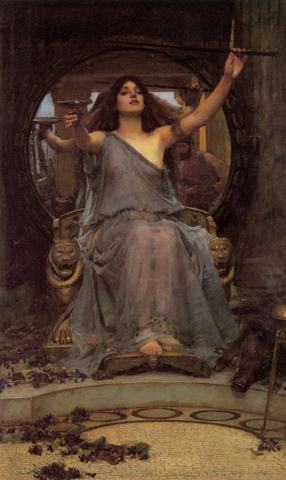
Goddess-enchantress of the island of Aiaia. She turned Odysseus' crew into swine, then became the one guide who told him how to reach the dead.
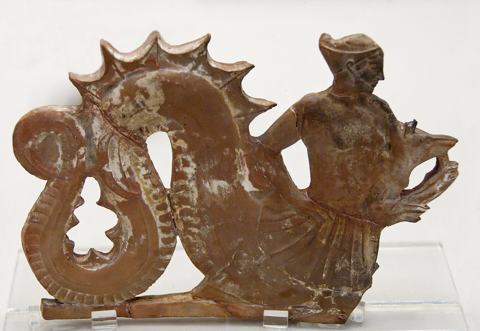
The twin sea-terrors of Odyssey 12 — a six-headed cliff monster and an all-swallowing whirlpool, set close enough that avoiding one means meeting the other.
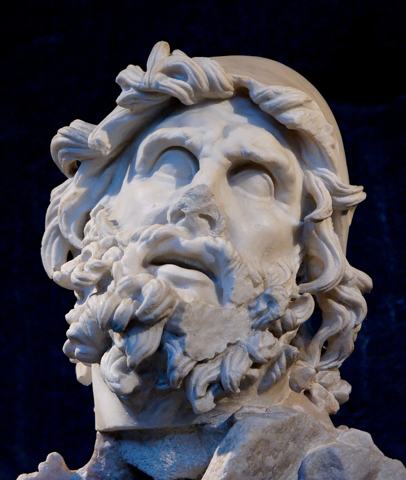
King of Ithaca and the man of many turns. Homer's cleverest hero, who took ten years to sail home from Troy and had to fight for his own house.
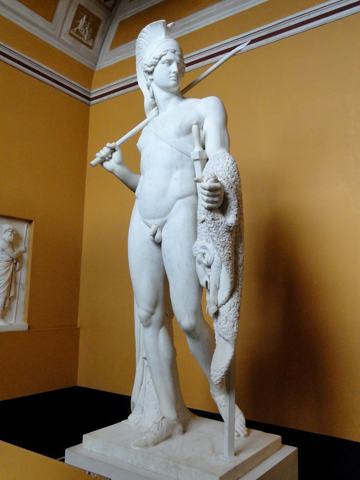
Jason and his crew of heroes sailed the Argo to the edge of the world for the Golden Fleece, and paid for it with a debt to the sorceress who made it possible.
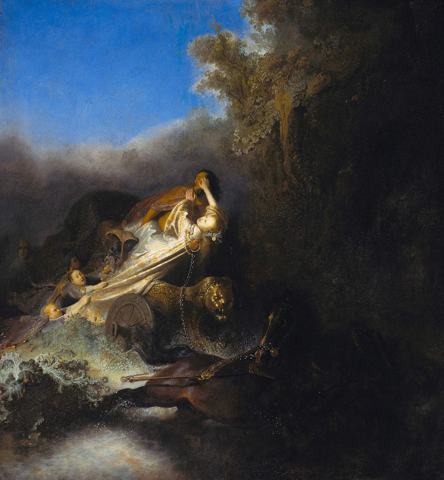
Lord of the underworld and of the wealth beneath the earth. Not a devil — a grim, lawful king whose only rule is that no one leaves.
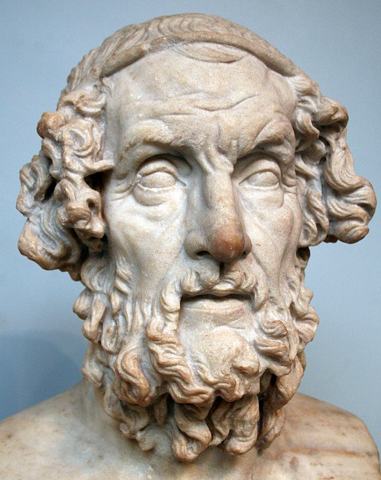
Homer's epic of Odysseus's ten-year voyage home from Troy, the founding adventure story of Western literature and the subject of a 2026 film.
Also mentioned inThe Lotus-Eaters
Sources & Further Reading
- 1.Homer, Odyssey (c. 8th-7th century BCE), esp. Book 12.
- 2.Hesiod, Catalogue of Women, fragments (c. 6th century BCE).
- 3.Apollonius of Rhodes, Argonautica, Book 4 (3rd century BCE).
- 4.Apollodorus, Bibliotheca and Epitome (1st-2nd century CE).
- 5.Ovid, Metamorphoses, Book 5 (c. 8 CE).
- 6.Doherty, Lillian E. Siren Songs: Gender, Audiences, and Narrators in the Odyssey. University of Michigan Press, 1995.
- 7.Gantz, Timothy. Early Greek Myth: A Guide to Literary and Artistic Sources. Johns Hopkins University Press, 1993.
- 8.Hornblower, S., A. Spawforth and E. Eidinow, eds. The Oxford Classical Dictionary, 4th ed. Oxford University Press, 2012.
Spot an error or have a source to suggest? Write to info@viseterna.com. We cite primary sources and modern scholarship, and we correct fast.