
Theseus
Athens's founding hero - slayer of the Minotaur, unifier of Attica, and the man whose forgotten sail cost his own father's life.
Theseus and the Minotaur, Antonio Canova, 1781-1783 (Victoria and Albert Museum, London) · CC BY-SA 3.0 · source
Two Fathers, One Sword
Theseus is unusual even by heroic standards in having two fathers assigned to the same night: Aegeus, king of Athens, sleeps with Aethra, princess of Troezen, and Poseidon is said to have visited her the same night, so that ancient sources hedge on which parentage actually produced the child and let both stand at once 1,2. Before leaving Troezen, Aegeus buries a sword and a pair of sandals under a great boulder and tells Aethra that if she bears a son strong enough to move the stone, he should be sent to Athens with the tokens to claim him 1. Plutarch, writing as a biographer determined to find a plausible core beneath the legend, treats the story straightforwardly: Theseus grows up, lifts the rock without difficulty, and sets out for Athens not by the easy sea route but overland, along a coast road notorious for bandits, specifically to match the reputation of his distant cousin Heracles 1.
Six Monsters on the Road
Bacchylides's ode, one of the earliest surviving sources, and Apollodorus after him list the road to Athens as a chain of set-piece fights, each one a small myth in itself: Theseus kills the club-wielding Periphetes and takes his weapon; kills Sinis, who tied travellers between bent pine trees and let them snap apart, using the man's own method against him; kills the sow of Crommyon, a monstrous pig terrorising the countryside; throws the robber Sciron, who forced travellers to wash his feet before kicking them off a cliff, off the same cliff; defeats the wrestler Cercyon; and finally deals with Procrustes, who forced guests to fit an iron bed exactly, stretching the short and cutting down the tall, by fitting Procrustes to his own bed 2,3,4. Pausanias, touring Attica centuries later, still found altars and shrines marking the spots local guides assigned to several of these fights, evidence that the road-labours functioned as real, walkable local lore rather than abstract legend 6. By the time Theseus reaches Athens he has already, without any royal introduction, become a hero in his own right, matching Heracles labour for labour before he has even met his father 1,7.
A Bull, a Thread, and a Stepmother
Aegeus, not yet recognising his son, has meanwhile married the sorceress Medea, fresh from her own escape after helping Jason and the Argonauts win the Golden Fleece. Medea recognises Theseus by instinct and nearly has Aegeus poison the stranger at dinner, a plot foiled only when Aegeus spots the sword at the last moment and knocks the cup away 2. Reconciled with his father, Theseus soon volunteers for a far worse ordeal: Athens owes Crete an annual tribute of youths and maidens fed to the Minotaur in its labyrinth, and Theseus sails as one of them, intending to end the payment for good 1,2. In Crete, Minos's daughter Ariadne falls for him and supplies the thread that lets him navigate the maze after killing the bull-headed monster inside it, a debt of gratitude and love that Theseus repays badly 1,2.
Naxos and a Forgotten Sail
Sailing home with Ariadne, Theseus abandons her, asleep, on the island of Naxos. Ancient authors offer excuses ranging from a storm to a direct order from the gods, and Plutarch, uncomfortable with all of them, records several without settling on one 1. Worse follows by accident rather than choice: Theseus had agreed to swap his ship's black sail for a white one if he survived Crete, and forgets. Aegeus, watching from a headland for his son's return, sees the black sail still flying, assumes the worst, and throws himself into the sea that now bears his name 1,5. Theseus becomes king of Athens on the strength of a triumph that has just killed his own father 1,7.
Building a City, Fighting Amazons
As king, Theseus's most consequential act by far is political rather than heroic: Plutarch credits him with the synoikismos, the union of Attica's scattered villages into a single Athenian state with one council and one assembly, a foundation myth Athenians treated as the origin of their own civic identity 1,8. Later legend layers on a raid against the Amazons, from which he brings home their queen, Antiope in most versions, Hippolyta in others, as a wife or captive, provoking an Amazon invasion of Attica that Athenian art commemorated widely 1,3,8. Walker's study reads these additions as Classical Athens actively building Theseus into a democratic, city-founding counterpart to the more archaic, monster-killing Heracles, a hero remade to fit the polis that claimed him 8.
A Kidnapping Too Far
Theseus's closest friendship, with the Lapith king Pirithous, produces the story's most reckless episode: the two men swear to marry daughters of Zeus, and while Theseus abducts the child Helen, later of Troy, to raise as his bride, Pirithous sets his sights on Persephone herself, and the pair descend to the underworld to take her from Hades 2,3. Hades, seeming to welcome them, offers seats that turn out to be chairs of forgetfulness that fuse to their bodies. Theseus is eventually torn free and rescued only when Heracles arrives on his own errand to fetch Cerberus, though Pirithous, by most accounts, is left behind forever 2,3. It is a rare moment in which Theseus needs saving rather than doing the saving, and ancient sources treat it as a genuine overreach rather than another triumph 2,7.
Exile, Death, and an Unsinkable Ship
Theseus's ending is unglamorous. Returning to find Athens changed and his authority gone, he is driven out, takes refuge on Skyros with King Lycomedes, and is killed there, pushed off a cliff, by most accounts, by a host who either feared him as a rival or had simply been bribed by his enemies 1. Centuries later the Athenians reclaimed him anyway: Plutarch records that the general Cimon retrieved bones identified as Theseus's from Skyros in the fifth century BCE and brought them home for a hero's burial, converting an exile's death into a civic relic 1. Plutarch adds one detail that outlived the whole myth: the ship in which Theseus had sailed to Crete was preserved by Athens for centuries, its rotting planks replaced one at a time, so that philosophers used it, still under the name "the ship of Theseus," to argue about whether a thing with every part replaced remains the same thing it started as 1,7.
Continue Exploring
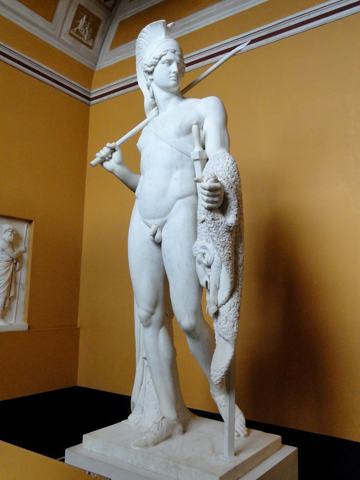
Jason and his crew of heroes sailed the Argo to the edge of the world for the Golden Fleece, and paid for it with a debt to the sorceress who made it possible.
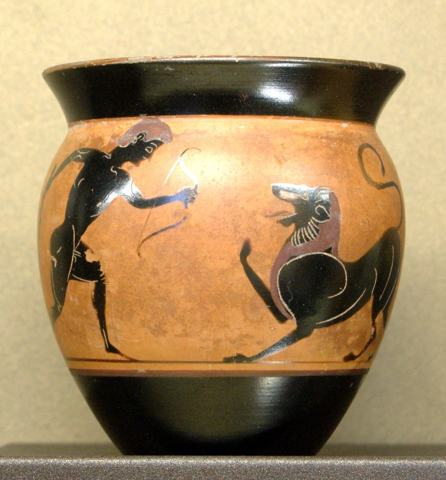
Zeus's mortal son, driven mad by Hera and set twelve impossible labours as penance - the strongest man in Greek myth, who died in agony and rose to Olympus.
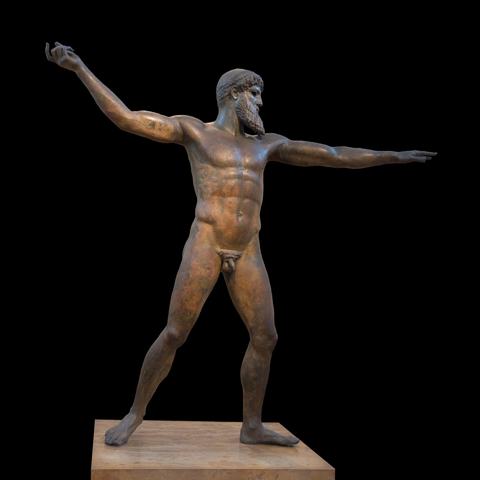
God of the sea, earthquakes and horses. Brother of Zeus, wielder of the trident, and the divine enemy who keeps Odysseus from reaching home.
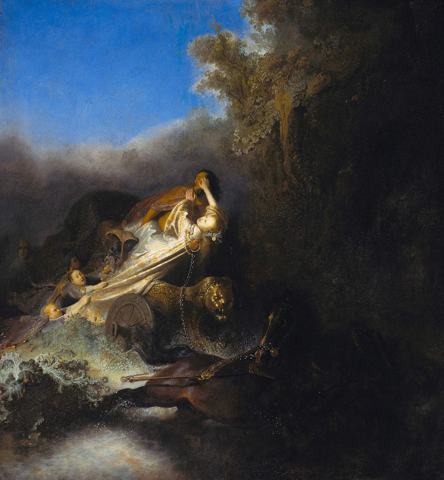
Lord of the underworld and of the wealth beneath the earth. Not a devil — a grim, lawful king whose only rule is that no one leaves.
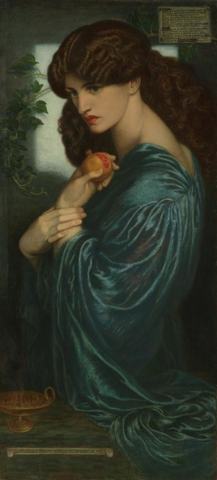
The girl carried off in a chariot and the dread queen of the dead. Persephone divides her year between the grain above and the throne below.
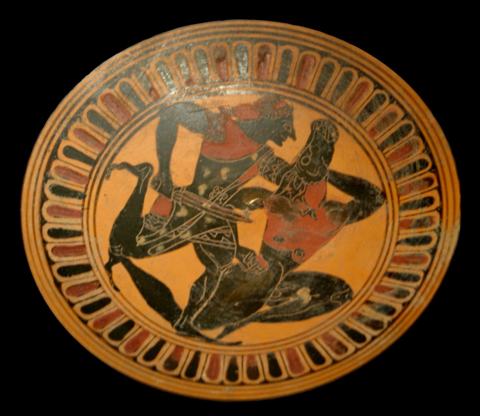
Bull of the labyrinth. The bull-headed son of a Cretan queen, hidden in a maze and fed Athenian children until Theseus followed a thread in.
Also mentioned inDionysus
Sources & Further Reading
- 1.Plutarch, Life of Theseus (c. 100 CE).
- 2.Apollodorus, Bibliotheca and Epitome, esp. Epitome 1 (1st-2nd century CE).
- 3.Diodorus Siculus, Bibliotheca Historica, Book 4 (1st century BCE).
- 4.Bacchylides, Dithyramb 17 (5th century BCE).
- 5.Ovid, Metamorphoses, Books 7-8 (c. 8 CE).
- 6.Pausanias, Description of Greece, Book 1 (c. 150-180 CE).
- 7.Gantz, Timothy. Early Greek Myth: A Guide to Literary and Artistic Sources. Johns Hopkins University Press, 1993.
- 8.Walker, Henry J. Theseus and Athens. Oxford University Press, 1995.
Spot an error or have a source to suggest? Write to info@viseterna.com. We cite primary sources and modern scholarship, and we correct fast.