
Xibalba
"Place of Fear" — the K'iche' Maya underworld of the Popol Vuh, a court of disease lords whose houses of trial the Hero Twins survived and overturned.
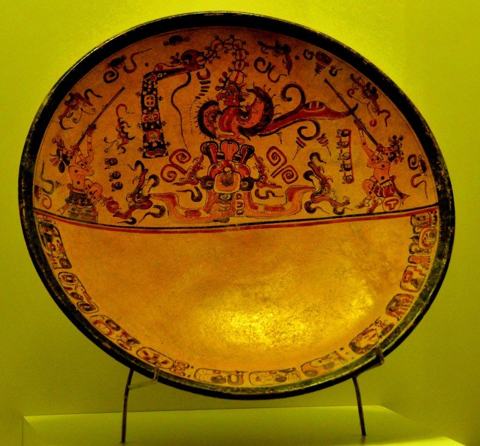
Codex-style vessel with two scenes, Maya, Late Classic (Kimbell Art Museum) · Public domain · source
Place of Fear
Xibalba is built on the K'iche' Maya root xib, fear or fright — "place of fear," or as Tedlock renders it, the place of those who frighten 1,2. It is the underworld of the Popol Vuh, reached by a road that descends through water and cliffs, and it is less a landscape of torment than a bureaucracy: a court of lords who summon, test, and kill 1,3.
The realm's characteristic weapon is not fire but illness. Its rulers are named for the specific ways bodies fail, and their business with the living world is sending sickness, swelling, and sudden death into it 1,2,3.
The Lords of Xibalba
At the top sit two: One Death and Seven Death, in K'iche' Hun Kame and Vukub Kame 1,3. Beneath them are paired officials whose names Tedlock translates as Scab Stripper and Blood Gatherer; Demon of Pus and Demon of Jaundice; Bone Scepter and Skull Scepter; Demon of Filth and Demon of Woe; Wing and Packstrap 1,2. Christenson's translation gives comparable readings, and the variation between them reflects genuine difficulty in the K'iche' rather than disagreement about the sense: these are diseases with titles 2,3.
Their assignments are spelled out in the text. One pair causes people to sicken and swell; another makes blood flow from the mouth; another reduces bodies to bone; another catches travellers on the road and makes them vomit blood until they die 1,3. The Popol Vuh is describing epidemic and wasting disease as a governing council.
The Road Down
The descent begins at a set of steep cliffs and passes rivers — one of blood, one of pus, in some readings a river running with scorpions — and then a crossroads of four coloured roads, where the Black Road speaks and misleads 1,2,3. The trap is arrival itself.
Arriving lords set the first test in their council chamber: greet the seated figures. Two are carved wooden mannequins, and the visitor who addresses them politely is laughed at 1,3. Next the visitor is offered a seat, which is a burning-hot stone bench 1,3. The twins' father and uncle, One Hunahpu and Seven Hunahpu, fall for both, are defeated, and are sacrificed — One Hunahpu's head hung in a calabash tree, whose spittle into the hand of the underworld maiden Xquic engenders the Hero Twins 1,3.
The Houses of Trial
The core sequence is a series of houses, each a night to be survived 1,2,3:
Dark House, wholly without light, where the twins must return a torch and cigars unconsumed by morning — solved with a macaw's tail for false flame and fireflies on the cigar tips 1,3. Rattling House or Cold House, all hail and freezing draught 1,2. Jaguar House, filled with jaguars, quieted by throwing them bones 1,3. Bat House, the house of the snatch-bats, where Camazotz takes Hunahpu's head off when he looks out at what he thinks is dawn 1,2. Razor House, packed with blades that move of themselves, persuaded to hold still by the promise of animal flesh 1,3.
The order and the count vary slightly between translations and between the sequences the text gives, and not every house is imposed on every visitor 2,3. Running alongside the trials is the ballgame: Xibalba's lords play the twins repeatedly, and the game is both sport and execution 1,3.
How the Twins Won
They do not win by force. Having learned that the lords cannot be beaten in their own house on the lords' terms, the twins arrange their own deaths, are ground up and thrown into a river, and come back five days later as fish and then as ragged travelling performers whom nobody recognises 1,3.
As entertainers they perform a trick: they sacrifice and revive a dog, then a person, then Xbalanque kills and revives Hunahpu 1,2. One Death and Seven Death, delighted, demand the same be done to them. The twins kill them and decline to bring them back 1,3. The remaining lords surrender, and the twins impose terms — Xibalba is demoted, restricted to unworthy offerings and to the base and guilty rather than the whole of humanity 1,3. Hunahpu and Xbalanque then rise into the sky as sun and moon, or in some readings sun and Venus 1,2,3.
This is a myth about a hierarchy overturned by cleverness and self-sacrifice, and it closes with a limit placed on death's authority rather than its abolition 2,3.
Caves, Cenotes and the Wider Maya Underworld
Xibalba by that name belongs to the K'iche' of highland Guatemala in the sixteenth century, and care is needed before spreading it across the whole Maya world 5,6. In Yucatan, Landa reports an underworld called Metnal — a borrowing of the Nahuatl Mictlan — ruled by a death lord and reserved for the wicked, in an account already shaped by the categories of his own religion 4,5.
What is shared across regions and periods is the association of the underworld with caves, cenotes, and standing water: openings in the earth were treated as entrances, and Maya ritual deposits in cave systems from the Classic period onward include ceramics, offerings and human remains 6. Classic-period painted vessels depict a court of death gods and a young maize god's descent and rebirth that clearly relate to the Popol Vuh narrative, showing the tradition is many centuries older than the manuscript 5,6. Some scholars also identify the dark rift of the Milky Way with a road to the underworld, an attractive reading that rests on ethnographic and iconographic inference rather than on a decoded text 5,6.
Continue Exploring
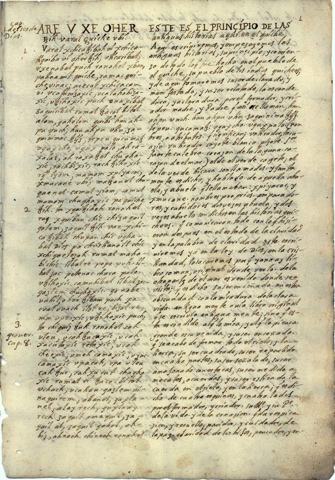
The K'iche' Maya "Book of Council" — creation, the Hero Twins, and a dynasty's history, saved by one Dominican friar's copy of a lost original.
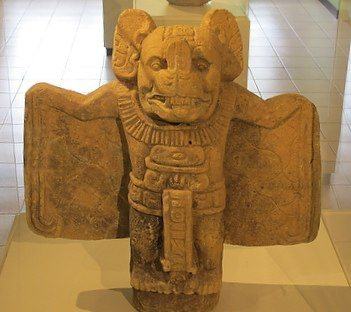
The death bat — the snatching bat-demon of the K'iche' underworld who takes off a hero's head in the dark, and the long Mesoamerican cult behind him.
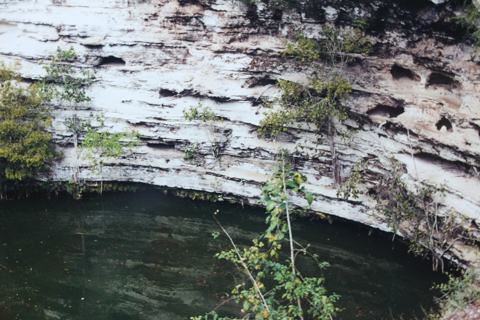
The natural sinkhole at Chichen Itza where the Maya threw offerings of jade, gold, and people, dredged by an American consul in the early 1900s.
Hunahpu and Xbalanque — the ballplaying twins of the Popol Vuh who outwitted the lords of Xibalba, avenged their father, and rose as sun and moon.
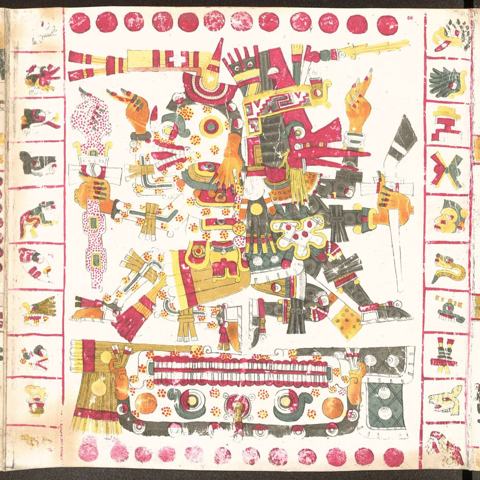
The Place of the Dead — a ninefold underworld reached by a four-year journey, where the ordinary dead arrive at last and simply cease.
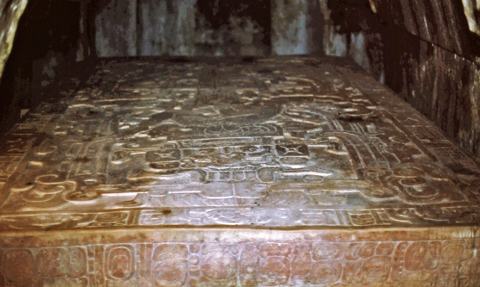
The carved limestone lid over King Pakal's tomb at Palenque — a scene of death and rebirth at the World Tree, and the most misread monument in Maya art.
Also mentioned inAh Puch (Maya Death God)Huracan (Heart of Sky, Maya Storm God)Kinich AhauThe Maize God (Hun Hunahpu)The Maya Ballgame (Pitz)The Maya World TreeTikalXquic (Blood Moon)
Sources & Further Reading
- 1.Popol Vuh — the K'iche' Maya creation epic (alphabetic text c. 1550s; Ximenez manuscript c. 1701).
- 2.Tedlock, Dennis. Popol Vuh: The Mayan Book of the Dawn of Life, revised edition. Simon & Schuster, 1996.
- 3.Christenson, Allen J. Popol Vuh: The Sacred Book of the Maya. University of Oklahoma Press, 2003.
- 4.Diego de Landa, Relacion de las cosas de Yucatan (c. 1566).
- 5.Miller, Mary & Karl Taube. The Gods and Symbols of Ancient Mexico and the Maya. Thames & Hudson, 1993.
- 6.Sharer, Robert J. with Loa P. Traxler. The Ancient Maya, 6th edition. Stanford University Press, 2006.
Spot an error or have a source to suggest? Write to info@viseterna.com. We cite primary sources and modern scholarship, and we correct fast.