
Frigg
Odin's wife and the highest-ranking goddess of the Aesir — keeper of foreknowledge she will not speak, and the mother whose oaths could not save Baldr.
Frigg Spinning, John Charles Dollman, 1909 · Public domain · source
The Lady of Fensalir
Frigg is the wife of Odin and, by Snorri's ranking, the foremost of the Asynjur, the goddesses of the Aesir. Her hall is Fensalir, "fen halls" or "sea halls" depending on the reading, and Grimnismal gives her nothing more to do there than know things: the poem's frame story has Odin and Frigg watching the nine worlds from Hlidskjalf, arguing over which of their foster-sons is behaving worse, a small domestic scene that is almost the only glimpse the sources give of the two of them simply being married 1,2.
Snorri lists a retinue of attendant goddesses around her — Fulla, who carries her chest and knows her secrets; Gna, who rides her errands on the horse Hofvarpnir; Eir, Lofn, Vor and several others — and scholarship has never settled whether these are distinct minor goddesses or Frigg's own qualities split out and personified, a question that recurs with Frigg herself 2,6. Fulla in particular is close enough to Frigg in later charm texts that the two are sometimes treated as doublets 6.
What She Knows and Will Not Say
The sharpest line drawn about Frigg comes from an enemy. In Lokasenna, cornered at Aegir's feast, Loki turns on her and says that she, Fjorgyn's daughter, has always been the most man-mad of women, naming Odin's brothers Vili and Ve as proof. Freyja cuts him off, calling him mad for dredging up Frigg's affairs, and adds the line that defines the goddess for most readers: Frigg knows the fate of every being — though she never says it herself 2. That single couplet is the whole of her characterization in one stroke: total foreknowledge, total silence. Where Odin accumulates knowledge to act on it, Frigg appears to hold hers and do nothing, which the sources never explain and scholars read variously as wisdom, powerlessness, or simply the narrow room medieval poets gave a goddess to speak in 1,6.
The Oaths That Failed
Frigg's one full narrative is a mother's attempt to cheat fate, and it fails. When Baldr begins dreaming of his own death, Frigg travels the world extracting a promise from fire, water, iron and every metal, stones, earth, trees, sicknesses, beasts, birds, poisons and serpents that none of them will harm her son. It works, and the Aesir turn it into a game, throwing things at Baldr for sport 1.
Loki, taking a woman's shape, gets the one gap out of her in conversation: mistletoe, passed over as too young to swear. He cuts it, puts it in the hand of the blind god Hodr, and Baldr falls dead 1. Afterward it is Frigg who asks for a volunteer to ride to Hel and beg for his return, and Frigg's household — every living and dead thing in creation — weeps for him at her request, all but the giantess Snorri names as Loki in disguise 1. The episode gives Frigg near-total power over the physical world and none at all over the one thing she needed.
A Scandal in Ynglinga Saga
Ynglinga saga, Snorri's euhemerized account of the gods as ancient kings, preserves a story that sits uneasily beside the devoted mother of Gylfaginning: Odin is away so long that the Aesir doubt he will ever return, so his brothers Vili and Ve — in this telling functioning as regents in his absence — divide his estate between them and both take Frigg as a wife, until Odin comes home and reclaims her 3. Saxo Grammaticus tells a starker version of the same rupture: while "Othinus" lives abroad in self-imposed exile, his wife Frigga has the gold stripped from a statue of him to buy herself finery, giving herself to the servant who helps her get it down 4. Neither account fits comfortably with the goddess of Fensalir, and scholars generally read the discrepancy as evidence that Frigg's medieval portrait was never one single, stable thing, stitched together from local cult, court poetry and a Christian historian's taste for scandal 5,6,7.
The Frigg/Freyja Question
The most persistent debate about Frigg is whether she and Freyja were originally a single Germanic goddess who split into two figures by the Viking Age. The case for it is real: both are the object of a husband's absence and search, both carry associations with fate and foreknowledge, and the West Germanic mainland sources — unlike Scandinavian ones — preserve only a single such goddess, Frija, with no separate Freyja at all 6,7. The case against it is equally real: Icelandic sources treat Frigg and Freyja as clearly distinct persons with different husbands, different halls and different domains, and nothing in Old Norse literature confuses them. The English weekday name Friday descends from Frigg, not Freyja, though the two are routinely mixed up in popular writing today, which is itself a sign of how easily the confusion regenerates without needing an ancient source for it 6,7. The question remains open rather than resolved.
A Wider Family of Names
Frigg's name and role have cognates across the Germanic world: Old High German Frija, Old English Frige, and the continental Origo Gentis Langobardorum and Paul the Deacon's Historia Langobardorum preserve a legend in which Frea tricks her husband Godan (Wodan) into granting victory to her favored tribe, the Winnili, by having their women tie their hair forward like beards — the trick that supposedly gave the Lombards their name, "long-beards." It is a continental cousin of the Norse Frigg, sharp-witted where the Icelandic sources make her mostly silent, and one of the clearest signs that a single figure lies somewhere behind the later, divergent portraits 6,7,8.
Legacy
Frigg is comparatively thin in surviving narrative next to Odin or Thor, and that thinness is itself informative: she occupies the position of queen and knower in a mythology built almost entirely around male action, and the sources give her power that never quite converts into agency. What stories she has — the failed oaths, the scandal with Odin's brothers, the argument over foreknowledge — all turn on the same point, a woman who knows the shape of events and cannot, or will not, change them 1,2,5,6.
Continue Exploring
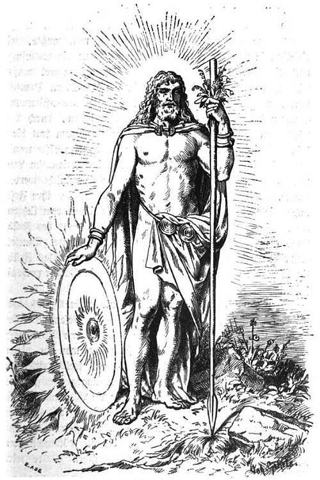
God of Light. The most beloved of the Aesir, made immune to all harm but one plant — and killed by it, which set the world's ending in motion.
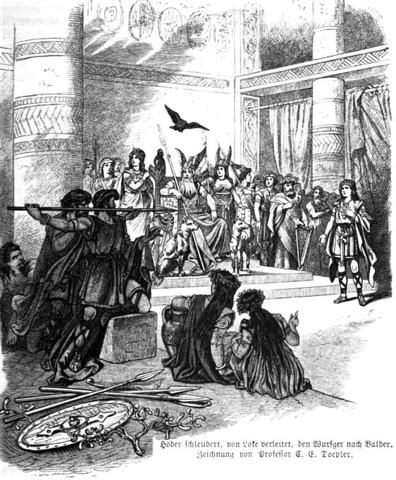
The blind god who threw the dart that killed Baldr, guided by Loki's hand — Norse myth's clearest case of a killer who may not be the guilty party.
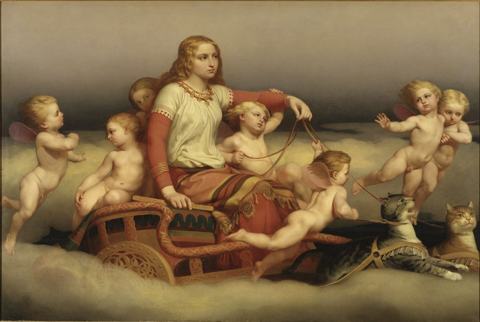
Lady of the Vanir. Goddess of love, war, gold and seidr magic — often spelled Freya — who claims half of the battle-slain for her own hall.
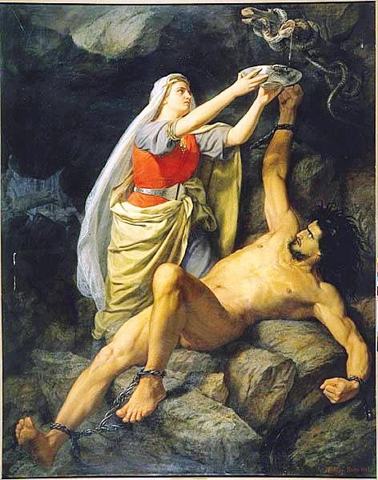
The Trickster. Shape-shifter of giant blood counted among the gods — their cleverest ally, the father of monsters, and the spark of Ragnarok.
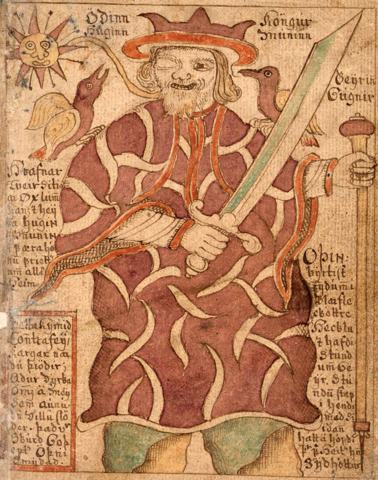
The Allfather. God of war, poetry and the dead who traded an eye for wisdom and hanged himself on the world tree to win the runes.
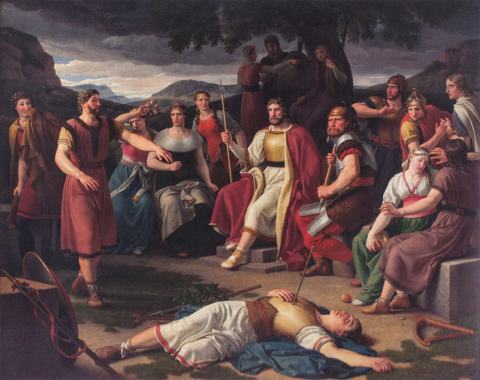
The first tragedy. A god made invulnerable by oath, killed by the one plant nobody asked — the murder that starts the clock on Ragnarok and cannot be undone.
Sources & Further Reading
- 1.Snorri Sturluson, Prose Edda — Gylfaginning (c. 1220).
- 2.Poetic Edda — Voluspa, Grimnismal and Lokasenna (Codex Regius, 13th century).
- 3.Snorri Sturluson, Ynglinga saga, in Heimskringla (c. 1230).
- 4.Saxo Grammaticus, Gesta Danorum, Book 1 (c. 1200).
- 5.Lindow, John. Norse Mythology — A Guide to the Gods, Heroes, Rituals, and Beliefs. Oxford University Press, 2001.
- 6.Simek, Rudolf. Dictionary of Northern Mythology. Trans. Angela Hall. D.S. Brewer, 1993.
- 7.Turville-Petre, E.O.G. Myth and Religion of the North — The Religion of Ancient Scandinavia. Weidenfeld & Nicolson, 1964.
- 8.Orchard, Andy. Dictionary of Norse Myth and Legend. Cassell, 1997.
Spot an error or have a source to suggest? Write to info@viseterna.com. We cite primary sources and modern scholarship, and we correct fast.