
Long, the Chinese Dragon
China's dragon — a benevolent, scaled power of rain, river, and sea, emblem of imperial authority and the only mythical beast in the zodiac.
Nine Dragons (detail), Chen Rong, 1244, Southern Song dynasty (Museum of Fine Arts, Boston) · Public domain · source
What a Long Is
The Chinese dragon, long (龍 / 龙), is a water creature before it is anything else — the power that raises clouds, releases rain, and rules rivers, lakes, and seas 4,5. It is auspicious rather than adversarial, a bringer of fertility and a guarantor of order, and killing one is not a heroic act in Chinese narrative but usually an offence 4,5,7.
This is the first and most important correction to make. The long shares almost nothing with the fire-breathing, treasure-hoarding, knight-slain dragon of European tradition, and using the same English word for both has caused persistent confusion — enough that some Chinese writers have argued for transliterating long rather than translating it 5.
Nine Resemblances
The dragon's body is a composite, and the traditional description is precise about it. A widely transmitted list, recorded by Song-dynasty writers from earlier Han material, gives the dragon nine resemblances: the head of a camel, the horns of a stag, the eyes of a demon, the ears of an ox, the neck of a snake, the belly of a great clam, the scales of a carp, the claws of an eagle, and the pads of a tiger 5. Whiskers trail from the snout; a pearl or flaming jewel is often set beneath the chin or chased through the clouds 5.
The earliest formal definition is older still. Xu Shen's dictionary of about 100 CE calls the dragon the chief of scaled creatures and describes it as able to become dark or bright and short or long at will, rising into the sky at the spring equinox and diving into the deeps at the autumn equinox 2. Transformability, not size, is the defining property, and Sterckx shows that early Chinese thought treated the boundaries between animal kinds as permeable in exactly this way — a carp that leaps the falls may become a dragon 6.
Later popular taxonomy multiplied the types: celestial dragons that guard the halls of heaven, spirit dragons that make rain, earth dragons that determine the courses of rivers, and treasure dragons that watch over what is buried 5. Ming-dynasty writers also catalogued nine sons of the dragon, each with its own nature and its own architectural post — the tortoise-bodied one under a stele, the roof-ridge one that swallows fire, the one that likes to roar set on a bell handle 5.
Dragons in the Oldest Texts
Dragons are already everywhere in the early corpus. The Classic of Mountains and Seas describes Zhulong, the Torch Dragon, whose eyes opening and closing make day and night and whose breath makes winter and summer; and Yinglong, the Responding Dragon, a winged dragon who fights for the Yellow Emperor against Chiyou and who later helps the sage Yu draw the channels that drain the flood 1,4.
Dragons draw the chariots of gods and immortals, appear as omens at the birth of sage-rulers, and function throughout Han cosmology as one of the four directional creatures — the Azure Dragon of the East, paired with the Vermilion Bird of the South, the White Tiger of the West, and the Dark Warrior of the North 4,5. Birrell notes that the dragon is less a character in Chinese myth than a category of divine agency, appearing wherever water, sky, and transformation intersect 4.
The Dragon Kings and the Rain
From the Tang period onward, the dominant popular form is the Dragon King, Longwang — a bureaucratic deity ruling a specific body of water from an undersea palace, with a court, a treasury, and paperwork 5. Four brothers govern the four seas, the eldest, Ao Guang, holding the Eastern Sea, and lesser dragon kings hold individual rivers, lakes, and wells 5.
The rise of this figure owes a great deal to Buddhism. The Indian naga, serpent-beings who guard waters and treasures, were rendered into Chinese with the word long, and the naga-king of Buddhist scripture merged with indigenous river deities to produce the Dragon King cult 5,7.
The practical consequence was rain. Dragon King temples stood at rivers and reservoirs across China, and in drought the community petitioned them — with processions, offerings, and written prayers. When petitions failed, the response could turn coercive: the god's image might be carried out and left in the sun to feel the drought it had permitted 5. Schafer's study of Tang literature traces the same complex from the literary side, where dragon women and rain maidens embody the erotic, dangerous, fertile power of water 7.
The Emperor's Dragon
The dragon became the emblem of imperial authority, and the association was legally enforced. The five-clawed dragon was reserved for the emperor, with four and three claws assigned down the ranks; the throne was the dragon throne, the ruler's face the dragon countenance, and the longpao, the dragon robe, was court dress 5. Yellow, the imperial colour, carried the imperial dragon.
The wider identification of the Chinese people as "descendants of the dragon" is modern rather than ancient — it spread with a popular song of the late 1970s and became a common patriotic idiom afterwards 5. The dragon's older claim on Chinese identity was through the calendar: it is the only mythical animal in the twelve-year zodiac, and dragon years still produce measurable rises in birth rates across Chinese communities 5.
Fiction, Festival, and Practice
Dragons remain busy in literature. In Journey to the West, Sun Wukong descends to the palace of the Dragon King of the Eastern Sea and bullies him out of the iron pillar that becomes his weapon, then works his way through the rest of the family — one of the novel's clearest signals that no bureaucracy, celestial or submarine, can hold him 3.
In practice the dragon is danced. Dragon dances open Lunar New Year celebrations worldwide, with a long cloth body carried on poles chasing a pearl; dragon boat races mark the Duanwu festival in the fifth lunar month; and dragons coil across temple roofs, bridges, and screen walls as guardians 5. The creature that began as the reason the rains came is now the most recognisable image China shows the world 5.
Continue Exploring
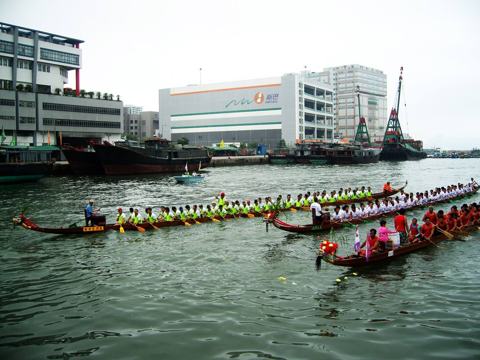
China's fifth-month river festival of racing dragon boats and rice dumplings — tied to the poet Qu Yuan's drowning, though the boats likely predate him.
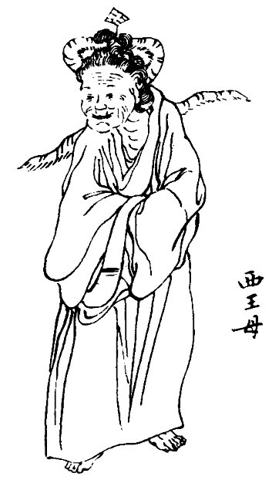
China's oldest surviving catalogue of mountains, monsters, and gods — a text nobody can name an author for, and half this Codex's bestiary depends on.
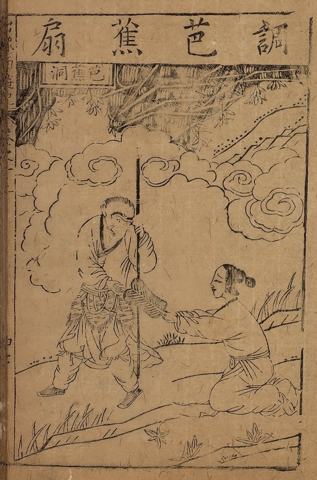
The Monkey King — a stone-born immortal with seventy-two transformations who fought heaven to a standstill, then walked to India as a monk's disciple.
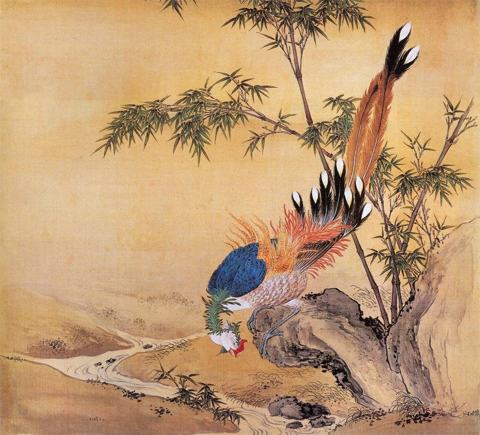
The radiant bird of Chinese myth — ruler of all birds, marked with the five virtues, whose rare appearance announces a just reign and an age of peace.
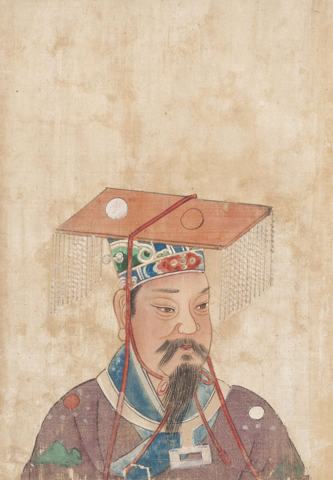
Legendary founder of Chinese civilization who defeated the horned rebel Chiyou at Zhuolu and gave his name to the medical canon that shaped Chinese medicine.
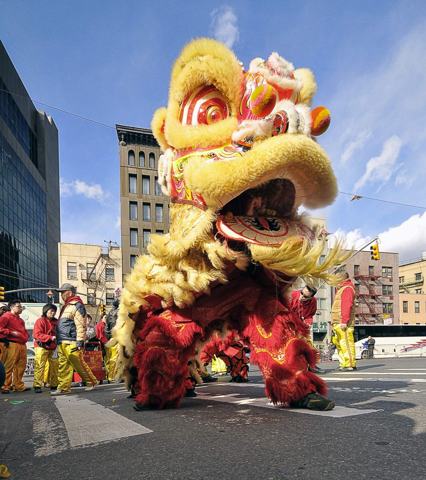
The horned beast said to terrorize villages once a year until scared off by firecrackers, fire, and red — a legend newer than the New Year customs it explains.
Also mentioned inErlang ShenMazuQilinThe Dragon Kings (Longwang)The Four Symbols
Sources & Further Reading
- 1.Shanhaijing — The Classic of Mountains and Seas; trans. Anne Birrell. Penguin Classics, 1999.
- 2.Xu Shen, Shuowen jiezi — Explaining Graphs and Analysing Characters (c. 100 CE).
- 3.Wu Cheng'en (attrib.), Journey to the West — Xiyouji (16th c.).
- 4.Birrell, Anne. Chinese Mythology: An Introduction. Johns Hopkins University Press, 1993.
- 5.Yang, Lihui & Deming An. Handbook of Chinese Mythology. ABC-CLIO, 2005.
- 6.Sterckx, Roel. The Animal and the Daemon in Early China. SUNY Press, 2002.
- 7.Schafer, Edward H. The Divine Woman: Dragon Ladies and Rain Maidens in T'ang Literature. University of California Press, 1973.
Spot an error or have a source to suggest? Write to info@viseterna.com. We cite primary sources and modern scholarship, and we correct fast.