
Dragon Boat Festival (Duanwu)
China's fifth-month river festival of racing dragon boats and rice dumplings — tied to the poet Qu Yuan's drowning, though the boats likely predate him.
Eastern District Dragon Boat Race, Hong Kong, Stewart, 2008. A modern race in a working harbour: the festival's custom as it is still practised · CC BY 3.0 · source
The Double Fifth
Duanwu Jie, the Dragon Boat Festival, falls on the fifth day of the fifth lunar month — a date old enough that its own name, "double fifth," predates any of the legends now attached to it 4,5. In the traditional calendar, midsummer was considered a dangerous season rather than a festive one: the "five poisons" of snake, scorpion, centipede, toad, and spider were thought to be at their most potent, and households hung bundles of mugwort and calamus over their doors, drank realgar wine, and tied colored thread on children's wrists as protection against the sickness and ill fortune the month was expected to bring 3,4,5. Zong Lin's sixth-century record of seasonal custom in the Jing-Chu region describes this same cluster of midsummer practice directly, including the mugwort figures hung on doors and the colored cords tied at the wrist, making it one of the earliest surviving accounts of the festival's ritual detail 3. The dragon boat races and the rice dumplings now associated with the day sit on top of that older, more apotropaic layer of midsummer ritual 5.
Qu Yuan's Drowning
The festival's best-known origin story concerns Qu Yuan, a statesman and poet of the southern state of Chu and the figure traditionally credited with the Chuci poems, including the Li Sao 1. Exiled after losing influence at court, and devastated by his state's defeat, Qu Yuan is said to have drowned himself in the Miluo River; villagers who admired him raced out in boats to search for his body, beat drums and splashed their oars to keep fish and river spirits away from it, and threw rice wrapped in leaves into the water so that the fish would eat the rice instead of the poet 1,2. The earliest surviving text to connect Qu Yuan directly to the dumplings and the boats is Wu Jun's Xu Qi Xie Ji, written in the sixth century CE — many centuries after Qu Yuan's traditional death date in the third century BCE — which marks the story as a later explanatory legend built onto an existing custom rather than a contemporary record of its origin 2.
Other Drownings, Other Origins
Qu Yuan is not the festival's only claimed origin, and which drowned figure the day commemorates has always depended on where in China one asks. In the lower Yangzi region around Suzhou, Duanwu is more often tied to Wu Zixu, a loyal minister of Wu forced to suicide by a king who ignored his warnings, his body thrown into the river and later honored as a tidal river god 4,5. Further south, around Shaoxing, local tradition instead credits Cao E, a girl said to have drowned searching the river for her father's body and to have been found still clasping it days later — a story commemorated in the very name of the Cao E River 4,5. Eberhard's survey of Chinese festival custom treats this regional multiplicity as normal rather than as competition between "correct" and "incorrect" origins: Duanwu absorbed local drowned-hero cults wherever they already existed, with Qu Yuan's version eventually spreading widest 4.
Older Than the Poet
Some modern scholarship goes further, treating the boats themselves as older than any of the drowning legends attached to them. Bodde's study of the classical festival calendar notes that dragon imagery, river ritual, and the fifth-month date all have plausible roots in earlier river-and-totem worship among the peoples of the Yangzi basin, predating the historical Qu Yuan by centuries; on this reading, the drowned-poet story was fitted onto an existing dragon-boat rite already tied to the summer date, rather than the rite being invented to honor him 4,5. Both layers are now inseparable in practice, and the festival is not diminished by having more than one root: a very old river ritual and a beloved, if literarily reconstructed, patriotic tragedy occupy the same day without much friction 4,5.
Dragon Boats and Zongzi
The race itself uses long, narrow boats carved or painted with a dragon's head at the bow and tail at the stern, paddled by teams timed to a drummer seated in the prow — a direct, practical use of the Chinese dragon's old association with rivers, rain, and water more generally 5. Zongzi, glutinous rice packed with meat, egg yolk, bean paste, or other regional fillings and steamed in a wrapping of bamboo or reed leaves, are the festival's food, eaten at home and thrown into rivers in reenactment of the original offering to Qu Yuan alike 1,2. In 2009, UNESCO added the Dragon Boat festival to its Representative List of the Intangible Cultural Heritage of Humanity, formal recognition of a custom that by then had already spread, as a competitive sport, to expatriate and non-Chinese communities on several continents 6.
A Festival Still Racing
Duanwu keeps its place in a ritual year that opens with the fear-and-firecrackers of Nian in deep winter and turns, three months after the dragon boats, to the quieter reunion of the Mid-Autumn Festival 4. Between those two, Duanwu remains the loud one: drums on the water, crowds on the banks, and a story about a poet who drowned rather than watch his home fall that is retold every year regardless of how old the boats underneath the story turn out to be 1,2,5.
Continue Exploring
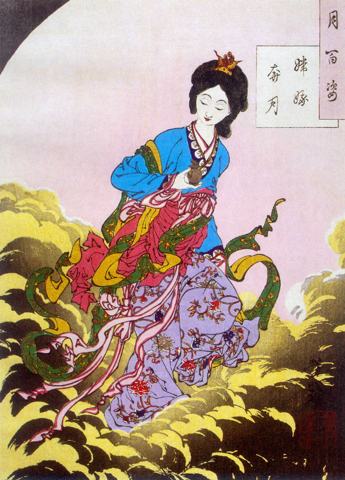
China's harvest-moon festival of family reunion, mooncakes, and lantern-lit nights under the fullest moon — inseparable from the goddess Chang'e.
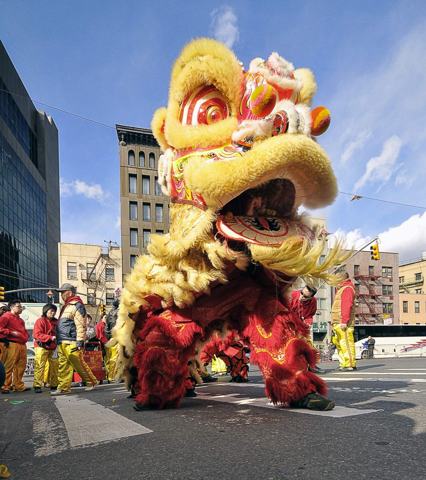
The horned beast said to terrorize villages once a year until scared off by firecrackers, fire, and red — a legend newer than the New Year customs it explains.
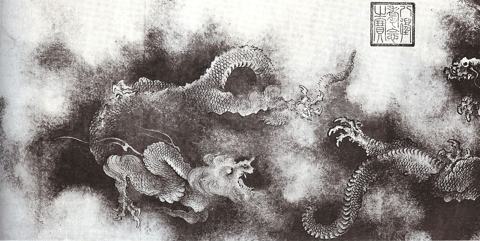
China's dragon — a benevolent, scaled power of rain, river, and sea, emblem of imperial authority and the only mythical beast in the zodiac.
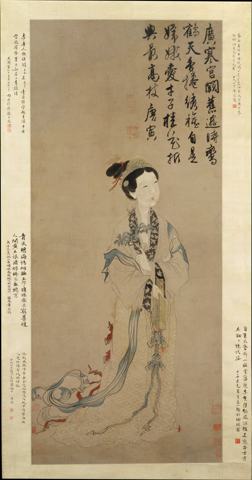
The moon goddess who swallowed the elixir of immortality and rose beyond reach — honoured each Mid-Autumn Festival with mooncakes and lanterns.
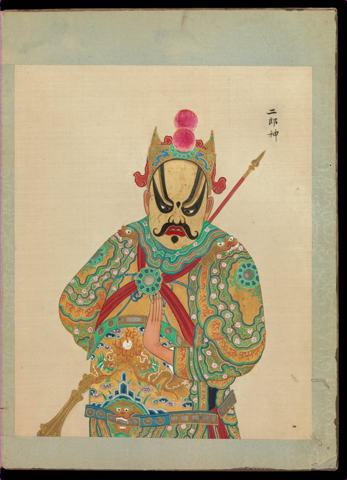
The three-eyed god of Guankou who tamed the floods and was the only celestial general able to beat the Monkey King in a fair fight.
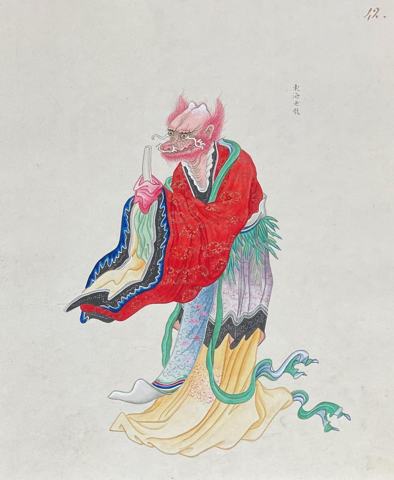
Four bureaucrat-dragons who rule the seas from undersea palaces, command rain and flood, and get bullied by mortal heroes in China's best-loved novels.
Sources & Further Reading
- 1.Qu Yuan (attrib.) and others. The Songs of the South — Chuci; trans. David Hawkes. Penguin Classics, 1985.
- 2.Wu Jun, Xu Qi Xie Ji — Sequel to Records of Qi Xie (6th c. CE).
- 3.Zong Lin, Jingchu Suishiji — Record of the Seasonal Customs of Jing-Chu (6th c. CE).
- 4.Eberhard, Wolfram. Chinese Festivals. Henry Schuman, 1952.
- 5.Bodde, Derk. Festivals in Classical China: New Year and Other Annual Observances During the Han Dynasty, 206 B.C.-A.D. 220. Princeton University Press, 1975.
- 6.UNESCO Intangible Cultural Heritage Lists. "Dragon Boat festival." Representative List, inscribed 2009 (nomination no. 00225).
Spot an error or have a source to suggest? Write to info@viseterna.com. We cite primary sources and modern scholarship, and we correct fast.