
The Dragon Kings (Longwang)
Four bureaucrat-dragons who rule the seas from undersea palaces, command rain and flood, and get bullied by mortal heroes in China's best-loved novels.
The Dragon King of the Eastern Sea (Donghai Longwang), Chinese album painting, 19th century · Public domain · source
Four Brothers, Four Seas
The Dragon Kings (Longwang) are a set of four brothers, each ruling one of the Four Seas from a crystal palace beneath its waves: Ao Guang of the East, Ao Qin of the South, Ao Run of the West, and Ao Shun of the North 1,6. Unlike the older, more diffuse tradition of the Chinese dragon as rain-bringer and imperial emblem, a Dragon King is imagined concretely as a court official — bearded, robed, seated on a throne, attended by crab generals, shrimp soldiers, and a filing staff of underlings — ruling his sea the way a magistrate rules a county, complete with a treasury, a family, and paperwork 1,6. Tom describes the type as one of Chinese religion's clearest cases of the state bureaucracy supplying the template for how the divine world itself was imagined 6.
Buddhist Origins of a Chinese Office
The title "Dragon King" is a Chinese solution to a translation problem. Buddhist scripture arriving from India described naga-rajas, serpent-kings who guard water, treasure, and the Buddhist teaching itself; Chinese translators rendered naga with long, the native word for dragon, and the imported naga-king gradually merged with indigenous Chinese river and sea spirits 4. The Lotus Sutra, translated into Chinese by Kumarajiva in 406 CE, contains one of the tradition's most influential naga-king episodes: the eight-year-old daughter of the dragon king Sagara achieves instant enlightenment before an assembly of doubting elders, a story that circulated widely in Chinese Buddhism and helped normalize the idea of dragon royalty as an ordinary feature of the supernatural bureaucracy rather than an exotic import 3. De Visser's early-twentieth-century survey traces the resulting figure as a genuine fusion rather than a simple substitution: by the Tang dynasty, "Dragon King" temples stood at rivers, lakes, and wells with no need to explain the Buddhist half of their ancestry to the worshippers who prayed there 4.
The Cult of Rain
The Dragon Kings' practical importance in imperial and village China came down to one thing: rain. Temples to the Dragon King of a given river, lake, or well were a standard feature of the Chinese religious landscape, and in drought communities petitioned them directly, with processions, incense, and written prayers asking for relief 4,5. Overmyer's study of twentieth-century north Chinese village religion documents how concrete and reciprocal this relationship was expected to be: when petitions failed and the drought continued, a community's patience could turn punitive, and a Dragon King's image might be taken from its temple and left standing in the full sun — a way of making the god feel, in miniature, the very drought his negligence had permitted 5. The Dragon King's birthday, traditionally placed on the thirteenth day of the sixth lunar month, was marked in many regions with its own dragon processions, distinct from the more widely known dragon-boat festival 6.
Bullied by Mortals: Nezha and the Dragon King
Chinese fiction treats the Dragon Kings with remarkably little deference, and two of the most popular Ming-dynasty novels build entire episodes around mortals humiliating them. In the Fengshen yanyi, the child-god Nezha, bathing in a river, provokes the underwater household of Ao Guang, Dragon King of the East Sea; he kills the dragon patrol captain and then Ao Guang's own son Ao Bing, and when the furious Dragon King threatens to flood the mortal town in retaliation, it is Nezha, not the god, who is forced to make the sacrifice, cutting away his own flesh and bone to spare his parents from the consequences of a fight the god could not win outright 2. The episode is one of Chinese literature's clearest illustrations of how thoroughly "divine" and "untouchable" are not the same thing in this tradition: a Dragon King commands a sea, but he can still lose a schoolyard fight to a child and be made to look petty for wanting revenge 2.
Robbed by a Monkey: Sun Wukong and the Iron Pillar
Xiyouji's Sun Wukong treats the Dragon King of the East Sea with outright contempt. Newly powerful and unarmed, Sun Wukong descends uninvited to Ao Guang's undersea palace and, through a mixture of demand and intimidation, extracts from the reluctant king first a weapon and then, when nothing on offer satisfies him, the Ruyi Jingu Bang, an iron pillar that had been used to gauge the depth of the ocean and that no one else on the premises can even lift 1. Ao Guang, unable to refuse a guest he cannot defeat and unwilling to let the fight reach his palace, complains to heaven instead of resisting further — the same institutional recourse, notably, that Ao Guang's fictional brothers in the Fengshen yanyi take against Nezha, suggesting that appealing upward rather than fighting directly is simply how a Dragon King is expected to respond to a threat he cannot handle alone 1,2.
Dragon Kings in Ritual Life Today
Dragon King worship persists across China's rural and coastal religious landscape, often continuous with older water-spirit cults that predate the Buddhist-inflected court title entirely 4,5. The four brothers' individual identities matter less in most living practice than the basic transaction their cult was always built on: a specific body of water, personified as a responsive official rather than an impersonal force, who can be petitioned, thanked, and, when the harvest fails badly enough, publicly blamed 5,6.
Continue Exploring
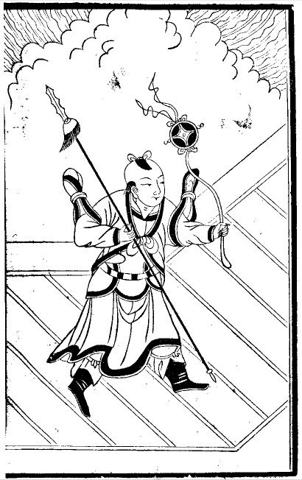
The child god who killed a dragon prince, returned his flesh to his parents, and was rebuilt out of lotus — China's most rebellious divine infant.
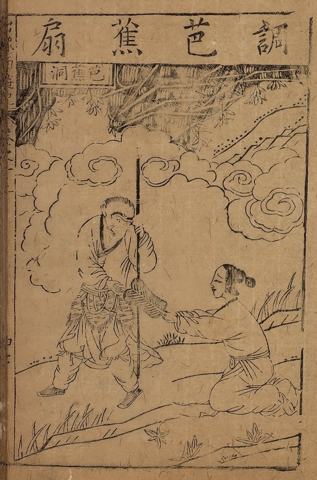
The Monkey King — a stone-born immortal with seventy-two transformations who fought heaven to a standstill, then walked to India as a monk's disciple.
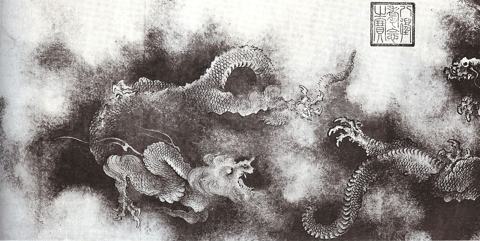
China's dragon — a benevolent, scaled power of rain, river, and sea, emblem of imperial authority and the only mythical beast in the zodiac.
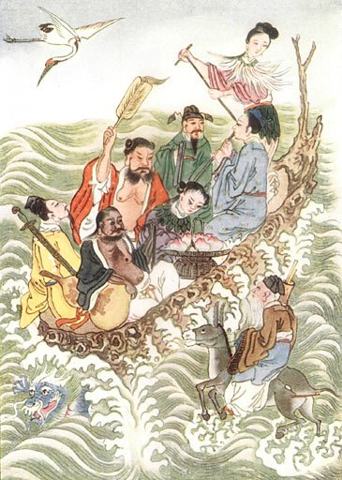
Eight Daoist immortals — a beggar, a drunk, a girl, a courtier, a flute player — who cross the sea by their own strange powers instead of by boat.
The household god who watches every family from above the stove all year, then ascends before New Year to report their conduct to the Jade Emperor.
The three-eyed god of Guankou who tamed the floods and was the only celestial general able to beat the Monkey King in a fair fight.
Sources & Further Reading
- 1.Wu Cheng'en (attrib.), Xiyouji — Journey to the West (16th century); trans. Anthony C. Yu, The Journey to the West, revised edition, University of Chicago Press, 2012.
- 2.Xu Zhonglin (attrib.), Fengshen yanyi — The Investiture of the Gods (late 16th century); trans. Gu Zhizhong, Creation of the Gods, New World Press, 1992.
- 3.Miaofa lianhua jing — The Lotus Sutra, 'Devadatta' chapter, Chinese translation by Kumarajiva (406 CE); trans. Burton Watson, The Lotus Sutra, Columbia University Press, 1993.
- 4.de Visser, M.W. The Dragon in China and Japan. Johannes Müller, 1913.
- 5.Overmyer, Daniel L. Local Religion in North China in the Twentieth Century. Brill, 2009.
- 6.Tom, K.S. Echoes from Old China: Life, Legends, and Lore of the Middle Kingdom. University of Hawaii Press / Hawaii Chinese History Center, 1989.
Spot an error or have a source to suggest? Write to info@viseterna.com. We cite primary sources and modern scholarship, and we correct fast.