
The Trojan War
The ten-year siege of Troy that Homer sang, and the real Bronze Age city at Hisarlik whose ruins keep the question of a historical war unresolved.
Legendary walls of Troy, Hisarlik, Turkey, photograph by Jorge Lascar, 2012 · CC BY 2.0 · source
A War Over Helen
The war's cause, in the fullest surviving outline, begins at a wedding: the goddess Eris throws a golden apple marked "for the fairest" among three goddesses, and the Trojan prince Paris judges Aphrodite the winner in exchange for the world's most beautiful woman, Helen, already married to the Spartan king Menelaus. The lost epic Cypria, known today only through a late summary, took the story from there: Paris either seduces or abducts Helen, Menelaus's brother Agamemnon calls in an oath sworn by her former suitors, and a coalition fleet gathers at Aulis, delayed until Agamemnon sacrifices his own daughter Iphigenia to appease the offended goddess Artemis 3,6.
Nine Years Offstage
None of that is in the Iliad. Homer's poem opens in the tenth year of the siege and covers only a few weeks — the quarrel between Achilles and Agamemnon over a captive woman, Achilles' withdrawal from the fighting, and his return to kill the Trojan prince Hector after the death of his companion Patroclus 1. The nine years before that, and the war's actual end, are left to the other poems of the Epic Cycle: the Aethiopis brought in the Amazon queen Penthesilea and the Ethiopian king Memnon as Trojan allies and killed Achilles with an arrow to the heel, while the Little Iliad and the Iliou Persis carried the story through to the Trojan Horse and the sack of the city 3.
How It Ended
The city falls by a trick rather than a breach. Greek soldiers hide inside a hollow wooden horse left behind as a fake offering, the Trojans drag it inside their own walls, and the hidden men climb out that night to open the gates for the returning fleet — the full mechanics belong to the horse's own entry, but the horse is the hinge the whole war turns on 3,6. What follows in the ancient accounts reads closer to massacre than battle. Aeneas, one of the few Trojan leaders who escapes, becomes in Roman tradition the ancestor of Rome precisely because his story does not end inside the burning city like nearly everyone else's 6. Odysseus, the horse's architect, does not reach home for another ten years, and his own poem opens by asking a goddess to sing of exactly that delay 2.
Ancient Doubts, Ancient Defenses
Some ancient authors already treated parts of the story as embellishment. Herodotus, visiting Egypt, reports a priestly tradition that Helen never reached Troy at all: winds blew Paris's ship off course, an Egyptian king kept Helen there for the duration of the war, and the Trojans — who by Herodotus's account told the Greeks the truth throughout the siege — simply were not believed 4. Thucydides takes the opposite approach, treating the war as broadly historical but wildly inflated by Homer for poetic effect; he reads the Achaean coalition as a real, if smaller and less coordinated, alliance, and doubts the epic's numbers rather than the war's occurrence 5.
Digging Up Troy
The nineteenth century found something to dig. In 1868 the archaeologist Frank Calvert convinced the wealthy amateur Heinrich Schliemann that the mound of Hisarlik in northwestern Turkey was ancient Troy, and their excavations, however rough by modern standards, uncovered a genuine multilayered Bronze Age city. Layer VI was a major fortified citadel occupied through the Late Bronze Age; Layer VIIa was built soon after VI's destruction, apparently by the same population, and was itself burned and sacked around 1180 BCE, with scorch marks and unburied dead left where they fell 7. Manfred Korfmann's later excavations added a large lower town outside the citadel walls, defended by a rock-cut ditch, showing Troy VI/VIIa was a substantial city rather than a minor hilltop residence — a finding the historian Frank Kolb disputed at the time, arguing Korfmann had overstated the site's size and importance 7.
Wilusa and the Wooden Question
Independent of Schliemann's spade, Hittite royal archives from roughly the same centuries mention a western Anatolian kingdom called Wilusa, ruled at one point by a king named Alaksandu — a name philologists have long compared to Alexandros, Paris's other name in Homer. A surviving treaty has Alaksandu swear loyalty to the Hittite king and requires the text read aloud three times a year, evidence of a literate court with real diplomatic weight. Most specialists now accept Wilusa as Troy under another name, but that identification settles less than it seems to: Trevor Bryce, who has worked directly on the Hittite texts, cautions that "our current understanding of Wilusa's history does not provide evidence for there having been an actual Trojan War" — a real city with a real name is not the same thing as Homer's ten-year siege over a stolen queen 8.
What's Left Unsettled
The honest position, shared by most current specialists, is a hedge rather than a verdict. The archaeology proves a real, important Bronze Age city stood at Hisarlik and was destroyed by fire and violence around the time Greek tradition remembered a war, and the Hittite texts prove Late Bronze Age Anatolia had a kingdom that plausibly is that city under its own name. Neither proves Agamemnon existed, that Helen was the cause, or that any single ten-year siege happened as the poems describe it. Ancient chronographers who tried to date the war exactly, such as Eratosthenes, arrived at 1194 to 1184 BCE, suspiciously close to Troy VIIa's excavated destruction date — but the agreement may be coincidence, calculation worked backward from the poems, or a genuine folk memory, and scholars remain divided 7,8.
Continue Exploring
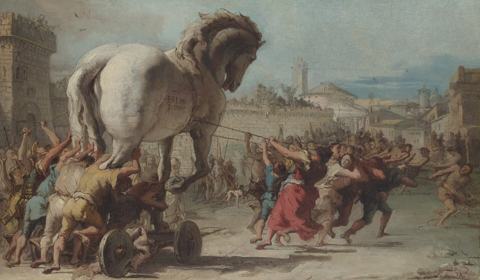
The hollow wooden horse that let the Greeks inside Troy's walls — absent from the Iliad, first told in the lost Epic Cycle, and made famous by Virgil.
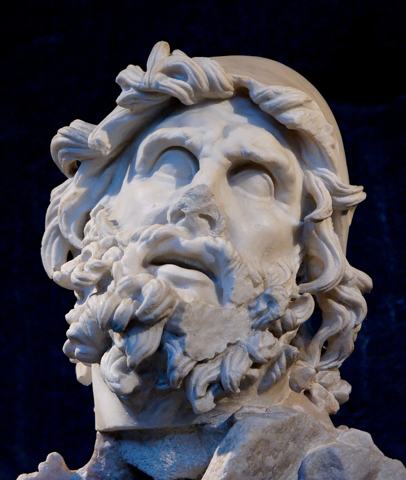
King of Ithaca and the man of many turns. Homer's cleverest hero, who took ten years to sail home from Troy and had to fight for his own house.
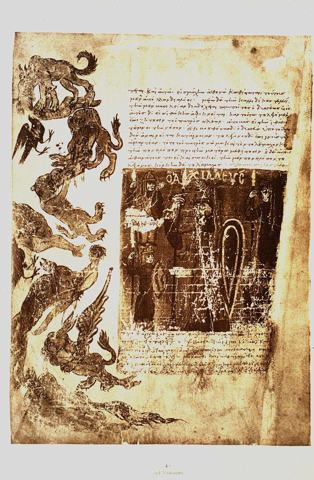
Homer's epic of the final weeks of the Trojan War, opening with Achilles's rage and closing with the ransom of Hector's body.
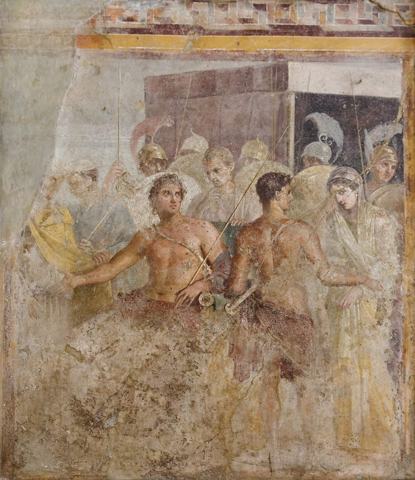
The greatest fighter at Troy, doomed by his own choice of a short glorious life over a long quiet one, and undone in the one place he could still be wounded.
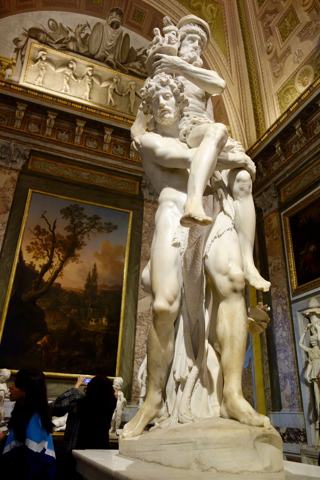
The Trojan prince who escaped burning Troy carrying his father and household gods, wandered the Mediterranean, and became Rome's mythical ancestor.
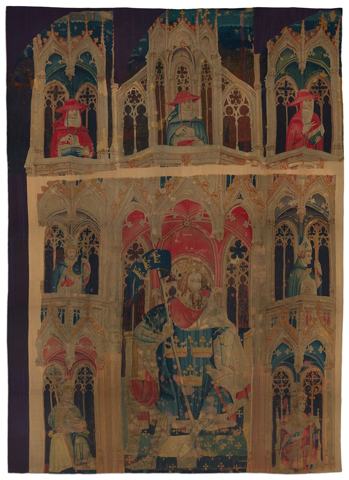
The medieval term for the whole Arthurian tradition, coined around 1200 to separate British legend from the Matter of France and the Matter of Rome.
Sources & Further Reading
- 1.Homer, Iliad (c. 8th century BCE).
- 2.Homer, Odyssey (c. 8th century BCE), esp. Books 1, 4, 8, and 11.
- 3.Proclus, Chrestomathy, summarizing the lost Epic Cycle (Cypria, Aethiopis, Little Iliad, Iliou Persis, Nostoi; the poems themselves c. 7th-6th century BCE, Proclus's own date disputed).
- 4.Herodotus, Histories (c. 430 BCE), 2.113-120.
- 5.Thucydides, History of the Peloponnesian War (c. 400 BCE), 1.3 and 1.9-11.
- 6.Apollodorus, Epitome (1st-2nd century CE), 3.1-6.15.
- 7.Cline, Eric H. The Trojan War: A Very Short Introduction. Oxford University Press, 2013.
- 8.Bryce, Trevor. The Trojans and Their Neighbours. Routledge, 2006.
Spot an error or have a source to suggest? Write to info@viseterna.com. We cite primary sources and modern scholarship, and we correct fast.