
Parvati
The Goddess who wins Shiva through fierce austerity, mother of Ganesha and Kartikeya, and one revealed face of the same Devi worshipped as Durga and Kali.
Shiva and Parvati, South India, Tamil Nadu, Chola period (Cleveland Museum of Art) · CC0 · source
Daughter of the Mountain
Parvati, "she of the mountain," is the daughter of Himavat, the Himalaya given a body and a name, and his wife Mena. She is understood across Puranic literature as the reborn Sati, Shiva's first wife, who immolated herself in protest when her father Daksha excluded her husband from his great sacrifice 2,4. Where Sati was lost to him, Parvati is a second chance — a goddess who chooses, this time, to win Shiva rather than simply belong to him, and the myths spend considerable energy on exactly how she does it 2,6.
Kalidasa's Kumarasambhava, "The Birth of the War-God," gives the classical Sanskrit account. The gods, oppressed by the demon Taraka who can be killed only by a son of Shiva, need the ascetic god to father a child, but Shiva sits in unbroken meditation on Kailasa, indifferent to the world. Kama, god of desire, is sent to break his concentration with an arrow aimed at his heart; Shiva opens his third eye and burns Kama to ash without so much as rising 1,6. Most scholarship treats Kalidasa's finished, authenticated verses as ending around the wedding itself, with the poem's later, more explicit cantos long debated as a later continuation 1.
Winning Shiva by Tapas
Beauty and desire having failed, Parvati chooses austerity instead. She takes up tapas — the accumulated heat of asceticism — standing among five fires in the Himalayan summer, fasting through winter, matching the ascetic on his own ground rather than tempting him off it 1,6. Shiva, testing her resolve, appears disguised as an elderly brahmin and describes Shiva himself in the worst terms he can invent: ash-smeared, ill-tempered, a beggar with a skull for a bowl and snakes for jewelry. Parvati defends him without hesitation, and Shiva drops the disguise. Their wedding, arranged by the Himalaya and attended by the assembled gods, is one of the great set pieces of Sanskrit poetry 1.
The paradox that defines Shiva — supreme renouncer and supreme husband in the same body — is completed only with Parvati beside him. O'Flaherty's study of Shaiva mythology reads the marriage as structural rather than incidental: an ascetic god who married nobody would remain outside the world the tradition needs him to also sustain 6.
The Family on Kailasa
Puranic literature is not of one mind about how Ganesha and Kartikeya (also called Skanda) came to be hers. The most widely told account has Parvati create Ganesha alone, from turmeric or sandalwood paste rubbed from her own body, and set him to guard her door while she bathes; Shiva, not recognizing him, beheads him, and the elephant head that restores him to life makes him hers and Shiva's together only after the fact 2,3. Kartikeya's birth is even less settled: some Puranic tellings have Shiva's seed pass through Agni and the river Ganga before six star-goddesses, the Krittikas, nurse the child Parvati then claims as her own; others make her his mother without the detour 3,5. Doniger's sourcebook collects several of these variants side by side rather than resolving them, which is closer to how the tradition itself treats the question 5.
Whatever the precise mechanics, the result is a settled domestic image rare among Hindu deities: a mountain household of father, mother, and two sons, visited constantly in painting and popular devotion, and echoed every autumn in Bengal when Durga — read there as Parvati herself — is welcomed home with Ganesha, Kartikeya, Lakshmi, and Saraswati at her side 7.
One Goddess, Several Faces
Shakta theology holds that Parvati, Durga, and Kali are not separate goddesses but one Devi under different names and different moods — the gentle, married, domestic face and the fierce, independent, battlefield face of a single power 7. The Devi Mahatmya dramatizes the point directly: while the gods elsewhere praise a great warrior goddess, Parvati, bathing on the Himalaya, hears herself described as though she were someone else. A dark, fierce form — Kaushiki — steps out of her own body to go and be worshipped, and what remains, pale and radiant, is given the name Gauri, "the fair one," another common name for Parvati 4,7. The text is explicit that nothing was actually created or subtracted: the sheath that left and the woman who stayed were always the same goddess 4.
Kinsley's survey of the goddess traditions treats this fluidity as a genuine theological claim rather than a loose folk habit — worshippers may approach Devi as a comforting mother on the mountain or a sword-wielding slayer of demons, and orthodox Shaiva and Shakta thought insists both approaches reach the same being 7. Parvati's own iconography carries traces of both moods even at her mildest: she is shown holding a lotus and a mirror as often as she is shown, in her form as Ardhanarishvara fused bodily with Shiva, as half of a single androgynous god 2,6.
A Living Goddess
Parvati remains one of the most visited goddesses in India today, worshipped separately under regional names — Gauri, Uma, Annapurna, Meenakshi in Madurai — and honored each year in festivals such as Teej, where married and unmarried women alike fast and pray for a husband as devoted, or as fortunate a marriage, as hers 3,7. The myths of her tapas are not read as a closed story about a distant age; they remain a template invoked in ordinary devotional practice for what patient, self-directed effort can accomplish, even against a god.
Continue Exploring
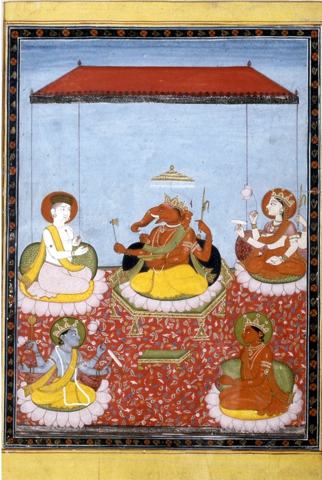
The elephant-headed son of Shiva and Parvati, lord of beginnings and remover (and placer) of obstacles, invoked before every undertaking.
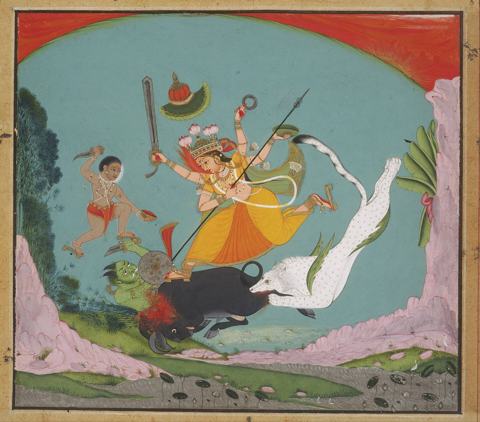
The warrior goddess assembled from the massed light of all the gods, lion-mounted slayer of the buffalo demon Mahishasura.
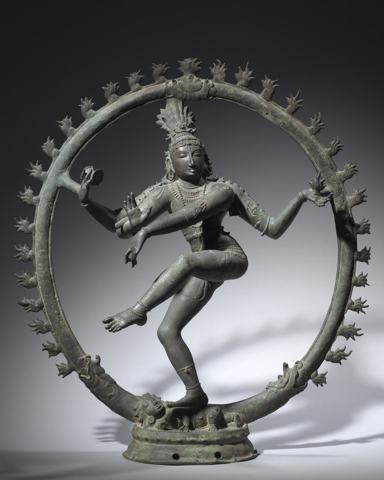
The destroyer and transformer — ascetic on the cremation ground, lord of the cosmic dance, and for millions of Shaivas the supreme reality itself.
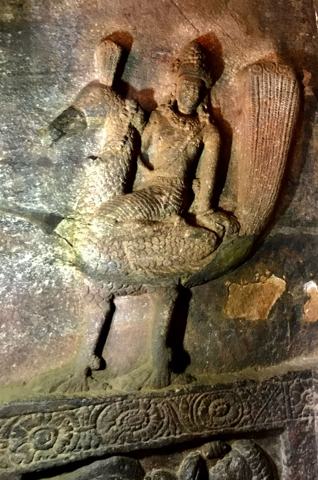
The six-headed god of war, spear in hand and peacock beneath him — Skanda to Sanskrit tradition, and Tamil Nadu's most fervently worshipped deity as Murugan.
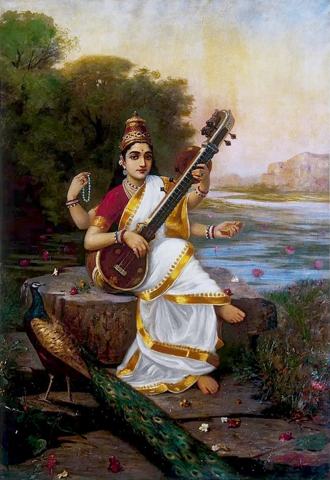
Goddess of speech, learning, music and the arts — a Vedic river who became the patron of every word written or sung.
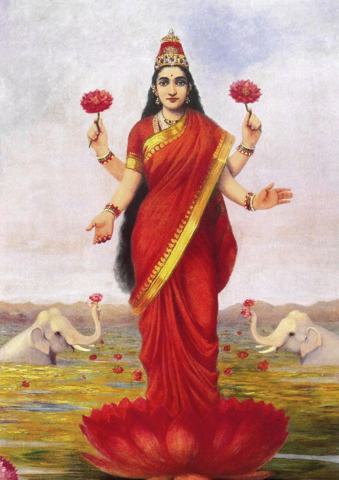
Goddess of wealth, beauty and good fortune, born from the churning of the ocean and inseparable consort of Vishnu.
Also mentioned inAgni (Hindu Fire God)Mount KailashTrishula
Sources & Further Reading
- 1.Kalidasa. Kumarasambhava, translated by Hank Heifetz as The Origin of the Young God — Kalidasa's Kumarasambhava. University of California Press, 1985.
- 2.Shiva Purana — Rudra Samhita, Parvati Khanda.
- 3.Skanda Purana.
- 4.Devi Mahatmya (Markandeya Purana), chapters 81-93 — c. 6th century CE.
- 5.O'Flaherty, Wendy Doniger, trans. Hindu Myths — A Sourcebook Translated from the Sanskrit. Penguin Classics, 1975.
- 6.O'Flaherty, Wendy Doniger. Asceticism and Eroticism in the Mythology of Siva. Oxford University Press, 1973.
- 7.Kinsley, David. Hindu Goddesses — Visions of the Divine Feminine in the Hindu Religious Tradition. University of California Press, 1986.
Spot an error or have a source to suggest? Write to info@viseterna.com. We cite primary sources and modern scholarship, and we correct fast.