
Janus
The two-faced Roman god of doors, beginnings and endings, named first in every prayer, whose gates in the Forum stood open only while Rome was at war.
Bust of Janus, from the series 'Deorum dearumque', engraved after coins in the collection of Abraham Ortelius, 16th century (The Metropolitan Museum of Art) · CC0 · source
A God With No Greek Twin
Almost every major Roman deity can be matched to a Greek one: Jupiter to Zeus, Juno to Hera, Neptune to Poseidon. Janus cannot. Roman writers themselves noticed this and were rather proud of it, treating him as evidence that some of their religion was genuinely their own and not a Hellenic import 4,6. What mythology he has is thin and mostly late; what he has instead is function, and an extraordinarily prominent place in ritual.
His name is the same word as ianua, "door" — though which came first is disputed, and some scholars derive both from a root meaning "to go", making Janus the god of passage as such 7,2. He is shown bifrons, two-faced, looking both ways at once, usually with a key and a staff or door-porter's rod. A four-faced form, Janus Quadrifrons, was associated with a crossroads arch in the Forum Boarium 4,6.
First in Every Prayer
The hardest evidence for Janus's importance is liturgical: he was invoked first. In the formulae of Roman public prayer and sacrifice, Janus's name opened the list — before Jupiter's — and Vesta's typically closed it 4,8. The logic is procedural rather than hierarchical. Janus governs beginnings, so any rite must begin by opening the way with him; the first portion of the offering and the first wine were his 1,4.
That gives him a genuinely odd theological position. He is not the greatest god, but no prayer to a greater one works without him. Ancient explanations vary: Varro made him the god of every threshold, Macrobius reports interpretations ranging from a deified Italian king of the Golden Age to a personification of the world or the sky, and Ovid has the god himself claim, half-playfully, to have once been Chaos, the shapeless mass from which the ordered world separated 1,2,4.
He was also the god of the year's opening. January (Ianuarius) carries his name; the Agonium of Janus fell on 9 January, when the rex sacrorum sacrificed a ram; and Ovid's Fasti opens on 1 January with Janus appearing to the poet and explaining himself at length — the single richest surviving account of the god, and one written by a poet, which is worth remembering when reading it as evidence 1.
The Gates of War
The best-known Janus structure was not a temple in the ordinary sense but a passage: the Ianus Geminus, the "twin Janus", a small double-arched shrine in the Forum whose doors faced east and west. Roman tradition credited it to Numa Pompilius, the second king and the legendary founder of most of Rome's religious institutions 3.
Its doors stood open while Rome was at war and were shut when Roman arms were everywhere at rest 3,5. The ancients themselves disagreed about what the ritual meant — Livy presents it as a public sign of the state's condition; other explanations held that the god went out with the army, or that war was being kept inside 3,4. Since Rome was at war almost continuously, the gates were almost always open, and closing them became a rare political prize.
Augustus made the point in his own funerary inscription. In the Res Gestae he records that the Senate decreed the gates closed three times during his principate, whereas in the whole span from the founding of the city to his birth tradition held that they had been closed only twice 5. The claim is propaganda in the most literal sense, but the ritual it exploits was old and real.
A separate temple of Janus stood by the Forum Holitorium, vowed by the consul Gaius Duilius after his naval victory over Carthage at Mylae in 260 BC 6.
Janus in Everyday Rome
Below the level of state cult, Janus is everywhere in ordinary Roman life because doorways are. The domestic threshold, the ianua, was itself a charged space — the point where outside became inside, where brides were carried rather than allowed to step. Roman writers treated the god of doors as presiding over that boundary in every house, and over bridges, gates and any point of transition 7,8.
The commonest Roman coin of the middle Republic, the bronze as, carried a janiform head on the obverse and a ship's prow on the reverse for centuries — which means most Romans handled his image daily 6. Louise Adams Holland's influential study went further, arguing that Janus's oldest association was specifically with river crossings and the ritual of the bridge; the thesis remains debated but it usefully underlines how physical, rather than mythological, this god is 7.
What Survives
Janus has no love affairs, no war against monsters, no death. He accumulated a consort, Jana or Juturna, in scattered sources, and a role in the Golden Age story receiving Saturn into Latium, but nothing like a mythic cycle 2,4. The scholarly consensus is that this absence is not a loss of material but the shape of the god: a Roman deity defined by what he does in ritual rather than by what he did in stories.
What survives instead is the metaphor. Two faces looking forward and back, the moment that is neither one year nor the next, the door that is neither the room nor the street. January is his, and so is every English sentence about being "Janus-faced" — a phrase that, unfairly, turned a god of thresholds into a byword for duplicity.
Continue Exploring
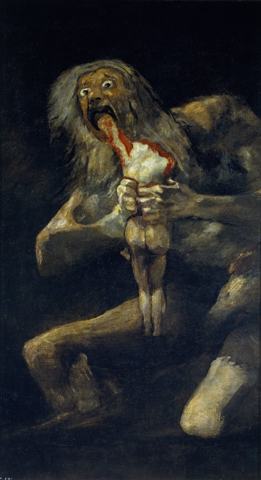
Rome's god of sowing and the lost Golden Age, whose temple held the state treasury and whose December festival turned the social order upside down.
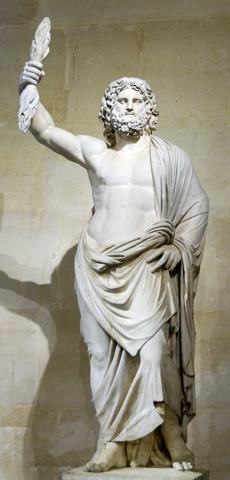
King of the gods and of the Roman state — lord of the bright sky, hurler of the lightning bolt, and the guarantor behind every oath and treaty.
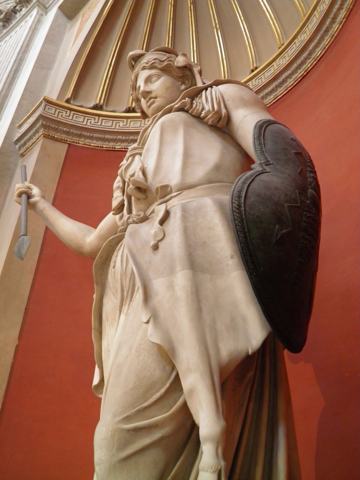
Queen of the gods — Rome's guardian of women, childbirth and the state, whose sacred geese warned the Capitol and whose temple gave us the word money.
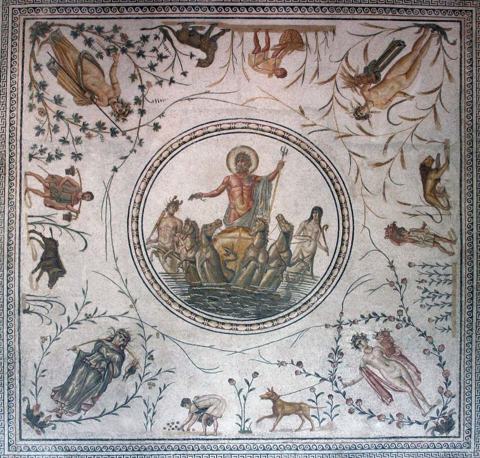
Lord of the sea — though the Romans knew him first as a god of springs and running water, honoured at midsummer when the rivers ran lowest.
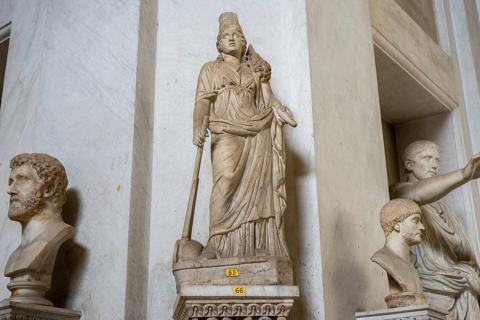
Rome's goddess of luck, worshipped under dozens of specific titles and consulted through a wooden-lot oracle at Praeneste that Cicero called a fraud.
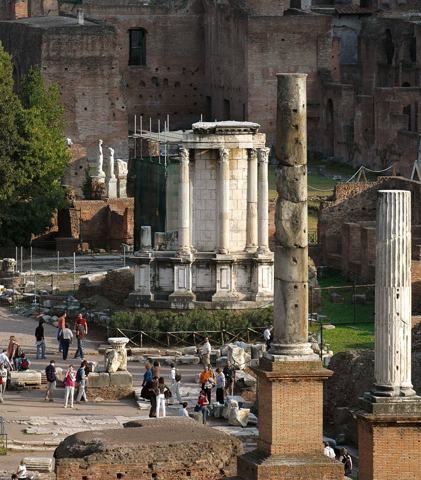
Rome's hearth goddess, worshipped as a living fire rather than a statue, tended in the Forum by six priestesses for over a thousand years.
Sources & Further Reading
- 1.Ovid, Fasti — Book I, lines 63-288 (Janus speaks for himself, c. AD 8).
- 2.Varro, De Lingua Latina — Books V and VII (c. 45 BC).
- 3.Livy, Ab Urbe Condita — Book I.19 (Numa and the shrine of Janus).
- 4.Macrobius, Saturnalia — Book I.9 (early 5th century AD).
- 5.Augustus, Res Gestae Divi Augusti — chapter 13 (the closing of the gates).
- 6.Beard, Mary, John North and Simon Price. Religions of Rome. 2 vols. Cambridge University Press, 1998.
- 7.Holland, Louise Adams. Janus and the Bridge. American Academy in Rome, 1961.
- 8.Scheid, John. An Introduction to Roman Religion. Trans. Janet Lloyd. Indiana University Press, 2003.
Spot an error or have a source to suggest? Write to info@viseterna.com. We cite primary sources and modern scholarship, and we correct fast.