
Circe
Goddess-enchantress of the island of Aiaia. She turned Odysseus' crew into swine, then became the one guide who told him how to reach the dead.
Circe Offering the Cup to Ulysses, John William Waterhouse, 1891 (Gallery Oldham) · Public domain · source
Goddess, Not Witch
Homer never calls Circe a witch. She is dia thea, "shining goddess", and polypharmakos, "knowing many drugs" — a daughter of Helios the Sun and the Oceanid Perse, sister of Aeetes of Colchis and of Pasiphae the wife of Minos 1,2. Her family is a line of dangerous solar magicians: her niece is Medea, and her sister is the mother of the Minotaur. She lives alone with attendant nymphs on the island of Aiaia, in a stone house in a forest clearing, and the wolves and lions that fawn at her door are men she has already transformed 1.
The later reduction of this figure to a sorceress-villain is a reception effect rather than a Homeric one. Judith Yarnall's study traces how allegorising readers from the Stoics onward converted a goddess who tests and then aids the hero into a straightforward emblem of appetite and female danger, an image that hardened through Virgil and Ovid and persisted for two thousand years 6.
The Transformation of the Crew
Odysseus lands on Aiaia after the Laestrygonians have destroyed all his ships but one. Half the crew, sent inland under Eurylochus, find the house and are welcomed with wine and cheese and barley mixed with a drug; a touch of Circe's wand turns them into swine — bodies, voices and bristles of pigs, but their minds unchanged, which is the cruel detail. Eurylochus, who hung back at the door, brings the news 1,8.
Going to the rescue alone, Odysseus is intercepted by Hermes, who gives him the plant moly: black at the root, with a milk-white flower, "hard for mortal men to dig". Homer does not identify it botanically, and ancient and modern attempts to do so — snowdrop, mandrake, wild rue — remain guesses 1,8. Protected by it, Odysseus drinks and does not change; when he draws his sword as Hermes instructed, Circe recognises him from a prophecy she has been told, and the encounter turns from a duel into an alliance. She restores the crew, younger and taller than before, and the whole company stays a full year 1.
The Guide to the Dead
Circe's decisive role in the poem is not the transformation but what follows it. She is the one who tells Odysseus that he cannot sail home until he has gone to the house of Hades to consult the ghost of the blind seer Tiresias, and she gives him the exact ritual: the black ewe and ram, the trench, the libations of honey, wine, water and barley, and the rule that the shades must not drink the blood until Tiresias has spoken 1.
When he returns from the underworld, she briefs him a second time, and it is her instructions that get him past the last dangers of the voyage — wax for the crew's ears and the mast for his own body at the Sirens, the hard choice to steer close to Scylla and Charybdis and lose six men rather than the whole ship, and the absolute prohibition on touching the cattle of Helios, her father 1,8. Functionally she is the hero's navigator. Every subsequent survival in the poem runs on information she supplied.
Other Myths and the Argonauts
Circe appears outside the Odyssey as well. In Apollonius' Argonautica Jason and Medea come to her island to be purified of the murder of Medea's brother; Circe performs the rite because kinship obliges her to, then throws them out once she learns what they have done — a scene that keeps her formidable without making her wicked 3,7. Ovid gives her the most vindictive version of her personality: she turns the sea-nymph Scylla into a monster out of jealousy over Glaucus, and transforms the Italian king Picus into a woodpecker for refusing her 4,6.
Genealogies also make her a founding ancestor. Hesiod names Agrius and Latinus as her sons by Odysseus, and later tradition adds Telegonus, who sails in search of his father and kills him by accident with a spear tipped in stingray venom — the ending that the lost epic Telegony gave the hero 2,5,7. In Roman geography her island was identified with Monte Circeo on the coast of Latium.
Reading Circe
The episode has always invited allegory: men reduced to animals by pleasure, the hero saved by a god-given restraint. But the Homeric text resists the moral. Circe's victims keep their human minds inside animal bodies, which is a comment on the swine, not on them; and the crew's real destruction comes later, from their own hunger on Thrinacia, after Circe has warned them plainly 1,8. The scholarship of the last three decades has tended to read her instead as a figure of sovereign hospitality on the edge of the known world — a host who can either destroy a guest or equip him, and who chooses 6.
In Popular Culture
Madeline Miller's novel Circe (2018) retold her life from the inside and spent years on bestseller lists, doing more than any other modern work to restore her from villain to protagonist. Renewed attention to the Odyssey around Christopher Nolan's 2026 film has pushed her further into the mainstream, and she is now among the most recognisable figures of the poem after Odysseus himself.
Continue Exploring
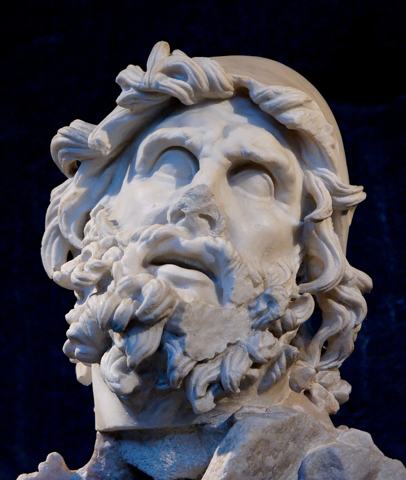
King of Ithaca and the man of many turns. Homer's cleverest hero, who took ten years to sail home from Troy and had to fight for his own house.
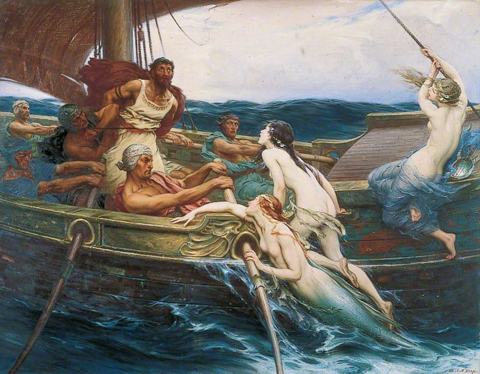
Bird-bodied singers of the Odyssey whose song promises knowledge, not romance. Odysseus heard them lashed to his mast, his crew rowing with waxed ears.
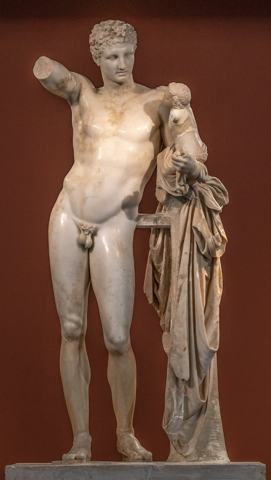
Messenger of the gods and guide of the dead. Patron of travellers, traders, heralds and thieves, and the only Olympian who crosses every boundary at will.
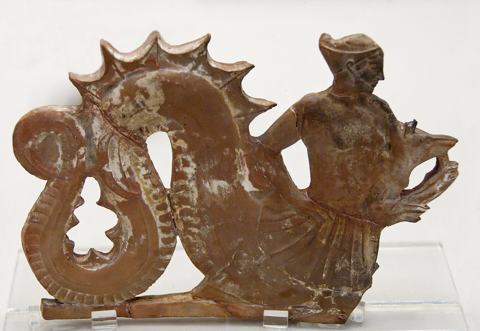
The twin sea-terrors of Odyssey 12 — a six-headed cliff monster and an all-swallowing whirlpool, set close enough that avoiding one means meeting the other.
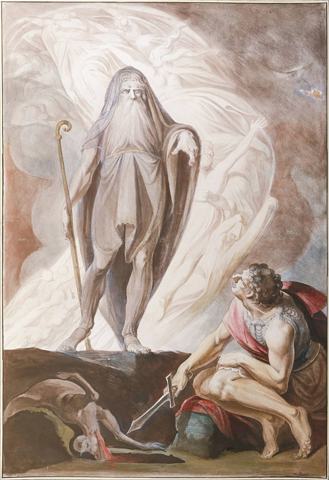
The blind prophet of Thebes who lived seven generations, spent seven years as a woman, and kept his mind intact among the dead.
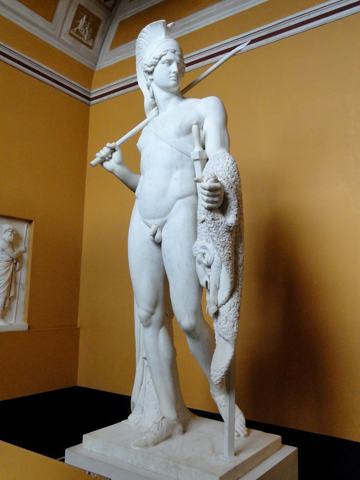
Jason and his crew of heroes sailed the Argo to the edge of the world for the Golden Fleece, and paid for it with a debt to the sorceress who made it possible.
Also mentioned inIthacaTelemachusThe Lotus-EatersThe Odyssey (Homer's Epic)
Sources & Further Reading
- 1.Homer, Odyssey (c. 8th-7th century BCE), esp. Books 10 and 12.
- 2.Hesiod, Theogony (c. 700 BCE).
- 3.Apollonius of Rhodes, Argonautica, Book 4 (3rd century BCE).
- 4.Ovid, Metamorphoses, Books 13-14 (c. 8 CE).
- 5.Apollodorus, Bibliotheca and Epitome (1st-2nd century CE).
- 6.Yarnall, Judith. Transformations of Circe: The History of an Enchantress. University of Illinois Press, 1994.
- 7.Gantz, Timothy. Early Greek Myth: A Guide to Literary and Artistic Sources. Johns Hopkins University Press, 1993.
- 8.Heubeck, A., S. West, J. B. Hainsworth, A. Hoekstra, J. Russo and M. Fernandez-Galiano. A Commentary on Homer's Odyssey, 3 vols. Oxford: Clarendon Press, 1988-1992.
Spot an error or have a source to suggest? Write to info@viseterna.com. We cite primary sources and modern scholarship, and we correct fast.