
Jason and the Argonauts
Jason and his crew of heroes sailed the Argo to the edge of the world for the Golden Fleece, and paid for it with a debt to the sorceress who made it possible.
Jason with the Golden Fleece, Bertel Thorvaldsen, 1803 (Thorvaldsens Museum, Copenhagen) · CC0 · source
A Throne Owed and a Fleece Demanded
Jason is the rightful heir to Iolcus in Thessaly, but his uncle Pelias has seized the throne and been warned by an oracle to beware a man wearing only one sandal 4. Jason loses the sandal fording a river while carrying an old woman who is secretly Hera in disguise, testing him, and he arrives at Pelias's court exactly as the oracle feared 4,6. Pindar's Pythian 4, composed some two centuries before Apollonius wrote his epic, is the fullest surviving early account and already includes the one-sandal omen, suggesting the story's basic shape was fixed long before any poet whose full text survives took it up 2,6. Pelias, unwilling simply to kill a popular claimant, instead sends Jason on an errand meant to be fatal: retrieve the Golden Fleece, the hide of a magic ram that once saved the children Phrixus and Helle, from the distant and hostile kingdom of Colchis on the eastern shore of the Black Sea 4,6.
Building the Argo and Losing Heracles
Jason answers with a ship and a crew built to match the task's scale. The shipwright Argus builds the Argo under Athena's direct supervision, and, in a detail that runs through the whole poem, a beam cut from the prophetic oak at Dodona is worked into the ship's prow, so that the vessel itself can occasionally speak and warn its crew 1. Apollonius catalogues the Argonauts at length: Heracles sails with them at first, alongside the musician Orpheus, whose songs later save the crew outright, and a roster of heroes whose sons and grandsons will fight at Troy a generation later 1,6. The partnership with Heracles ends early and badly: his young companion Hylas is pulled into a spring by nymphs entranced by his beauty, and Heracles, searching the woods for him and refusing to give up, is left behind when the Argo sails on without him, a scene Apollonius stages as a genuine loss to the expedition, not a comic exit 1,7.
Monsters and Narrow Straits
The outbound voyage is a chain of set-piece trials in the same manner as Theseus's road to Athens. In Thrace the Argonauts free the blind prophet Phineus from the Harpies, filthy bird-women who foul every meal he tries to eat, and in gratitude he tells them how to survive the Symplegades, the Clashing Rocks that crush any ship trying to pass between them: send a bird through first, and follow the instant the rocks rebound 1,4. They pass the rocks so narrowly that the stern ornament is clipped off, and the rocks, having failed once, are fixed in place forever afterward 1,4. Later, hugging a different coastline than Odysseus would take a generation on, the Argonauts pass the Sirens safely not through wax or ropes but because Orpheus simply outsings them, a solution unique to this version of the encounter 1.
Colchis: Trials and a Price Paid in Blood
King Aeetes of Colchis agrees to hand over the fleece only if Jason can yoke two fire-breathing bronze bulls, plough a field with them, sow it with dragon's teeth, and defeat the armed warriors that spring instantly from the furrows, a task designed to be impossible for anyone without help 1,4. Help arrives in the person of Aeetes's own daughter Medea, a sorceress who falls in love with Jason under Hera and Aphrodite's engineering and supplies him with a protective ointment and, afterward, the knowledge to trick the earthborn warriors into destroying each other by throwing a stone into their ranks 1,3,4. She then leads him to the fleece itself, guarded by a serpent that never sleeps, and either charms or drugs it long enough for Jason to take the prize and flee with her by night 1,4. Euripides, writing generations later about what this partnership became, has Medea herself recall the bargain bitterly: everything Jason won at Colchis, he won because she chose him over her own family 3.
Circe's Island and the Long Way Home
The price of that choice is paid almost immediately. Pursued by Aeetes's fleet, Medea lures her own brother Apsyrtus into an ambush, and Jason kills him, a crime so severe that the Argo itself, through its speaking Dodona beam, refuses to carry the pair home until they are ritually purified 1. That purification happens on the island of Circe, Medea's aunt, who cleanses the blood-guilt from both of them without ever forgiving what they did, then sends them away once she learns the details 1. On the return voyage the Argonauts face the bronze giant Talos, Crete's automated guardian, whom Medea disables by working loose the single vein of ichor sealed by a bronze nail at his ankle, a mechanical monster undone, fittingly, by the same sorcery that has solved every obstacle since Colchis 1,6.
Betrayal at Iolcus and a Poem's Legacy
Back in Iolcus, Medea's magic solves one final problem and creates a worse one: she tricks Pelias's own daughters into believing they can rejuvenate their aging father by cutting him up and boiling the pieces, demonstrating the process first on a ram that emerges from the cauldron alive and young. The daughters try it on Pelias and simply kill him 4,5. The murder makes Jason and Medea unwelcome in Iolcus, and they settle instead in Corinth, where Euripides picks the story up years later for the marriage-and-betrayal tragedy that made Medea, rather than Jason, the figure later ages remembered best 3. Jason's own end is deliberately unheroic: a later tradition, preserved in the ancient scholia to Euripides's Medea, holds that, old and alone, he was killed when the rotting stern of the beached Argo, the ship that had once spoken to warn its crew of danger, finally collapsed on him as he slept beneath it 3. Apollonius's third-century-BCE epic, composed in Ptolemaic Alexandria, is the version that shaped everything after it: Hunter's study of the poem traces how its psychologically interior Medea, falling in love against her own better judgment, became a direct model for Virgil's Dido and for centuries of love-plots grafted onto much older quest narratives 7.
Continue Exploring
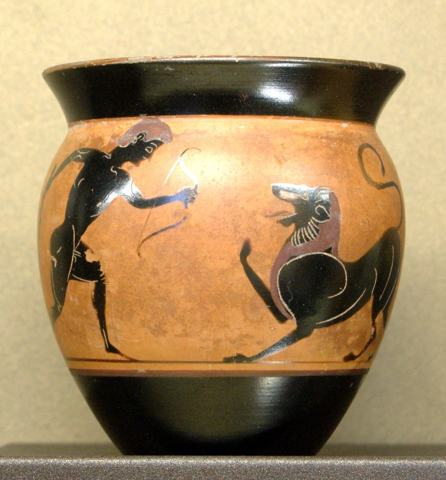
Zeus's mortal son, driven mad by Hera and set twelve impossible labours as penance - the strongest man in Greek myth, who died in agony and rose to Olympus.
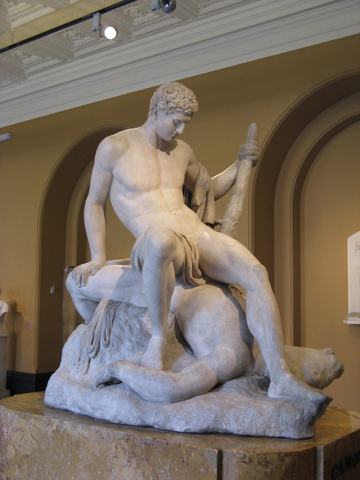
Athens's founding hero - slayer of the Minotaur, unifier of Attica, and the man whose forgotten sail cost his own father's life.
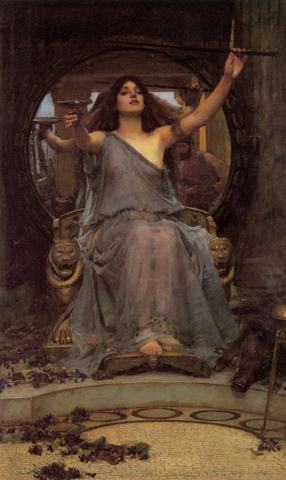
Goddess-enchantress of the island of Aiaia. She turned Odysseus' crew into swine, then became the one guide who told him how to reach the dead.
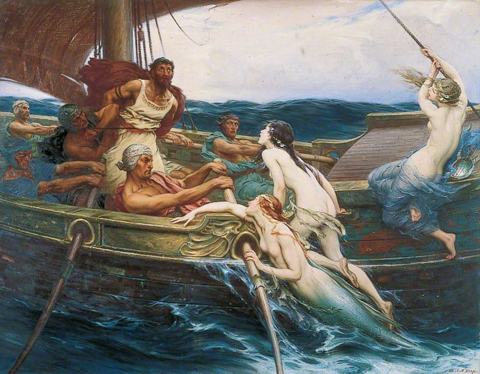
Bird-bodied singers of the Odyssey whose song promises knowledge, not romance. Odysseus heard them lashed to his mast, his crew rowing with waxed ears.
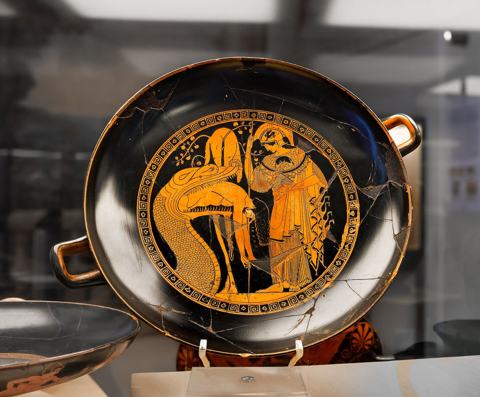
The pelt of a winged golden ram, hung in a grove sacred to Ares and guarded by a sleepless dragon, that Jason sailed to the edge of the world to steal.
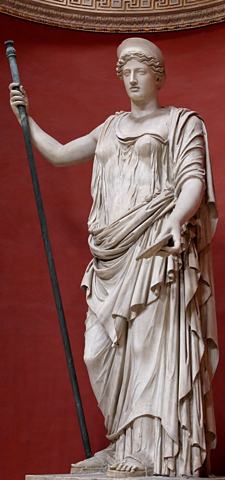
Queen of the gods. Zeus's sister, wife and most dangerous opponent — goddess of marriage in cult, and in Homer the one Olympian he is genuinely wary of.
Sources & Further Reading
- 1.Apollonius of Rhodes, Argonautica (3rd century BCE), trans. Richard Hunter, Oxford World's Classics, 1993.
- 2.Pindar, Pythian 4 (5th century BCE).
- 3.Euripides, Medea (5th century BCE, 431 BCE).
- 4.Apollodorus, Bibliotheca (Library), 1.9 (1st-2nd century CE).
- 5.Diodorus Siculus, Bibliotheca Historica, Book 4 (1st century BCE).
- 6.Gantz, Timothy. Early Greek Myth: A Guide to Literary and Artistic Sources. Johns Hopkins University Press, 1993.
- 7.Hunter, Richard. The Argonautica of Apollonius: Literary Studies. Cambridge University Press, 1993.
Spot an error or have a source to suggest? Write to info@viseterna.com. We cite primary sources and modern scholarship, and we correct fast.